Quick Summary: Association Online Store
- Digital products have highest margins: PDFs, templates, and downloads have near-zero marginal cost after creation.
- Publications outperform merchandise: Guides, study materials, and research reports drive more revenue than branded apparel.
- Avoid the merchandise trap: Start with digital products—don't invest in physical inventory before validating demand.
- Print-on-demand reduces risk: Test merchandise without upfront inventory costs until you prove demand exists.
- Member pricing reinforces value: Visible savings at checkout strengthen your membership proposition.
Part of our non-dues revenue guide
An association merchandise store turns your brand and expertise into products members want to buy—from publications and study guides to branded apparel and digital tools. Here's how to build one that actually generates revenue.
The opportunity is real. Sequence Consulting's 2026 Association Trends Report found that 63% of associations expect non-dues revenue to grow, yet 32% cite underdeveloped product models as a barrier. An online store is one of the most effective ways to close that gap—transforming your content and expertise into products members are eager to purchase. Over the years, I've seen associations turn neglected content libraries into consistent revenue streams simply by packaging what they already had. The most successful ones share a common mindset: they focus on solving member problems first and worry about margins second.
Success starts with value-driven products. A cheap t-shirt collecting dust doesn't move the needle—but a well-designed study guide or digital toolkit that helps members advance in their careers can generate steady sales for years. Start with what your members need, not just what carries your logo. In fact, industry benchmarking data shows 24% of lapsed members cite lack of perceived value as their reason for not renewing—offering relevant, useful products can help close that gap.
This guide outlines how to create an online store that drives real revenue while supporting members' professional growth. Integrated association online store software can make the entire e-commerce process seamless.
The e-commerce opportunity
Associations hold a unique edge in e-commerce thanks to their trusted brands, direct access to engaged audiences, and deep industry knowledge that naturally turns into sellable products. Unlike general retailers, your members already see you as an authority, making them far more likely to buy items that reinforce their professional identity or solve real work challenges—from certification guides to branded gear. This section breaks down why these advantages translate into reliable revenue, with illustrative projections showing how associations can scale store revenue by mixing high-margin digital offerings with targeted physical products.
Why association e-commerce works
- Trusted brand: Members trust your recommendations and quality standards
- Captive audience: Direct access to buyers through member communications
- Content expertise: Unique knowledge that can become products
- Professional identity: Members want to demonstrate affiliation
- Complementary to other programs: Store products support education and certification
Revenue potential
Store revenue varies widely based on product mix, member engagement, and how actively you promote products. The table below provides illustrative ranges—your results will depend on your specific audience, product quality, and marketing effort:
| Association Size | Publications/Digital | Merchandise | Total Potential |
|---|---|---|---|
| Small (500-2,000 members) | $5,000-$20,000 | $2,000-$8,000 | $7,000-$28,000 |
| Medium (2,000-10,000 members) | $20,000-$75,000 | $10,000-$30,000 | $30,000-$105,000 |
| Large (10,000+ members) | $75,000-$250,000+ | $30,000-$100,000+ | $105,000-$350,000+ |
Note: These are illustrative examples based on typical product mixes. Actual results vary significantly by industry, product quality, and promotional effort.
Product categories
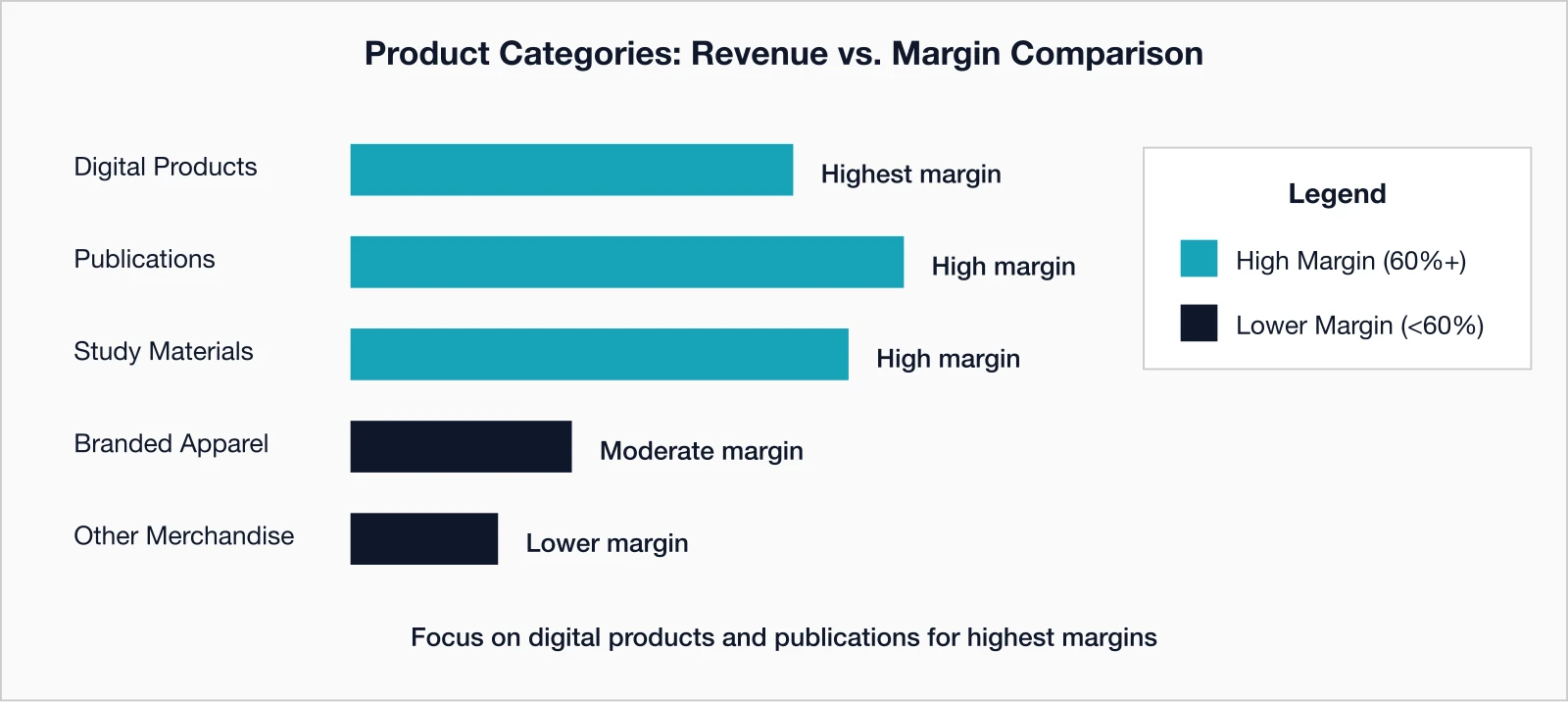
Your store's success hinges on offering products that align with member needs rather than just slapping your logo on generic items—publications and study materials typically outperform low-margin apparel. By prioritizing categories like industry guides, certification prep, and professional tools, you tap into what members value most: practical resources that advance their careers. This approach minimizes risk, keeps margins healthy (digital products tend to have much higher margins than physical merchandise), and builds a product lineup that sells itself through genuine utility rather than novelty.

Publications and books
Often the highest-revenue category for associations:
- Industry guides and handbooks
- Research reports and white papers
- Best practices manuals
- Annual directories or yearbooks
- Conference proceedings
Educational materials
Products that support professional development:
- Certification study guides
- Practice exams and question banks
- Online course access
- Webinar recordings
- Conference session recordings
Branded merchandise
Products that build community and professional identity:
- Apparel (polo shirts, t-shirts, jackets)
- Bags and totes
- Drinkware (mugs, water bottles)
- Office supplies (notebooks, pens)
- Recognition items (plaques, awards)
Professional tools
Industry-specific products members need:
- Reference charts and quick guides
- Calculation tools or templates
- Safety or compliance materials
- Professional signage
Avoid the merchandise trap: Many associations over-invest in branded merchandise that doesn't sell. Start with publications and digital products—they have higher margins and lower risk. Only add physical merchandise after validating demand.
Digital products
Digital products stand out as the smartest starting point for association stores, delivering near-instant revenue with very high margins, zero inventory headaches, and global scalability—no shipping delays or storage costs required. Think downloadable PDFs like salary surveys, certification study guides, or customizable templates that members can access immediately after purchase, turning your existing content expertise into evergreen income streams. These items not only boost profits but also enhance member loyalty by providing on-demand value that supports their daily professional challenges.
Types of digital products
- PDFs and e-books: Downloadable publications and guides
- Templates: Spreadsheets, documents, and forms members can customize
- Toolkits: Bundled resources for specific purposes
- Practice exams: Online or downloadable test prep
- Video content: Recordings and training videos
- Software/apps: Calculation tools, reference apps
Digital product advantages
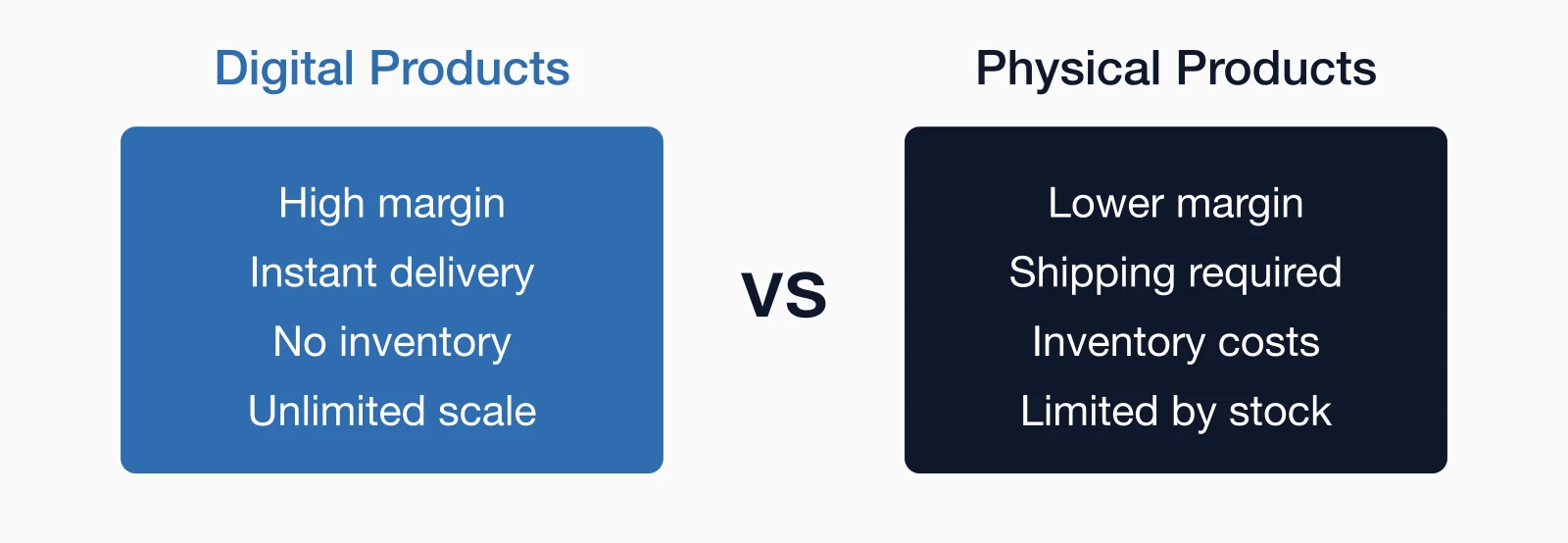
- Near-zero marginal cost: No inventory, shipping, or handling
- Instant delivery: Customers receive products immediately
- Global reach: No shipping limitations or costs
- Easy updates: Update content without reprinting
- Bundling flexibility: Combine products into packages
Digital product ideas
- Industry salary survey (PDF): High-value research that members need for benchmarking and negotiations
- Certification study guide (PDF): Essential prep materials with built-in demand from certification candidates
- Practice exam (online): Interactive test prep that candidates purchase repeatedly
- Policy templates bundle: Ready-to-use documents that save members hours of work
- Conference session recordings: Repurpose event content for year-round revenue
What excites me most about digital products is how they compound over time. A salary survey you create this year can generate revenue for the next five years with minimal updates. One association I've worked with turned a single compliance checklist—something they'd been giving away free—into their second-highest revenue product simply by packaging it properly and pricing it based on the value it delivered. That's the opportunity sitting in most associations' content libraries right now.
Tip: Price digital products based on the value they provide (time saved, career impact) rather than production cost alone.
Pricing strategies
Pricing in an association store goes beyond covering costs—it captures the premium value of your trusted, industry-specific content by factoring in time savings, career boosts, and compliance benefits that generic retailers can't match. Smart tactics like member discounts, bundles, and subscriptions encourage higher carts while reinforcing membership perks, ensuring non-members pay full price to highlight the ROI of joining. This value-based model justifies higher tags on high-impact items like exam prep kits, turning one-off sales into recurring revenue without undercutting your authority.

Value-based pricing
Price based on what the product is worth to buyers:
- Time savings: Templates that save hours of work
- Career impact: Study materials that help pass exams
- Competitive advantage: Research that informs business decisions
- Regulatory compliance: Materials that help avoid penalties
Pricing tactics
- Member/non-member pricing: Meaningful discount for members to reinforce membership value
- Bundle pricing: Discount when purchasing multiple products
- Volume discounts: Lower per-unit price for bulk purchases
- Early bird pricing: Discount for pre-orders or launch specials
- Subscription access: Annual fee for unlimited downloads
Physical product pricing
For physical merchandise, consider:
- Cost of goods (manufacturing, printing)
- Shipping and handling
- Inventory carrying costs
- Target margin (varies by product type)
E-commerce technology
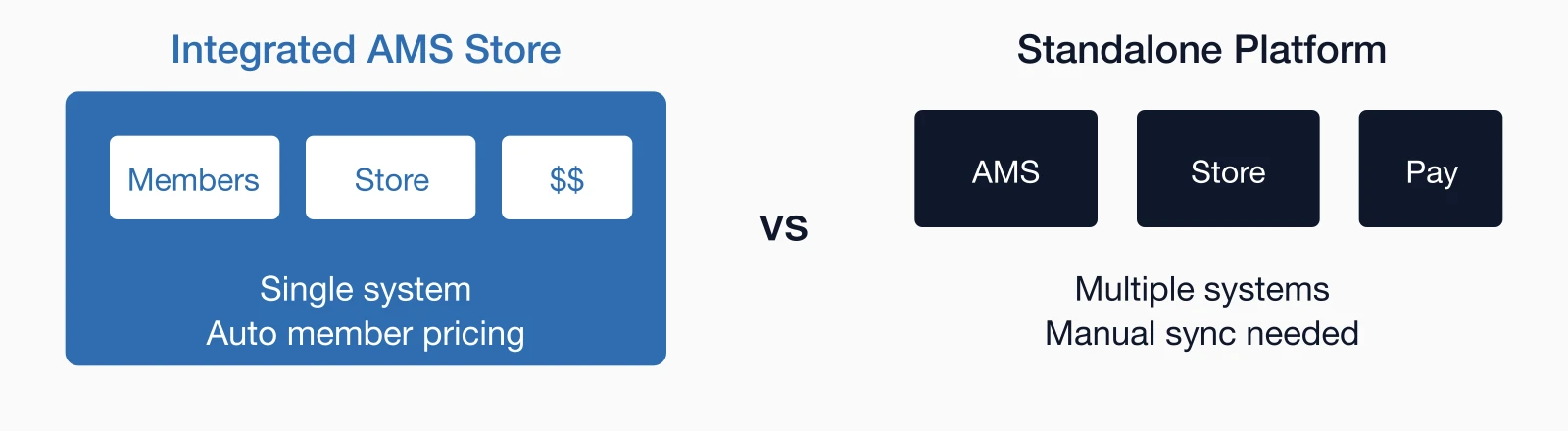
The technology powering your store determines whether shopping feels seamless for members or frustratingly clunky, directly impacting sales and satisfaction. Integrated platforms within your association management system eliminate silos by automating member pricing, single sign-on, and unified reporting, sparing staff from manual work and separate vendor hassles. Choosing features like robust catalogs, secure payments, and instant digital delivery sets up a frictionless experience that scales effortlessly as your product line grows.
Essential features
- Product catalog: Easy-to-browse product listings with search
- Shopping cart: Standard e-commerce cart experience
- Payment processing: Credit card and invoice payment options
- Digital delivery: Automatic download links for digital products
- Member pricing: Automatic discounts for logged-in members
- Inventory tracking: Stock management for physical products
- Order management: Fulfillment tracking and customer communication
Platform options
- Integrated AMS: i4a's online store integrates e-commerce with membership, events, and accounting
- Standalone e-commerce: Shopify, WooCommerce, or similar platforms
- Print-on-demand: Services like Printful for merchandise without inventory
Integration benefits
A well-integrated store within your association management platform should provide:
- Single sign-on for members
- Automatic member pricing recognition
- Combined purchase history
- Unified accounting and reporting
- No additional per-transaction platform fees
Operations and fulfillment
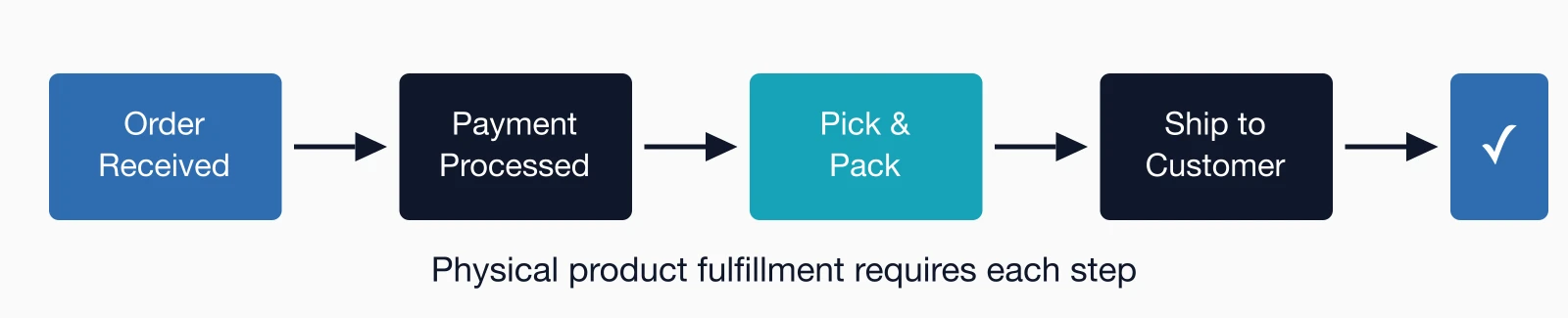
Streamlining operations separates thriving stores from those bogged down by inventory woes and fulfillment delays, especially when physical products demand picking, packing, shipping, and returns handling. Digital items simplify everything to automated links upon purchase, while smart options like print-on-demand or third-party fulfillment let you test merchandise demand without upfront stock risks. By matching fulfillment strategies to product types—simple for digital, outsourced for physical—you keep overhead low and focus on revenue-generating activities like content creation and promotion.
Digital product fulfillment
Relatively straightforward:
- Automated download link delivery upon purchase
- Secure file hosting with access controls
- Time-limited or download-limited access if needed
- License key delivery for software products
Physical product fulfillment
More complex, requiring careful planning:
- Inventory management: Track stock levels and reorder points
- Storage: Warehouse space for inventory
- Picking and packing: Staff time for order fulfillment
- Shipping: Carrier relationships, rate negotiation
- Returns: Process for handling returns and exchanges
Fulfillment options
- In-house fulfillment: Handle everything internally (low volume)
- Third-party fulfillment: Outsource to fulfillment center (higher volume)
- Print-on-demand: Products manufactured and shipped as ordered (no inventory risk)
- Drop shipping: Partner ships directly to customer
Start with print-on-demand: For merchandise like t-shirts and mugs, print-on-demand services eliminate inventory risk. You only pay when someone orders. Once you validate demand, you can consider bulk ordering for better margins.
Marketing your store
Even the best products gather digital dust without targeted promotion that puts them front and center in members' inboxes, newsletters, and event touchpoints. Effective strategies weave store highlights into everyday communications—like welcome discounts for new members or conference bundles—while leveraging social proof through reviews and previews to drive impulse buys. Consistent multi-channel efforts turn passive awareness into active purchases, building momentum that compounds sales over time without relying on big ad budgets.

Marketing channels
- Email campaigns: New product announcements, seasonal promotions
- Newsletter features: Regular "Featured Products" section
- Website placement: Prominent store link, product features on homepage
- Conference promotion: On-site store or product showcase
- Social media: Product highlights, member photos with merchandise
Promotional tactics
- New member welcome: Store discount in onboarding emails
- Renewal thank you: Exclusive product offer for renewers
- Holiday promotions: Seasonal sales and gift-giving themes
- Conference specials: Discounts during annual meeting
- Bundle promotions: "Buy certification prep kit, get study guide free"
Content marketing
- Blog posts that lead to product purchases
- Free sample chapters or previews
- Customer reviews and testimonials
- Product usage guides and how-tos
Member pricing
Member pricing isn't just a discount—it's a powerful retention tool that visibly demonstrates the tangible savings and exclusive access joining provides, encouraging upgrades and repeat buys. By showing side-by-side comparisons (e.g., $99 non-member vs. $69 member), prompting logins for instant deals, and bundling freebies with dues, you reinforce perceived value at every checkout. This approach not only lifts conversion rates but also ties store revenue directly to stronger membership loyalty and growth.

Member pricing strategies
- Percentage discount: Consistent discount for members on all products
- Member-only products: Exclusive items available only to members
- Free shipping: Free shipping for members on physical products
- Bundled access: Certain products included with membership
Making member pricing visible
Ensure members understand the value:
- Show both member and non-member prices
- Calculate and display savings at checkout
- Promote "Join now to save $X on this order"
- Include store savings in membership value calculations
Implementation tips
- Require login to receive member pricing
- Display member price after login, non-member price before
- Send abandoned cart reminders with member discount reminder
- Prompt non-member purchasers to join for instant discount
Build a strategic product program
Your association's store should be more than a logo shop. Focus on products that help members succeed professionally, start with high-margin digital products, and add physical merchandise only after validating demand.
The associations that build successful stores share something in common: they treat their store as an extension of their mission, not just a revenue line item. When you create products that genuinely help members advance their careers, the revenue follows naturally. Start with what you know your members need, package it thoughtfully, and make it easy to buy. The rest is iteration and consistency.
Key takeaways:
- Prioritize digital products and publications for highest margins
- Use value-based pricing, not just cost-plus
- Integrate e-commerce with membership for seamless member pricing
- Start with print-on-demand for merchandise to avoid inventory risk
- Promote products consistently through all member touchpoints
- Make member pricing visible to reinforce membership value
For more non-dues revenue strategies, explore our complete Non-Dues Revenue Guide or learn about related opportunities like content monetization and online learning programs.
Key takeaways
- Digital products have highest margins: PDFs, templates, and downloads have near-zero marginal cost
- Publications drive most revenue: Guides, books, and research reports outperform branded merchandise
- Member pricing creates value: Discounted store access strengthens membership proposition
- Integrated e-commerce is essential: Separate merchant accounts and platforms create friction
- Start small: Validate demand before investing in inventory
Ready to Launch Your Association Store?
i4a's integrated online store makes it easy to sell products with automatic member pricing, real-time shipping rates, and unified accounting.
Discuss Your E-Commerce StrategyRelated resources
10 Non-Dues Revenue Ideas for Associations
Complete guide to diversifying your association's revenue streams.
Publication & Content Monetization
Turn your expertise into revenue through publications and premium content.
Online Learning Revenue Strategies
Build profitable e-learning programs for your members.
Comprehensive guide to diversifying your revenue beyond membership dues.
