Quick Summary: Sponsorship Packages
- Tiered structure works best: Platinum/Gold/Silver/Bronze captures different budgets, creates upgrade paths, and drives urgency at top tiers.
- Annual programs outperform events: Year-round sponsorships build predictable revenue and deeper sponsor relationships.
- Sponsors buy access, not logos: Lead generation, speaking opportunities, and category exclusivity drive decisions—visibility is secondary.
- Limit top tiers: Scarcity supports premium pricing and motivates faster commitments.
- Retention beats acquisition: Proactive communication and ROI reporting turn one-time sponsors into long-term partners.
Part of our revenue diversification guide
Why sponsorships work for associations
Many associations struggle with sponsorship because they either undervalue what they offer or make it too hard for sponsors to say yes. Both issues are fixable with well-designed association sponsorship packages and a focus on what sponsors truly buy: access to your members.
In my experience working with associations since 1996, I've seen organizations leave substantial revenue on the table simply because they never structured their program or asked for the sale. The good news? A well-designed sponsorship program is one of the most straightforward ways to strengthen your financial position while delivering real value to sponsors who want to reach your members.
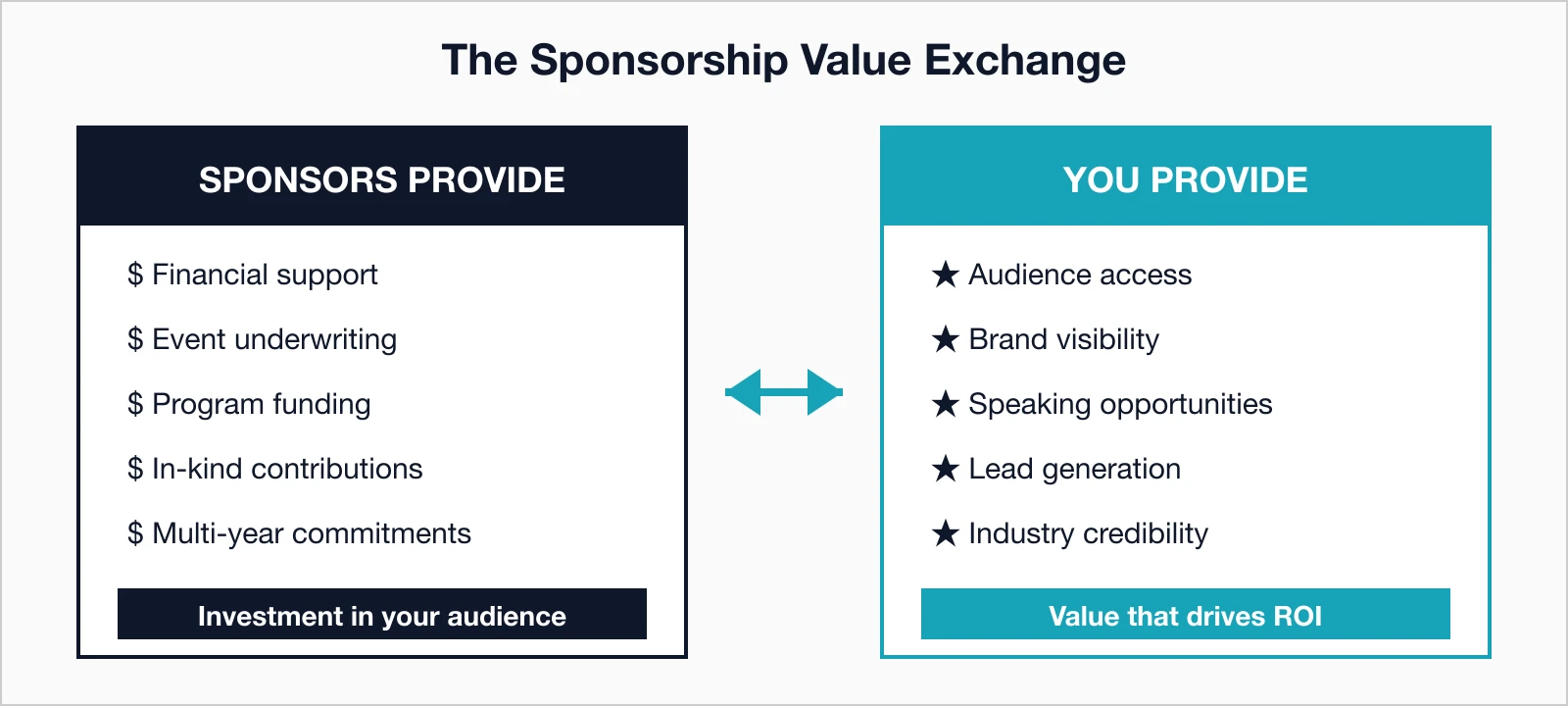
Corporate sponsorship is a straightforward exchange: companies pay for access to your audience so they can build brand awareness, generate leads, demonstrate industry commitment, or recruit talent. According to Sequence Consulting's 2026 Association Trends Report, 63% of associations expect non-dues revenue growth—and sponsorship is often the highest-margin opportunity to capture it. Your job is to make that access easy to buy and clearly valuable.
This guide walks through how to structure sponsorship packages, price them for value, and convert one-time sponsors into long-term revenue partners. Both trade associations with corporate vendor sponsors and membership nonprofits with community partners can adapt these models effectively.
The value you offer sponsors
Sponsors do not buy logos; they buy outcomes with your audience.
- Targeted audience: Members share professional interests and roles, creating a focused market segment
- Trust transfer: Your brand lends credibility and lowers risk for sponsors
- Engagement opportunities: Events, publications, and digital channels create multiple touchpoints
- Industry positioning: Sponsorship signals commitment to the profession or industry
- Lead generation: Sponsors get direct access to qualified prospects
Why sponsorship works for you
Sponsorship is one of the highest-margin non-dues revenue streams for most associations.
- High margins: Sponsorship revenue usually carries minimal direct cost
- Predictable income: Annual programs make revenue more forecastable
- Relationship building: Sponsors often become members, advertisers, and advocates
- Member value: Sponsor dollars fund better programs and help keep dues in check
- Scalability: You can add sponsors without a proportional increase in expenses
Types of sponsorship programs
A sustainable program usually combines several sponsorship types. That mix lets sponsors engage at different levels while giving you diversified revenue beyond a single annual event.

Annual/corporate sponsorships
Annual sponsorships create year-round partnerships and consistent visibility across your activities.
- 12-month commitment with bundled benefits
- Higher overall value than piecemeal event-only sponsorships
- Predictable revenue for budgeting and planning
- Deeper sponsor relationships and stronger retention
Event sponsorships
Event sponsorships support specific conferences, webinars, or major programs. They are often the entry point for new sponsors.
- Annual conference presenting sponsors
- Webinar or virtual event series sponsors
- Regional or chapter event sponsors
- Award ceremony or gala sponsors
Program sponsorships
Program sponsorships align sponsor support with specific initiatives and outcomes that matter to them.
- Scholarship or fellowship program sponsors
- Research or benchmarking initiative sponsors
- Certification or training program sponsors
- Advocacy or public policy campaign sponsors
Digital sponsorships
Digital channels extend sponsor visibility beyond the room and support year-round engagement.
- Newsletter sponsorships
- Website advertising and featured placements
- Podcast or video series sponsorships
- Social media campaigns or takeovers
- Job board or career center promotions
Pro tip: Annual sponsorships often generate significantly more revenue than selling the same benefits à la carte. Bundle benefits into structured packages instead of pricing every item separately.
Building tiered packages
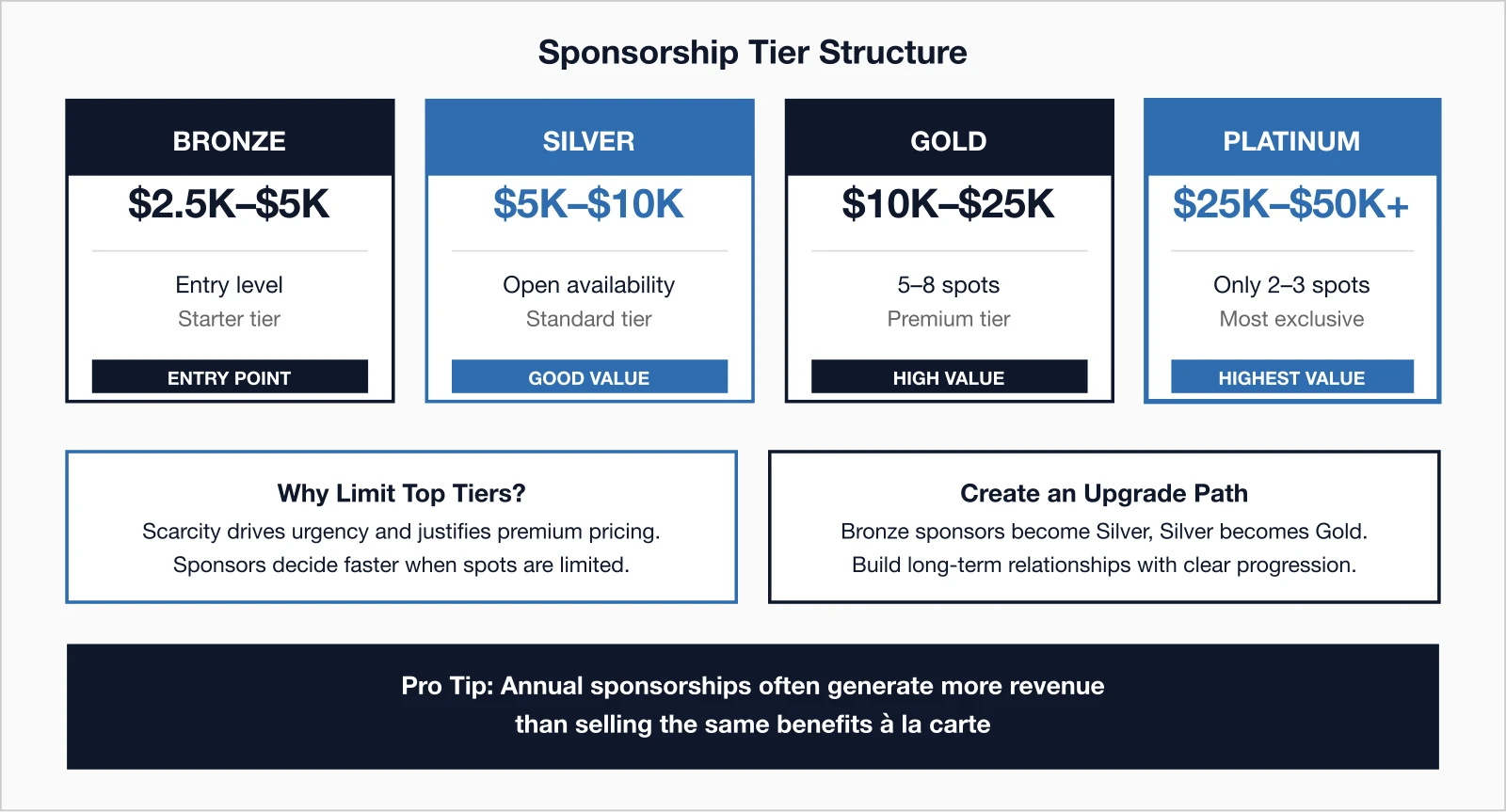
The most effective association sponsorship packages use tiered structures (Platinum/Gold/Silver plus Bronze) that make it easy for sponsors to self-select based on budget and objectives. A three- or four-tier model works well because it is simple, familiar, and flexible.
Sample annual sponsorship structure
Use a consistent tier framework across programs so sponsors recognize your structure and can easily upgrade over time.
| Tier | Price Range | Availability | Key Benefits |
|---|---|---|---|
| Platinum | $25,000-$50,000+ | Limited (2-3) | Exclusive category, keynote speaking, premium booth, all digital |
| Gold | $10,000-$25,000 | Limited (5-8) | Conference sponsorship, workshop speaking, prominent visibility |
| Silver | $5,000-$10,000 | Open | Event visibility, newsletter ads, exhibitor discounts |
| Bronze | $2,500-$5,000 | Open | Logo recognition, digital directory, basic visibility |
Why tiered pricing works
Well-designed tiers match sponsor budgets and provide a clear path to grow the relationship.
- Captures different budgets: Large companies gravitate to top tiers; smaller vendors enter at lower tiers
- Creates an upgrade path: Bronze can grow into Silver, then Gold, then Platinum
- Anchors price perception: Platinum pricing makes Gold look especially reasonable
- Encourages quick decisions: Limited availability at top tiers creates urgency
Tier design principles
Strong tier design avoids confusion and makes value jumps obvious.
- Clear value differentiation: Each tier includes exclusive benefits that justify higher pricing
- Exclusive top-tier benefits: Reserve keynote speaking, category exclusivity, and board access for Platinum
- Limit premium tiers: Scarcity increases perceived value and motivates faster commitment
- Consistent naming: Use the same tier names across events and programs for brand consistency
Pricing your sponsorships
Pricing is where many associations leave money on the table. Effective sponsorship pricing balances market benchmarks, perceived value, and the unique strength of your audience.
Here's the thing: most associations are underpriced. They set rates years ago and never revisited them, or they benchmark against organizations with smaller, less engaged audiences. If sponsors renew year after year without hesitation, that's a signal you have room to raise prices—and you should.
Factors that influence pricing
Before setting numbers, consider the elements that drive sponsor ROI.
- Audience size: Larger member and attendee bases can justify higher prices
- Audience quality: Decision-makers and high-income professionals are more valuable to sponsors
- Industry vertical: Highly specialized or B2B tech segments often command premium rates
- Competitive landscape: What similar associations charge for comparable benefits
- Historical pricing: Existing sponsor expectations and prior rate history
- Benefit mix: What is included at each tier and how differentiated benefits are
Pricing research methods
Use simple research methods to validate your pricing and avoid guesswork.
- Review competitor association sponsorship prospectuses
- Survey current sponsors on perceived value and willingness to pay more
- Calculate cost-per-impression versus alternative channels (digital ads, trade media)
- Test pricing with a small group of pilot sponsors before full rollout
Common pricing mistakes
Small missteps in pricing compound over time; avoid these pitfalls from the start.
- Underpricing: Charging too little for a highly qualified, engaged audience
- À la carte overload: Selling everything individually instead of as packages, which reduces total spend
- No price increases: Holding prices flat for years, which erodes perceived and real value
- Cost-based pricing: Basing prices on your costs rather than sponsor outcomes
Annual increases: Plan for 3–5% annual price increases. Long-term sponsors expect modest, regular changes, and new sponsors benchmark against current pricing. Stagnant pricing signals that you do not fully value your own offerings.
Benefits that sponsors value
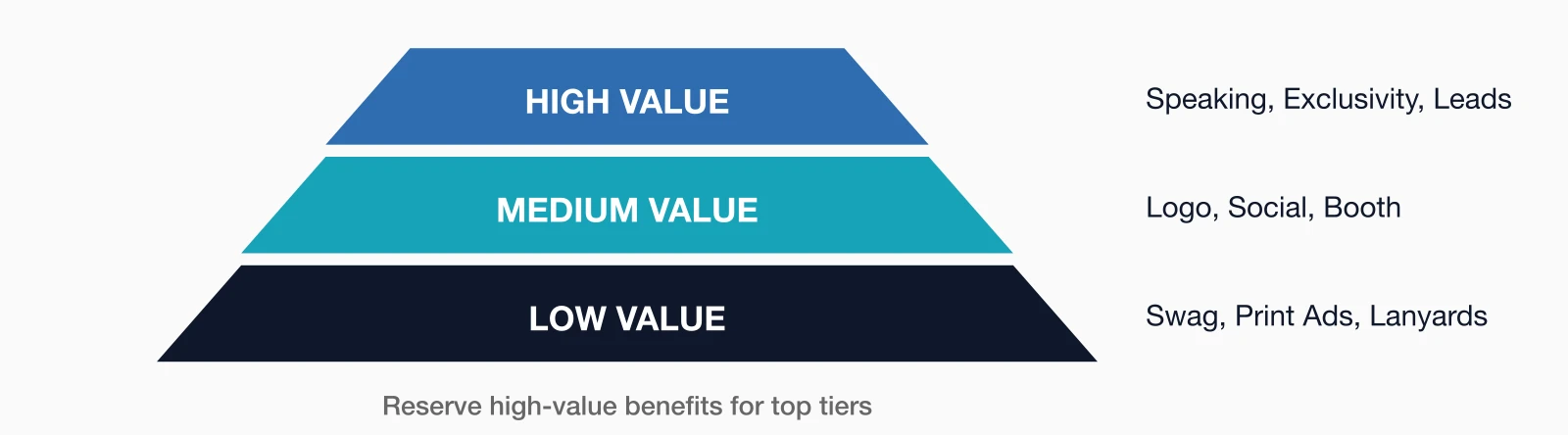
Not all benefits are equal. High-value benefits drive decisions; low-value extras simply round out the package. Design tiers around real sponsor priorities.
High-value benefits
These benefits usually determine whether a sponsor says yes.
- Speaking opportunities: Keynotes, panels, and workshops position sponsors as thought leaders
- Exclusive access: VIP events, leadership introductions, and (where appropriate) member data
- Lead generation: Attendee lists, booth leads, webinar registrants, and demo requests
- Category exclusivity: Being the only sponsor in a product or service category
- Content opportunities: Sponsored articles, research reports, and webinars
Medium-value benefits
These benefits support visibility but rarely close deals on their own.
- Logo placement on website, signage, and event materials
- Social media mentions and tagged posts
- Newsletter advertising and content features
- Exhibit booth space or tabletop displays
- Complimentary registrations or passes
Low-value benefits
These items are often expected but seldom influence the buying decision.
- Logo on event bags, lanyards, or collateral
- Program book or print ads in conference materials
- Name recognition in press releases
- Reserved tables at award dinners or banquets
Benefit packaging strategy
Use benefit value to structure your tiers: reserve high-value benefits for top tiers (Platinum and Gold), spread medium-value benefits across all tiers to show breadth, and use low-value benefits as "extras" that add volume without significant cost.
| Benefit | Platinum | Gold | Silver | Bronze |
|---|---|---|---|---|
| Keynote speaking | ✓ | |||
| Category exclusivity | ✓ | |||
| Workshop speaking | ✓ | ✓ | ||
| Premium booth | ✓ | ✓ | ||
| Newsletter ads | 12x | 6x | 4x | 2x |
| Website logo | ✓ | ✓ | ✓ | ✓ |
| Social mentions | Monthly | Quarterly | 2x/year | 1x/year |
Creating a sponsor prospectus
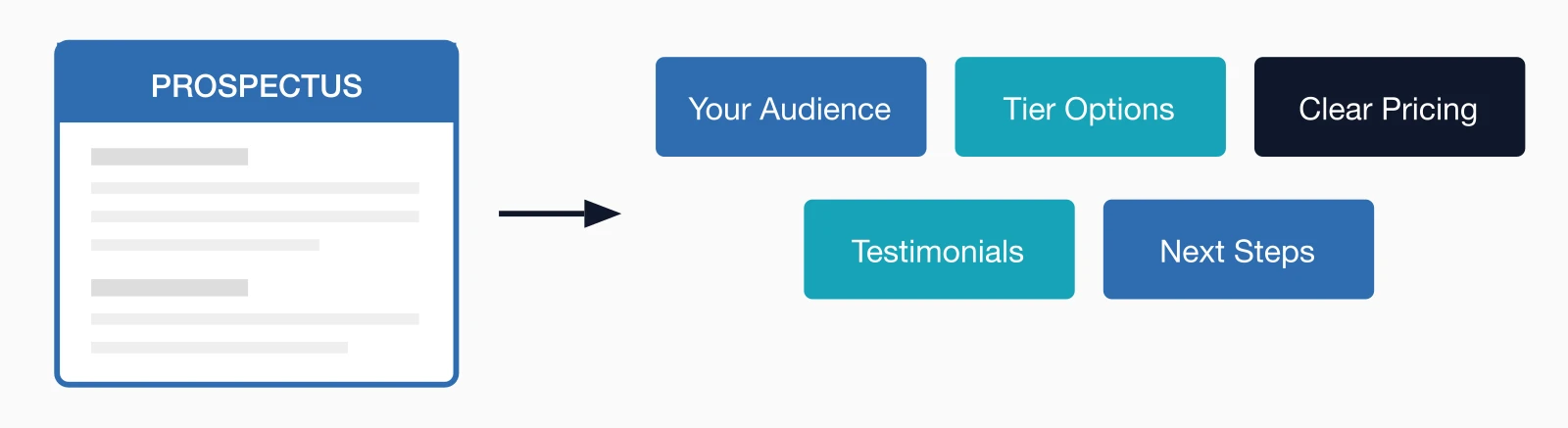
Your sponsorship prospectus is your primary sales tool. It should clearly tell sponsors who you reach, what you offer, and how they benefit—without making them work to find answers.
Essential prospectus sections
A strong prospectus answers a sponsor's core questions in minutes.
- About your association: Mission, focus, and why your audience matters
- Audience profile: Member demographics, roles, industries, and buying power
- Sponsorship opportunities: Tiered packages with clearly outlined benefits
- Pricing: Transparent tier pricing and any add-on options
- Testimonials: Quotes from satisfied sponsors to provide social proof
- Contact information: Clear next steps and a named contact for questions
Prospectus design principles
Treat your prospectus like a marketing asset, not a technical document.
- Lead with value: Start with outcomes for sponsors, not your revenue needs
- Use visuals: Charts, icons, and photos to break up dense text
- Be specific: Concrete numbers (e.g., "1,200 attendees") build confidence
- Include deadlines: Early-bird pricing and tier caps create urgency
- Make it scannable: Use clear headers and bullet lists for busy executives
Prospectus formats
Different formats serve different stages of the sales process.
- PDF brochure: Professional, shareable document for email and downloads
- Web page: Online version with an inquiry form and quick access to details
- One-pager: Condensed handout for brief conversations or board referrals
- Custom proposals: Tailored offers for major or strategic prospects
Selling sponsorships
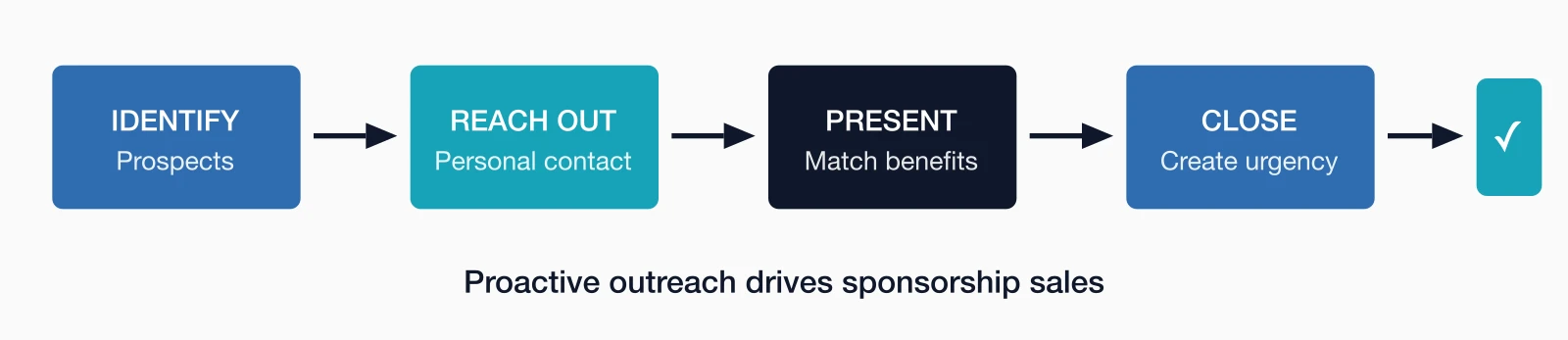
Even the best-designed packages will not sell themselves. Sponsorship sales require proactive, targeted outreach.
Identify prospects
Start with organizations already connected to your association and expand outward.
- Current advertisers and exhibitors: Already investing in your audience
- Member employers: Companies that value your members' expertise
- Industry vendors: Companies selling products or services to your members
- Competitor sponsors: Sponsors of similar associations or events in your space
- Past sponsors: Win-back opportunities with a refreshed offer
Outreach strategy
Treat sponsorship outreach like a business development campaign.
- Personal outreach: Direct emails and calls to decision-makers
- Board and member referrals: Use leadership relationships for warm introductions
- Event networking: Meet prospects at conferences and regional meetings
- Content marketing: Publish content that highlights your audience and reach
- RFP responses: Respond selectively to corporate sponsorship RFPs where there is a good fit
The sales conversation
Focus every conversation on the sponsor's goals and how your program helps achieve them.
- Understand their objectives: Brand awareness, leads, thought leadership, or recruitment
- Present relevant benefits: Match tier benefits directly to those objectives
- Quantify value: Share impressions, audience reach, and engagement metrics
- Handle objections: Address concerns around budget, timing, and competitors
- Close with urgency: Use limited spots, deadlines, and early-bird incentives
Sales tip: For brand awareness, focus on marketing leaders (CMO or marketing director). For recruitment, target HR leaders. For lead generation, engage sales or business development leadership. The budget holder often aligns with the primary goal.
Sponsor retention strategies
Retention is where sponsorship programs become sustainable. Keeping a sponsor is almost always cheaper than finding a new one.
Retention best practices
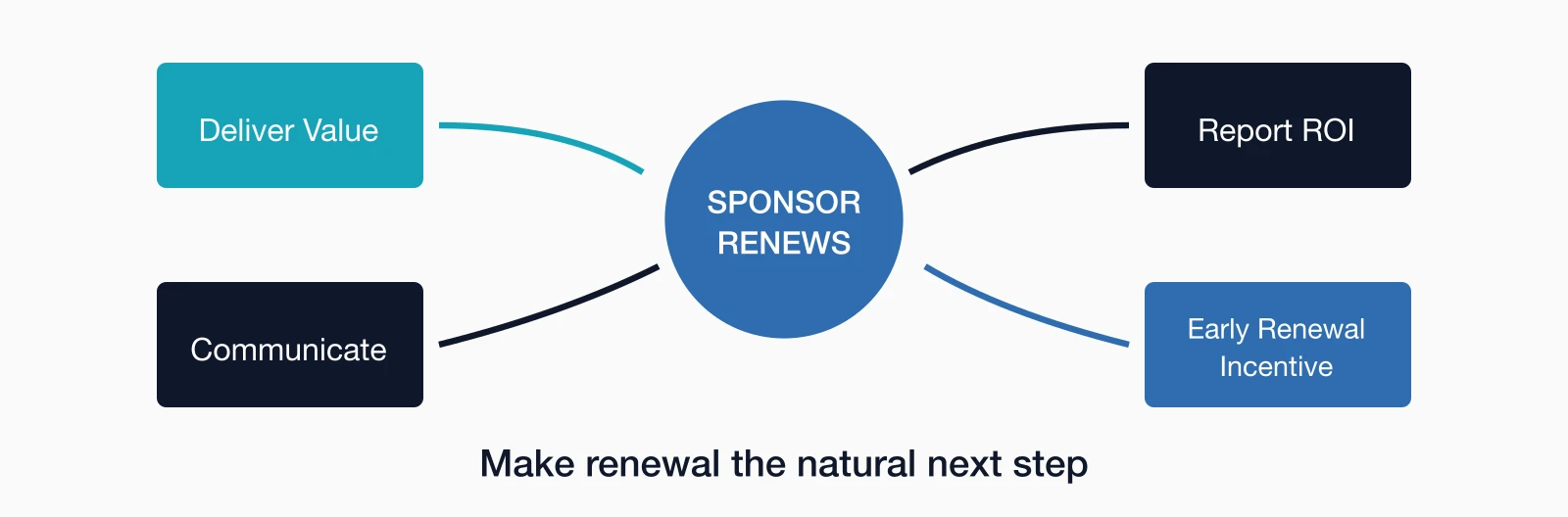
Make renewal the natural next step by proactively delivering value.
- Deliver on promises: Fulfill every benefit, on time and as sold
- Communicate proactively: Provide regular updates on performance and upcoming opportunities
- Provide ROI reports: Share impressions, leads, and engagement in simple dashboards
- Gather feedback: Use annual sponsor surveys or check-ins to understand satisfaction
- Recognize sponsors publicly: Highlight them at events and in communications
- Offer early renewal incentives: Locked-in pricing or bonus benefits for early commitments
Warning signs of sponsor churn
Watch for early indicators so you can intervene before a sponsor walks away.
- Declining engagement with benefits, such as skipping events
- Slower or reduced responsiveness to outreach
- Budget pressure or interest in downgrades
- Staff changes at the sponsor, especially your main contact
- Mergers, acquisitions, or broader corporate shifts
Renewal timeline
Start renewal conversations 90–120 days before sponsorships expire. Offer early renewal perks—price locks, guaranteed tier placement, bonus visibility—to encourage quick, low-friction decisions.
Measuring sponsorship ROI
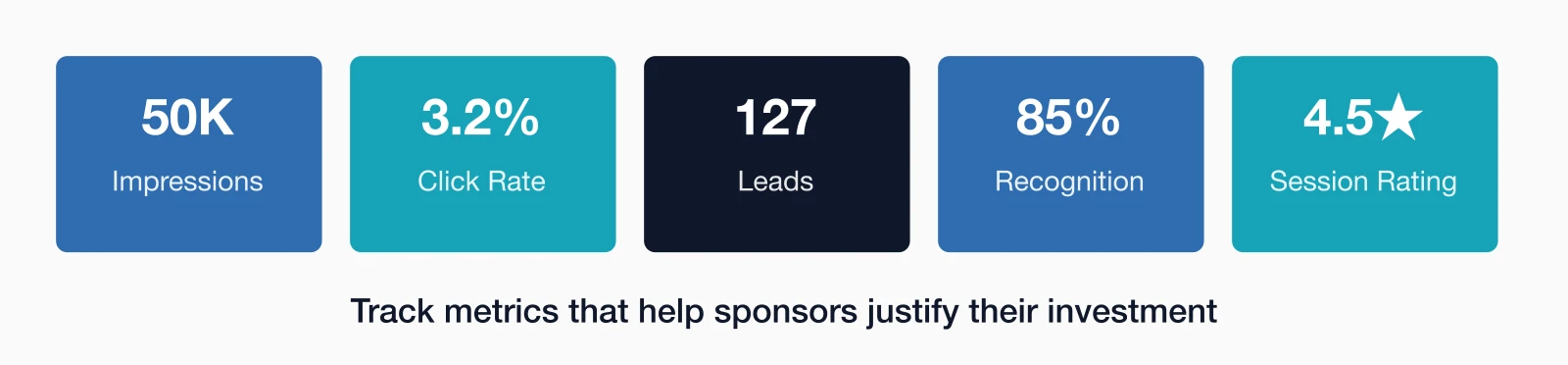
Sponsors need to justify their investment internally. Help them make the case with clear, consistent ROI reporting.
Metrics to track
Focus on metrics that connect clearly to marketing and sales outcomes.
- Impressions: Website views, email opens, social media reach
- Engagement: Click-through rates, booth visits, webinar registrations and attendance
- Leads generated: Business cards collected, demo requests, follow-up meetings
- Brand awareness: Survey questions on sponsor recognition and perception
- Speaking performance: Session attendance, ratings, and qualitative feedback
Reporting best practices
Turn your data into a simple, persuasive story of value.
- Deliver post-event reports within 30 days
- Include year-over-year comparisons for returning sponsors
- Visualize key metrics with simple charts and graphs
- Calculate cost-per-impression and compare to common benchmarks
- Add testimonials and qualitative feedback from members and attendees
Pro tip: Create a simple sponsorship tracking spreadsheet that logs benefits delivered, impressions generated, and sponsor engagement throughout the year. This real-time view strengthens renewal conversations and helps you refine your prospectus.
Build a sustainable sponsorship program
Successful association sponsorship packages rarely happen in a single cycle. They come from programs built over years, anchored in clear value, disciplined packaging, and strong relationships.
After nearly three decades in this industry, I can tell you that the associations with the strongest sponsorship programs share one thing: they treat sponsors as partners, not ATMs. When you focus on delivering measurable value—and make it easy for sponsors to see that value—renewals take care of themselves.
Key steps to focus on:
- Create tiered packages that serve different budget levels and growth paths
- Design benefits around what sponsors actually value: access, speaking, and leads
- Price based on value delivered, not internal cost alone
- Invest in a professional, persuasive prospectus that sells your program
- Prioritize retention through proactive communication and ROI reporting
- Track and share ROI so sponsors can easily defend and expand their investment
For more non-dues revenue strategies, explore the complete Non-Dues Revenue Guide or dive into related opportunities like advertising programs and job board monetization. With non-dues revenue on the rise across associations, building sponsorships into a broader, resilient strategy positions your organization for long-term growth and stability.
Key takeaways
- Tiered packages work best: Platinum/Gold/Silver (plus Bronze) captures different budget levels and creates urgency
- Annual programs outperform event-only: Year-round sponsorships build predictable revenue and deeper relationships
- Lead with outcomes, not features: Sponsors buy access to your audience, not logo placement
- Limit top tiers: Scarcity supports higher pricing and faster decisions
- Retention beats acquisition: Deliver value so sponsors renew year after year
Ready to Streamline Conference Sponsorships?
i4a's association management platform includes integrated event registration that handles sponsor registrations and payments for your conferences—so you can focus on building relationships instead of chasing invoices.
See How It WorksRelated resources
10 Non-Dues Revenue Ideas for Associations
Complete guide to diversifying your association's revenue streams.
Association Advertising Revenue Guide
Monetize your digital and print channels with advertising programs.
Generate significant revenue from your career center.
Complete guide to revenue diversification strategies for associations.
