Quick Summary: Member Benefits Communication
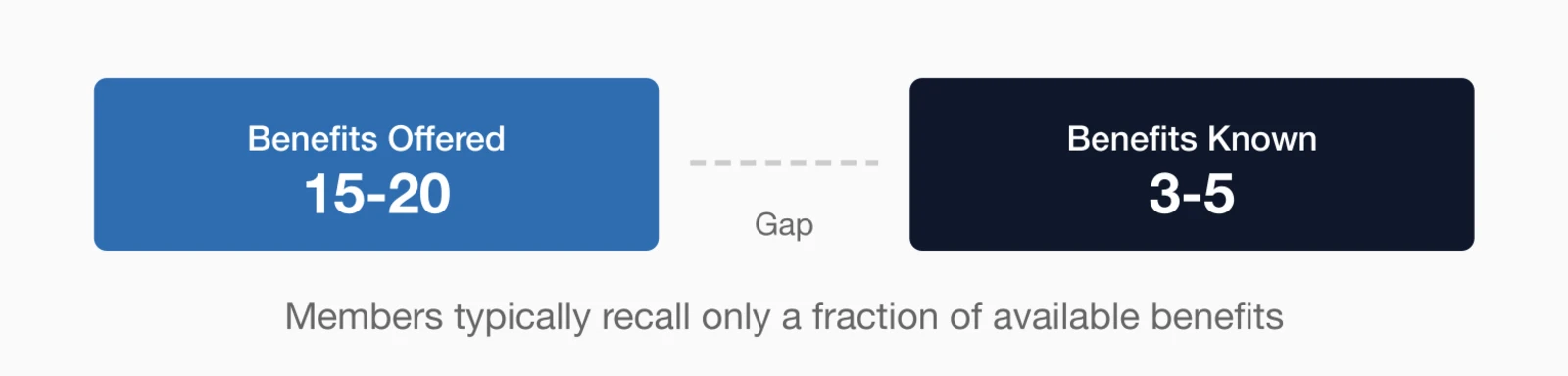
- Awareness is surprisingly low: Members typically recall only 3-5 benefits, even when you offer 15-20—and only 11% of associations rate their value proposition as "very compelling."
- Utilization drives retention: Members who use benefits renew at significantly higher rates; unused benefits might as well not exist.
- One mention isn't enough: People need 7+ exposures before information registers; plan for repetitive, multi-channel communication.
- Track to personalize: Monitor which benefits members actually use to target communications and identify at-risk members with low engagement.
- Show value at renewal: A personalized summary of what each member received versus what they paid makes renewal an easy decision.
Part of our member engagement strategies guide
Member benefits communication is the bridge between what you offer and what members actually use. Members who utilize benefits renew at higher rates—but awareness often falls short, even for core offerings. Here's how to close the gap.
I've sat in member focus groups where people complained about missing benefits that were available to them the entire time. "I wish the association offered X" they'd say—when X has been part of their membership for years.
This isn't a reflection on your members. It's a communication challenge. People are busy. They signed up for membership, got a welcome email (maybe), and moved on with their lives. Unless you consistently remind them about benefits and make usage easy, those benefits might as well not exist.
This guide covers how to communicate benefits effectively—so members know what they're getting, use what they're paying for, and renew because they've experienced real value. The right email marketing tools
The benefit awareness gap
Most associations overestimate how much members know about their benefits—sometimes dramatically. The 2025 Membership Marketing Benchmarking Report reveals the scope of the challenge:
- Only 11% of associations rate their membership value proposition as "very compelling"
- 63% cite "prospects don't understand value" as a significant recruitment challenge
- 52% report "lack of engagement" as the top reason members don't renew
Additional research consistently shows:
- Members typically can name only 3-5 benefits off the top of their head
- Awareness of specific benefits often hovers around 40-60%—even for core offerings
- Newer members have lower awareness than long-term members (but not by as much as you'd think)
- Usage rates are typically even lower than awareness rates
Why this matters for retention
Members who use benefits renew at higher rates than those who don't. The relationship is causal—benefit usage creates experienced value that justifies renewal. When members can't point to specific value they received, "I should probably cancel this" becomes an easy thought at renewal time.
This is why benefit communication isn't just marketing—it's a retention strategy. Every member who discovers and uses a benefit is a member more likely to renew.
The awareness test: Ask 10 random members to list your benefits without looking anything up. Compare their answers to your actual benefit list. The gap will probably surprise you.
Conducting a benefits audit
Before improving communication, you need to understand exactly what you're communicating about. A benefits audit clarifies what you actually offer and reveals where the awareness and utilization gaps are most severe.
Audit steps
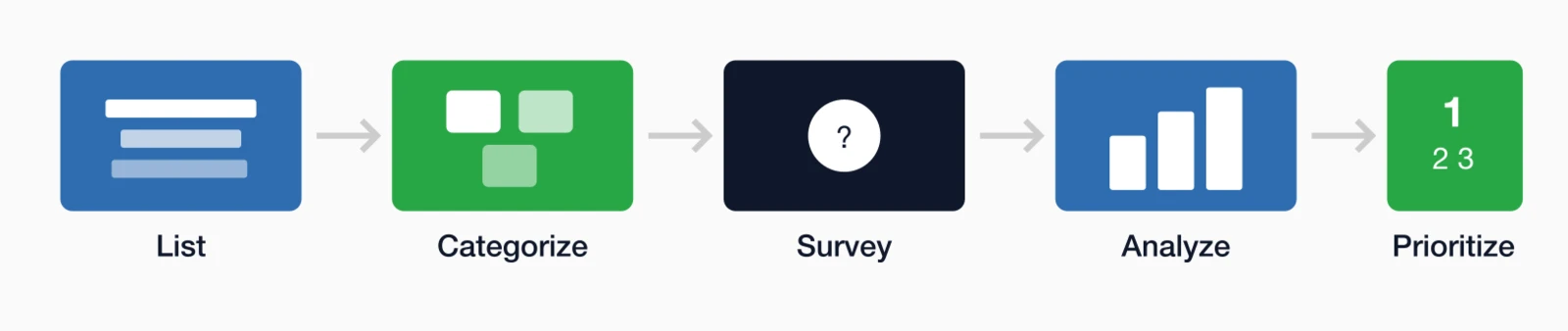
- List all benefits: Everything members receive—tangible products, services, access, discounts, content, community
- Categorize by type: Core vs. peripheral, access vs. discount, tangible vs. intangible
- Assess awareness: Survey members on which benefits they know about and which they've used
- Calculate value: What's the dollar value of each benefit if members fully utilized it?
- Track utilization: What percentage of members actually use each benefit?
- Identify gaps: Which valuable benefits have low awareness or utilization?
Sample benefits audit matrix
| Benefit | Est. Value | Awareness | Utilization | Priority |
|---|---|---|---|---|
| Member directory | $50/yr | 75% | 45% | Medium |
| CE discounts | $200/yr | 55% | 25% | High |
| Industry research | $300/yr | 40% | 20% | High |
| Job board access | $100/yr | 70% | 30% | Medium |
| Insurance discounts | $500/yr | 35% | 10% | High |
High-value benefits with low awareness represent your biggest communication opportunities.
Benefits communication strategy
Effective benefits communication requires a sustained, multi-channel approach—not just a single welcome email that gets lost in the inbox. Here's how to build a strategy that actually moves the needle on awareness and utilization.
Communication principles
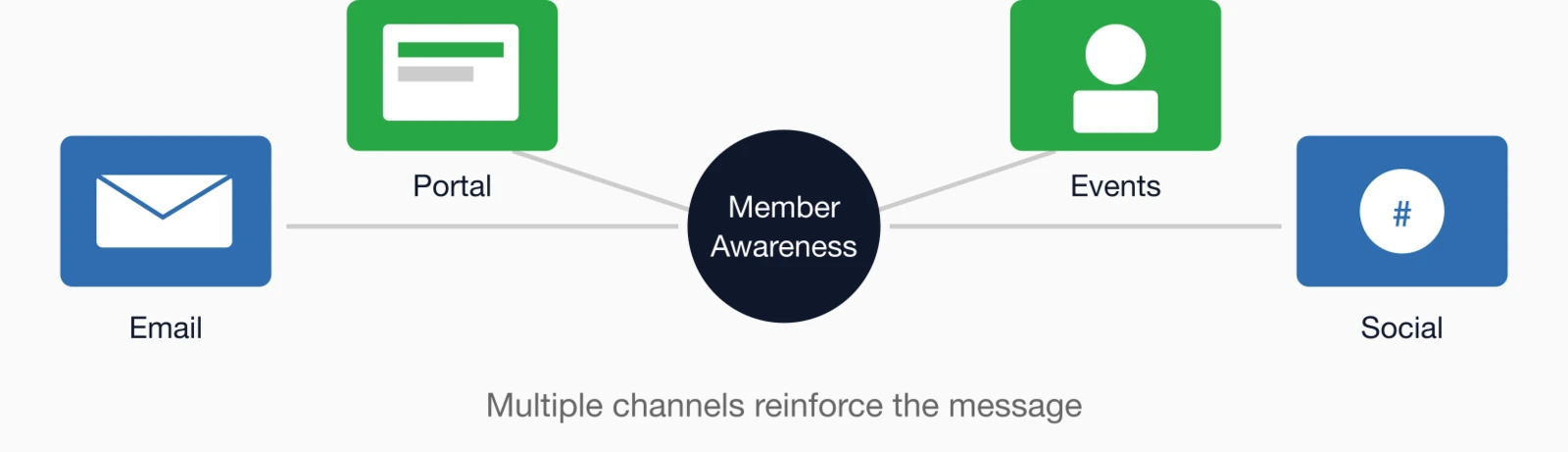
- Repetition matters: People need to hear things 7+ times before they register; plan for ongoing communication
- Multiple channels: Email, website, portal, events, social media—use all of them
- Specific over general: "20% off conference registration" lands better than "member discounts"
- Benefits, not features: Focus on what members gain, not what the organization offers
- Timing matters: Communicate benefits when they're relevant (CE reminders during recertification season)
Channel strategy
| Channel | Best For |
|---|---|
| Email campaigns | Targeted benefit spotlights, usage reminders |
| Member portal | Persistent benefits display, personalized value |
| Newsletter | Regular benefit highlights, success stories |
| Events | In-person benefit education, announcements |
| Social media | Bite-sized benefit reminders, member testimonials |
| Staff interactions | Personal recommendations based on member needs |
New member benefits communication
The first 90 days of membership are critical. New members are most receptive to learning about benefits during this window—and most at risk of never engaging if you don't reach them early with the right information.
Welcome series elements
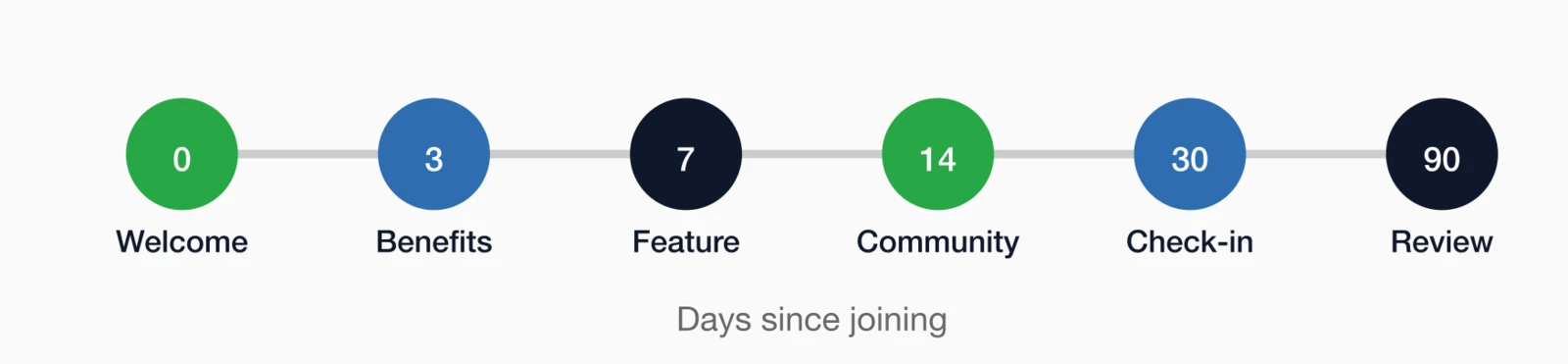
- Welcome email (day 0): Thanks for joining, here's your portal access, top 3 things to do first
- Benefits overview (day 3): Complete benefits guide with direct links
- Featured benefit (day 7): Deep dive on your highest-value benefit
- Community invitation (day 14): Forums, directory, networking opportunities
- Check-in (day 30): "Have you tried X yet?" with getting-started resources
- Value review (day 90): Summary of what they've accessed, suggestions for what else to try
A deeper look: The first 7 days
The first week after joining is your best opportunity to establish benefit awareness. Members are curious about what they've signed up for, and they haven't yet developed the habit of ignoring your emails.
Don't overwhelm them with everything at once—that leads to information overload and nothing being absorbed. Instead, sequence your communications thoughtfully. Start with immediate-value items: how to access the member portal, where to find the member directory, when the next event is happening.
Then introduce benefits that require more effort over the following weeks. The insurance discount is valuable but requires action to access; introduce it once they've established basic engagement patterns.
Ongoing benefits reminders
New members aren't the only ones who need benefit communication. Long-term members forget about benefits too, and associations regularly add new benefits that existing members never hear about. Ongoing communication keeps your value proposition fresh.
Tactics for ongoing communication
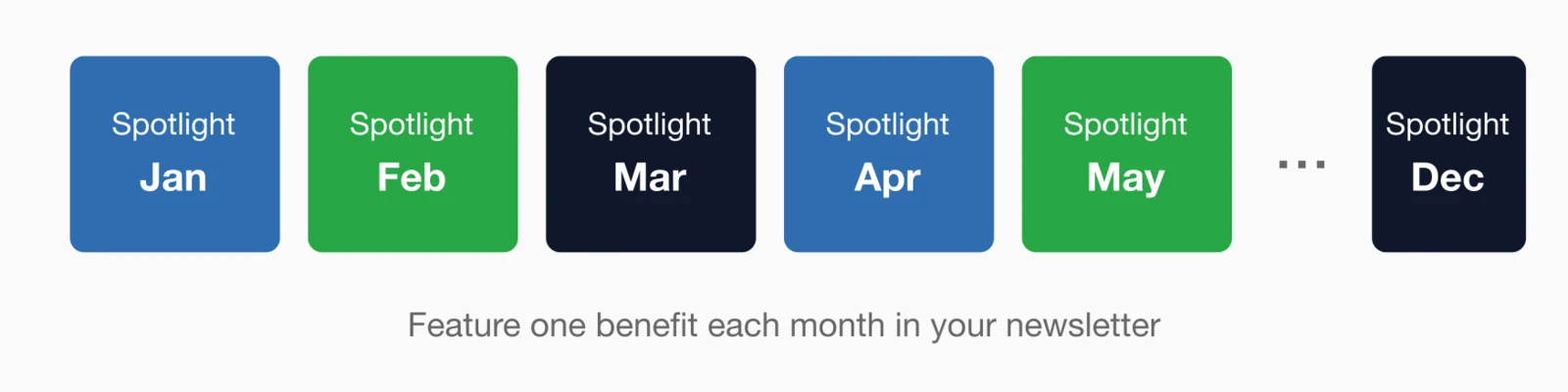
- Monthly benefit spotlight: Feature one benefit each month in your newsletter
- Seasonal reminders: Tie benefit communication to relevant timing (insurance renewal season, conference planning)
- Usage triggers: When a member uses one benefit, suggest related ones
- Member testimonials: "How I used [benefit] to save $500" stories
- Portal prominence: Rotate featured benefits on the member dashboard
- New benefit announcements: Clear communication when you add or improve benefits
Renewal-time value demonstration
Renewal time is when members evaluate whether their membership was worth the investment. This is your moment to summarize the value they received—and make the case for continuing that relationship.
The personal value statement
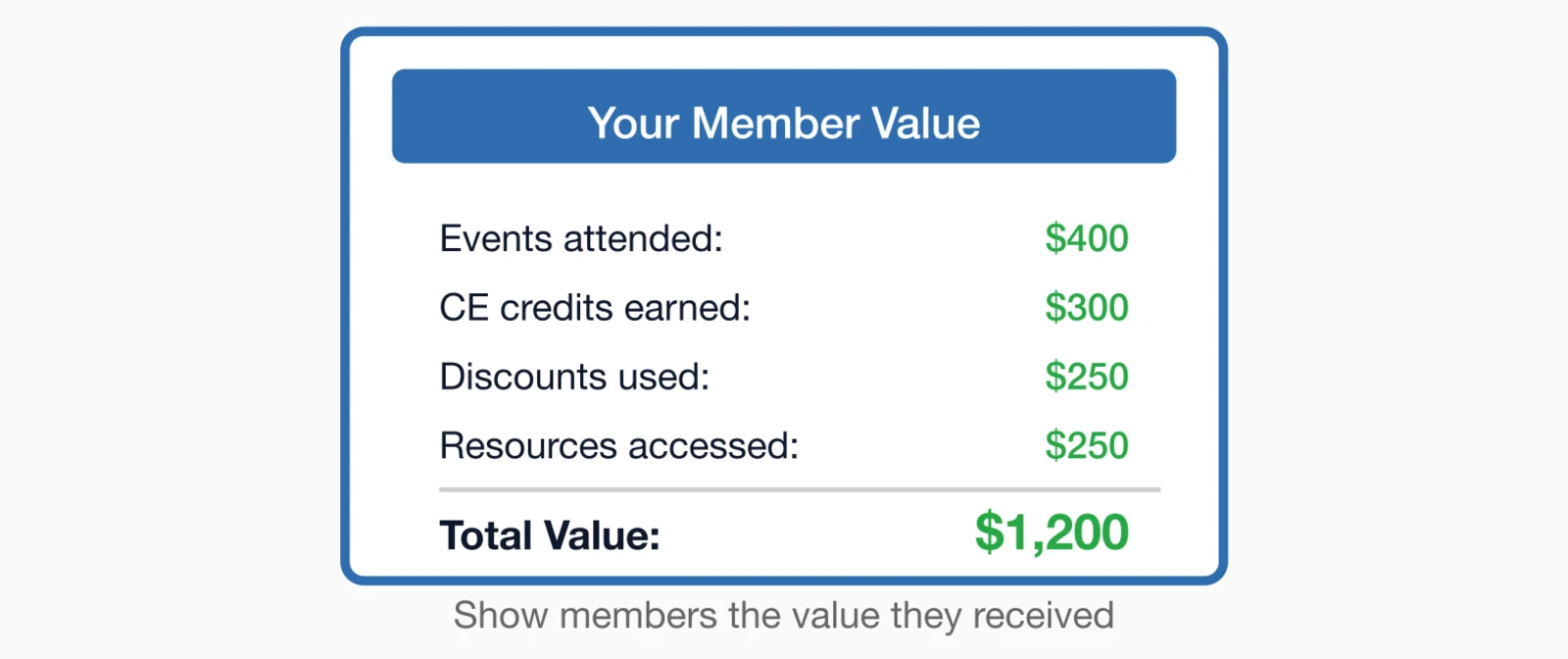
Create a personalized value summary for each member at renewal time showing:
- Events attended and their retail value
- CE credits earned
- Resources accessed or downloaded
- Discounts used and money saved
- Community participation (forum posts, directory searches)
- Total value received vs. dues paid
A member who sees "You received $1,200 in value from your $300 membership" has a compelling reason to renew.
Tracking benefit utilization
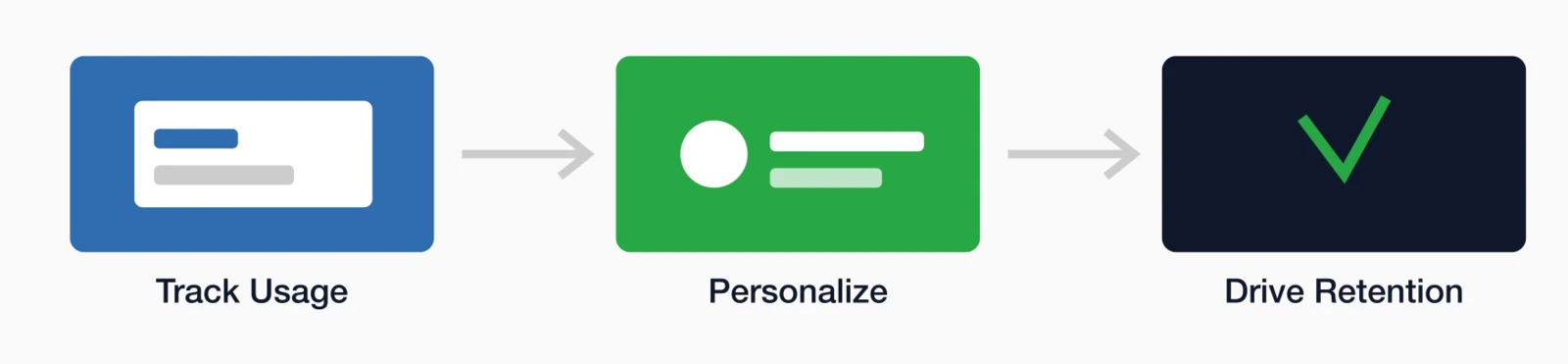
You can't demonstrate value you can't measure. Implementing utilization tracking enables both personalized communication and organizational insight into which benefits actually drive engagement and retention.
What to track
- Event registrations and attendance
- Resource downloads and content access
- Portal logins and feature usage
- Discount code redemptions
- Forum participation and directory searches
- CE credits earned
- Third-party benefit redemptions (when possible)
Using the data
Utilization data serves multiple purposes:
- Personal value statements: Show members what they've used
- At-risk identification: Members with low utilization are renewal risks
- Benefit evaluation: Low-utilization benefits may need better promotion—or retirement
- Communication targeting: Recommend unused benefits to those who haven't tried them
Personalized benefits communication
Different members value different things. Generic benefits communication treats everyone the same; personalized communication speaks to individual needs and dramatically improves engagement rates.
Personalization strategies
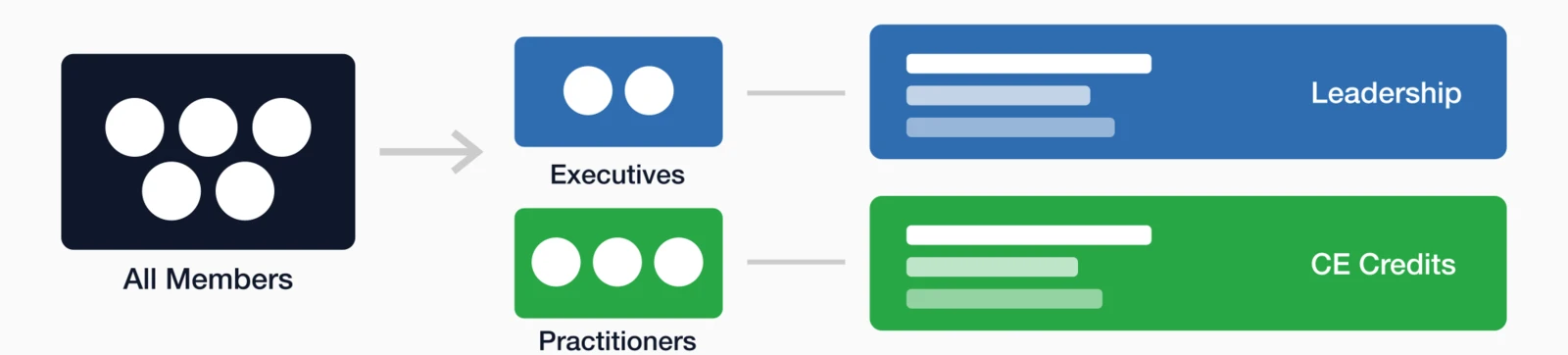
- Role-based: Executives vs. practitioners vs. students have different needs
- Interest-based: Members interested in leadership see leadership resources
- Behavior-based: Heavy event attendees see more event content
- Usage-based: Recommend benefits similar to ones they've used
- Non-usage targeting: Specifically promote benefits they haven't tried
Make your benefits visible
The benefits you offer are only valuable if members know about them and use them. Effective communication transforms latent benefits into experienced value—and experienced value drives retention.
Start with a benefits audit to understand your current awareness and utilization gaps. Then build a communication strategy that reaches members through multiple channels, multiple times, with specific and compelling messages. Track utilization to personalize communication and demonstrate value at renewal time.
The investment in benefits communication pays off in members who understand what they're getting, use what they're paying for, and renew because they've experienced genuine value.
For more on member communication, see our member communications best practices guide or explore the complete Member Engagement Guide
Key takeaways
- Value proposition is hard to communicate: According to the 2025 MGI Report, only 11% rate their value proposition as "very compelling"
- Prospects don't understand the value: 63% cite "prospects don't understand value" as a recruitment challenge
- One mention isn't enough: Benefits need repeated, varied communication through multiple channels
- Personalize when possible: Different members need different benefits; show them what's relevant
- Show the value at renewal: A personalized "what you received this year" report drives renewals
Ready to Improve Benefit Communication?
i4a helps associations communicate member benefits effectively, driving awareness, utilization, and renewal.
See How i4a Can HelpRelated resources
Member Communications Best Practices
Effective strategies for all member communications.
Set new members up for long-term engagement.
Complete guide to building engaged communities.
Build loyalty through celebrating contributions.
