Quick Summary: Member Communications
- Segmentation drives results: Targeted emails by member type, engagement level, or interests generate 20-30% higher open rates than mass blasts.
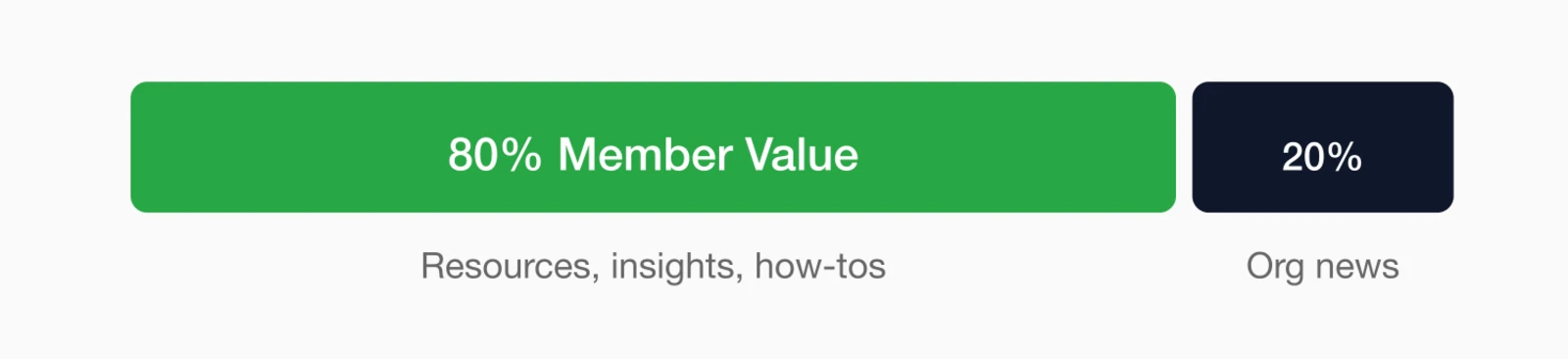
- Value beats promotion: Follow the 80/20 rule—80% useful content (resources, insights, opportunities) and only 20% organizational news.
- Consistency builds trust: Predictable schedules (same day, same time) improve open rates; erratic communication triggers unsubscribes.
- Mobile-first is mandatory: Over 60% of emails open on mobile devices—design for skimmability with short paragraphs, bullets, and clear CTAs.
- Measure to improve: Track open rates (20-30% benchmark), click rates (2-5%), and unsubscribes (<0.5%) to optimize over time.
Part of our complete email strategy guide
Member communications best practices can significantly boost open rates—if you segment, personalize, and time them right. This guide covers the 10 proven tactics that cut through inbox clutter and drive engagement.
Yet many organizations struggle with communication. They send too many emails that get ignored, or too few and members forget they exist. They blast the same message to everyone instead of tailoring content to different audiences. They focus on organizational news rather than member value. This challenge applies to every type of membership organization—professional associations, trade associations, membership nonprofits, and AMCs managing communications for multiple clients.
This guide will help you develop a communication strategy that resonates with members, drives engagement, and strengthens your organization.
Establish a consistent communication schedule
Consistency builds trust and sets expectations. When members know when to expect your newsletter, they're more likely to look for it—and less likely to mark it as spam when it arrives. The organizations with the highest open rates are usually the most predictable.

Recommended communication frequency:
- Weekly newsletter - For highly engaged communities or during peak activity
- Bi-weekly newsletter - The sweet spot for most organizations
- Monthly newsletter - Minimum to stay top-of-mind
- Event-specific emails - Separate from regular newsletters
- Urgent announcements - As needed, but use sparingly
Pro Tip: Pick a day and time for your regular newsletter and stick to it. Many organizations find Tuesday through Thursday mornings get the best open rates.
Segment your audience
Not all members need or want the same information, and treating them as a monolithic group is one of the fastest ways to lose their attention. Segmentation allows you to send relevant messages to the right people at the right time. A robust membership management system makes it easy to segment your audience based on any data point you track.
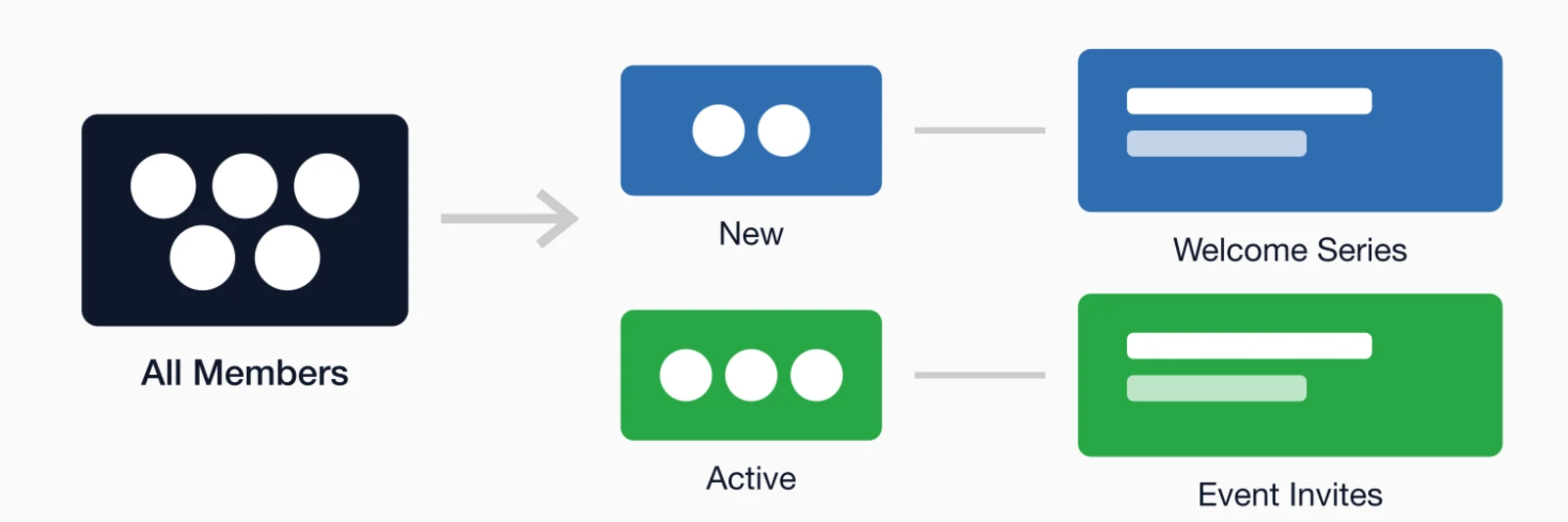
Common segmentation strategies:
- Membership type - Different tiers or categories receive different content
- Industry or specialty - Tailor content to specific professional areas
- Geographic location - Regional events and chapter news
- Engagement level - Different messages for active vs. dormant members
- Tenure - New members vs. long-term members
- Interests - Based on preferences or past behavior
- Event attendance - Follow up with attendees vs. non-attendees
Example segmented campaigns:
- Welcome series for new members
- Re-engagement campaign for inactive members
- Regional event invitations
- Specialized content for different professional roles
- VIP communications for high-tier members
- Board communications for leadership updates
Lead with value, not self-promotion
Members don't open emails to hear how great your organization is. They open them because they expect something useful—information, insights, opportunities, or solutions to their problems. Every email that disappoints them makes the next one less likely to get opened.
Value-first content includes:
- Educational content - How-to guides, best practices, industry insights
- Exclusive resources - Templates, tools, research available only to members
- Networking opportunities - Connections with peers and mentors
- Career advancement - Job postings, professional development, certifications
- Industry news - Relevant trends, regulations, or developments
- Member success stories - How others benefit from membership
- Exclusive discounts - Partner offers and member-only deals
The 80/20 rule: Aim for 80% valuable content and only 20% promotional or organizational news.
Craft compelling subject lines
Even the best content goes unread if your subject line doesn't grab attention. In a crowded inbox, you have about two seconds to convince someone your email is worth opening. That makes your subject line one of the most important pieces of copy you write.

Subject line best practices:
- Keep it short - 40-50 characters (visible on mobile)
- Create urgency - "Last chance," "Deadline tomorrow," "Spots filling fast"
- Be specific - "5 tax strategies for 2025" beats "Tax tips"
- Use numbers - "7 ways to..." or "Join 500+ attendees"
- Personalize - Include name or relevant detail when appropriate
- Ask questions - "Ready to advance your career?"
- Avoid spam triggers - Excessive caps, multiple exclamation points, "FREE!!!"
Examples of effective subject lines:
- "Your October member benefits (worth $500+)"
- "Early bird pricing ends Friday - Save $100"
- "3 new resources added to your member library"
- "[Member Name], your renewal deadline is approaching"
- "This month's networking event: Tech leaders meetup"
Test It: A/B test your subject lines to see what resonates with your audience. Small changes can dramatically impact open rates.
Design for skimmability
Most people don't read emails word-for-word—they scan for the parts that interest them. This isn't laziness; it's how busy professionals process information. Format your content for quick consumption, and members will actually engage with it.

Formatting techniques:
- Short paragraphs - 2-3 sentences maximum
- Bullet points - Break up dense information
- Clear headings - Help readers find what interests them
- Bold key points - Highlight the most important information
- White space - Don't cram everything together
- Visual hierarchy - Use size and color to guide the eye
- Mobile-first design - Over 60% of emails are opened on mobile devices
Include clear calls-to-action
Every communication should have a purpose beyond simply informing. What do you want members to do after reading? Register for an event? Download a resource? Renew their membership? If you don't ask clearly, they probably won't act.

Effective CTA strategies:
- One primary CTA - Don't overwhelm with too many options
- Action-oriented language - "Register now," "Download guide," "Join discussion"
- Button format - More clickable than text links
- Above the fold - Place primary CTA where it's immediately visible
- Repeat for long emails - Include the same CTA multiple times
- Create urgency - "Limited spots," "Expires soon," "Today only"
Personalize beyond the name
Using someone's first name is table stakes—members barely notice it anymore. True personalization is about relevance: sending the right content to the right person based on what you know about their interests, behavior, and membership status.
Personalization opportunities:
- Membership details - "Your membership renews in 30 days"
- Past behavior - "You attended last year's conference, here's 2025 info"
- Location-specific - Regional events, chapters, or news
- Role or industry - Content relevant to their profession
- Engagement level - Different messages for active vs. inactive members
- Achievements - "Congratulations on your 5-year membership"
- Preferences - Honor their communication preferences
Use multiple communication channels
Email is essential, but it's not the only way to reach members. Some prefer social media, others check your portal regularly, and for time-sensitive news, text messages get attention. A multi-channel approach reaches members where they actually are. An integrated platform that combines email marketing, a member portal, and other communication tools ensures consistent messaging across all channels.
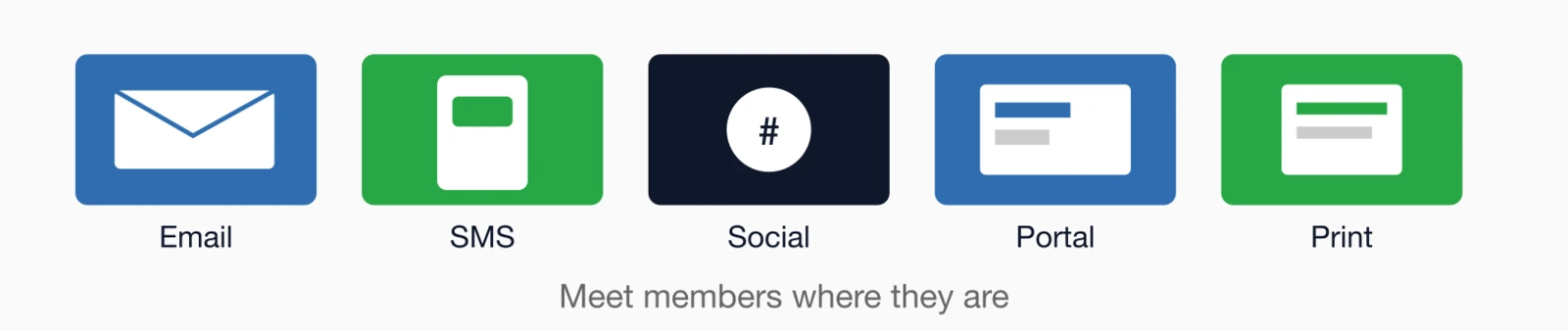
Communication channels to consider:
- Email newsletters - Your primary channel for detailed content
- Social media - Quick updates, engagement, and community building
- SMS/text messages - Time-sensitive or urgent communications
- Member portal - Announcements, resources, and personalized dashboards
- Print newsletters - Still valued by some demographics
- Mobile app push notifications - If you have a member app
- Direct mail - For special announcements or event invitations
- Phone calls - Personal touch for high-value communications
Channel-specific strategies: Tailor your message format to each channel. Social media should be brief and visual, emails can be longer and more detailed, text messages should be urgent and actionable.
Measure and optimize
You can't improve what you don't measure. Tracking your communication performance helps you understand what resonates with members and what falls flat. Robust analytics and reporting tools help you monitor email performance and make data-driven decisions about your content strategy.

Key metrics to monitor:
- Open rate - Percentage who open your emails (benchmark: 20-30%)
- Click-through rate - Percentage who click on links (benchmark: 2-5%)
- Unsubscribe rate - Should stay below 0.5%
- Bounce rate - Keep below 2% by maintaining clean lists
- Conversion rate - Percentage who complete desired action
- Engagement over time - Are members becoming more or less engaged?
Optimization tactics:
- A/B test subject lines, send times, and content formats
- Survey members about their communication preferences
- Review which content types get the most engagement
- Analyze unsubscribe feedback
- Benchmark against industry standards
Best Practice: Review your email analytics monthly and make incremental improvements. Small changes compound over time.
Respect member preferences and privacy
Give members control over their communication experience. When people can choose what they receive and how often, they're more likely to stay subscribed to what matters to them. This builds trust and reduces the all-or-nothing opt-outs that hurt your reach.
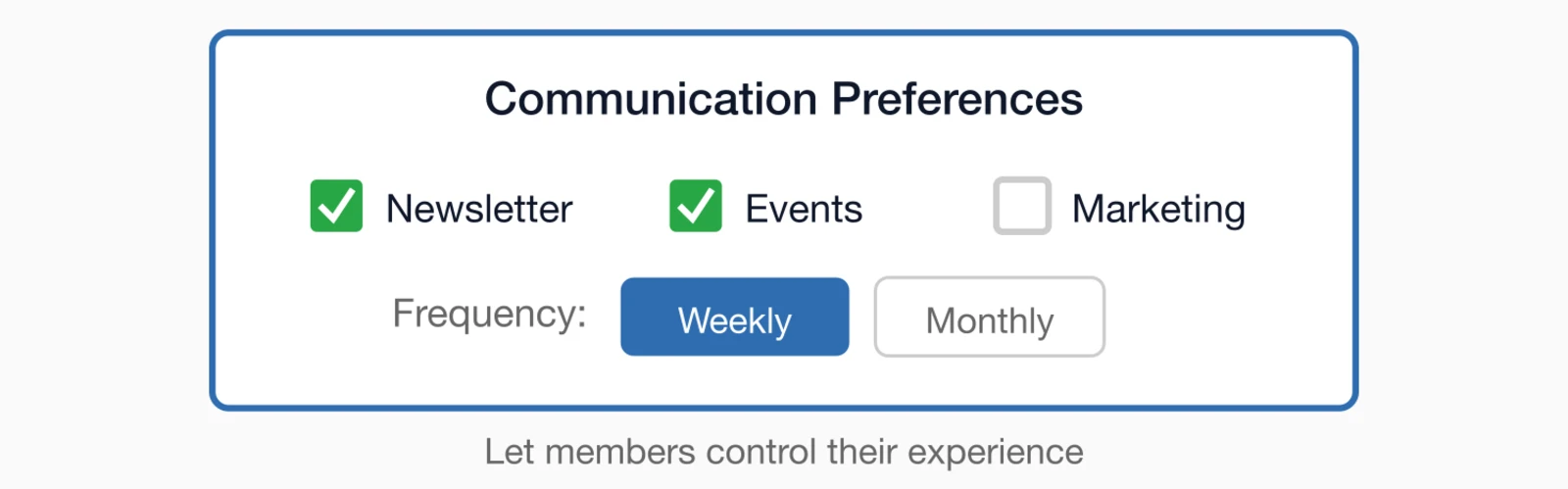
Preference management:
- Preference center - Let members choose what they receive
- Frequency options - Daily, weekly, or monthly digests
- Topic selection - Opt into specific content categories
- Easy unsubscribe - Make it simple, not hidden
- Partial opt-out - Unsubscribe from newsletters but keep event notifications
- Re-engagement campaigns - Before removing inactive subscribers entirely
Privacy and compliance:
- Comply with CAN-SPAM, GDPR, CCPA regulations
- Include physical mailing address in emails
- Honor opt-out requests immediately
- Secure member data properly
- Be transparent about data usage
Email content ideas for every newsletter
Staring at a blank email draft is one of the most common bottlenecks in member communications. Having a consistent framework makes it easier to produce quality content on schedule. Here's a versatile approach that works for most newsletters.
- Lead story - Main article or announcement (60% of content)
- Upcoming events - Next 2-3 events with registration links
- Member spotlight - Feature a member or success story
- Educational content - Tip, how-to, or industry insight
- Quick hits - 3-5 brief news items or resources
- Community highlights - Forum discussions, volunteer opportunities
- Partner offers - Relevant discounts or benefits
- Call to action - What you want members to do
Common communication mistakes to avoid

- Sending too frequently - Leads to email fatigue and unsubscribes
- Being too promotional - Every email shouldn't be a sales pitch
- One-size-fits-all messaging - Ignoring the power of segmentation
- Poor mobile experience - Not optimizing for smartphones
- Talking at members instead of with them - No opportunities for dialogue
- Inconsistent sending - Going silent for months then bombarding
- Neglecting deliverability - Letting your list quality degrade
- No clear purpose - Sending emails just to send something
- Ignoring analytics - Not learning from what works and what doesn't
Communication is your competitive advantage
In a crowded marketplace of organizations competing for attention and membership dollars, excellent communication sets you apart. It's how you demonstrate value, build relationships, and create community.
Key takeaways:
- Be consistent with timing and frequency
- Segment your audience for relevance
- Lead with value, not self-promotion
- Make content scannable and mobile-friendly
- Personalize beyond just using names
- Use multiple channels strategically
- Measure, test, and continuously improve
- Respect member preferences and privacy
Start by auditing your current communications. Are they consistent? Valuable? Relevant? Mobile-friendly? Use this article as a checklist and prioritize the biggest gaps first.
Remember: Every email, text, or social post is an opportunity to strengthen your relationship with members—or weaken it. Make every communication count.
Key takeaways
- Consistency beats frequency: Establish predictable communication schedules (weekly newsletter, monthly magazine, quarterly surveys) to build trust and expectations—erratic communication leads to unsubscribes and disengagement
- Segmented emails get 20-30% higher open rates: Send targeted messages based on member interests, tenure, engagement level, or location rather than blasting everyone with the same content
- Lead with member value, not org news: Focus 80% of content on what members gain (resources, insights, opportunities, connections) and only 20% on internal organizational updates
- 10 best practices: Consistent schedule, audience segmentation, value-first content, compelling subject lines (test A/B variants), skimmable design (headers, bullets, white space), clear CTAs, deep personalization, multi-channel approach, performance measurement, preference respect
Upgrade Your Member Communications
i4a's membership software includes powerful email marketing tools with segmentation, automation, and analytics—all integrated with your membership database so you can create, save, and reuse templates for targeted, personalized communications.
Let's Talk About Member CommunicationsRelated resources
Target the right members with the right messages.
Complete strategy guide for association email marketing.
Build engaged communities through communication and value.
Ensure members understand the value they're receiving.
