Quick Summary: Association Networking Events
- Connected members stay members: Members who build 3+ peer relationships renew at dramatically higher rates than isolated members.
- Structure beats "mingle freely": Speed networking, facilitated matching, and interest-based groups outperform unstructured cocktail hours every time.
- Lower the barrier for everyone: Introverts, newcomers, and underrepresented groups struggle with unstructured networking—designed formats ensure everyone connects.
- Peer roundtables build depth: Small ongoing groups create trusted advisory relationships that single events can't match.
- Virtual networking needs different design: What works in person fails online; use small groups, structured prompts, and frequent rotation.
Part of our Association Member Engagement Guide
Networking event ideas that work go beyond awkward cocktail hours. Members who build strong association connections renew at dramatically higher rates—but only when you design formats like speed networking, peer roundtables, and facilitated matching that help everyone connect.
After nearly 30 years working with associations, I've seen what makes networking events succeed or fail. The successful ones share common elements: they have structure, they reduce friction, and they focus on helping members find their people. The failures typically involve a room, a drink ticket, and a hope that connections will magically happen.
This guide covers networking formats that actually work—ideas you can implement at your next conference, chapter meeting, or as standalone events throughout the year.
Why networking matters for retention
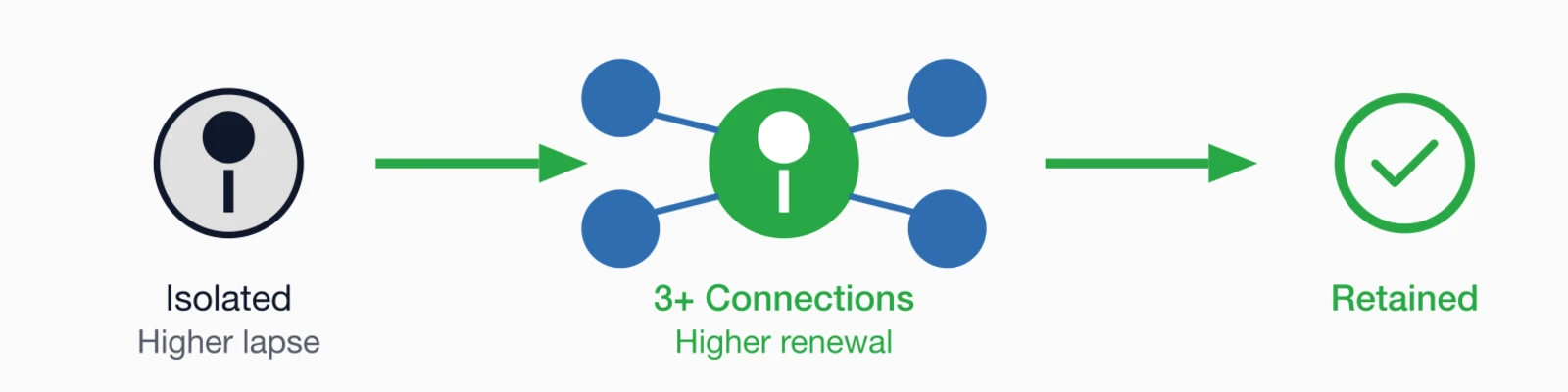
Member networking isn't just a nice benefit—it's a retention engine. Industry research shows 62% of associations are emphasizing networking opportunities as a key member benefit—and for good reason. Members who build relationships within the association are dramatically more likely to renew:
- Members with 3+ association contacts renew at significantly higher rates than isolated members
- Personal relationships create "switching costs" that generic benefits can't match
- Peer connections lead to greater involvement (committees, leadership, volunteering)
- Professional relationships extend the value of membership beyond formal benefits
The networking gap
Despite its importance, many members struggle to network effectively:
- Introverted members find unstructured networking exhausting
- New members don't know anyone and feel excluded from existing groups
- Members from underrepresented groups may feel less welcome approaching strangers
- Busy professionals can't justify time for networking that might not pay off
Your job as an association is to lower these barriers—to create formats where meaningful connections are likely, not just possible.
Speed networking
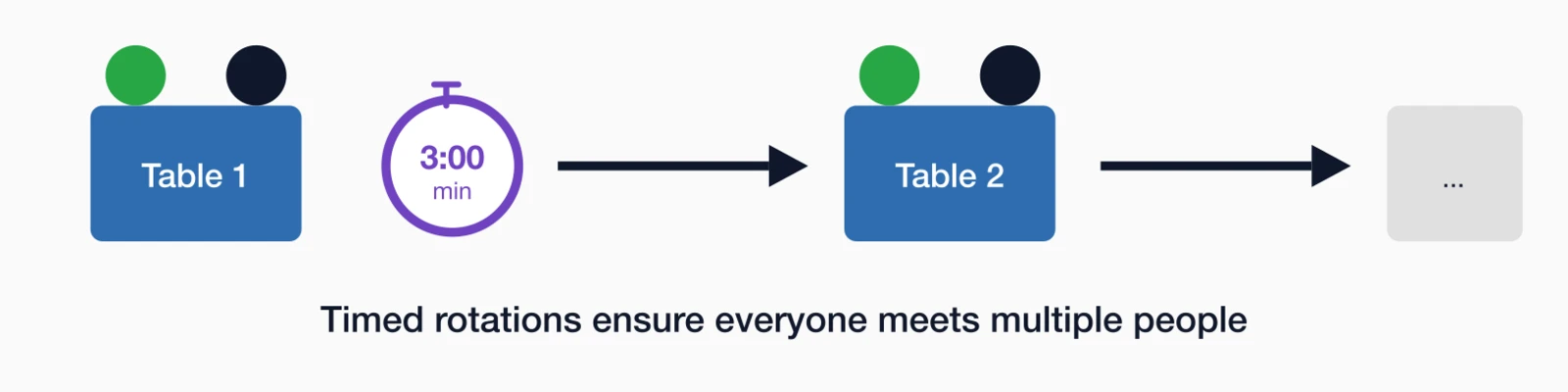
Speed networking has become one of the most effective structured networking formats for associations. The concept applies speed dating principles to professional introductions—members rotate through a series of timed one-on-one or small group conversations, ensuring everyone meets multiple people in a short period.
How it works
- Set up numbered tables or stations
- Assign members to starting positions
- Timer sounds (typically 3-5 minutes per rotation)
- Members introduce themselves and exchange key information
- Bell rings, designated group rotates to next station
- Repeat for 8-12 rotations
Why it works
- Everyone meets multiple people: No one leaves having talked to only their existing friends
- Built-in exit strategy: The bell removes awkward conversation endings
- Equal time: Extroverts can't dominate; everyone gets the same opportunities
- Low pressure: No connection? No problem—you're moving on in 3 minutes anyway
A deeper look: Speed networking variations
Basic speed networking is just the starting point. Enhance the format with these variations:
Themed rotations: Instead of generic introductions, each rotation has a prompt. "Tell your partner about your biggest professional challenge right now." "What's the best advice you've ever received?" Prompts create more substantive conversations than "so what do you do?"
Host tables: Stationary "hosts" at each table guide the conversation around a specific topic. Members rotate, but each table has a focus—regulatory changes, career development, technology trends. Members can prioritize tables based on their interests.
Pair-then-quad: Start with pairs for 3 minutes, then combine into foursomes for a 5-minute group discussion. The pair conversation warms people up before the group interaction.
Facilitated introductions
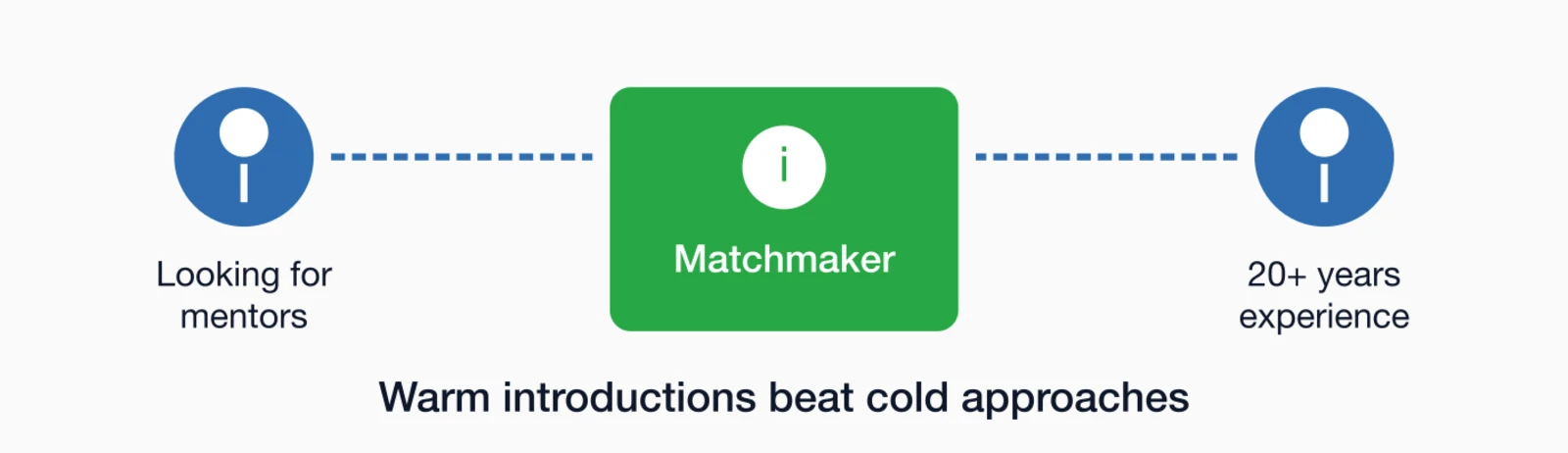
The most valuable networking connections rarely happen by chance. Facilitated introductions take the randomness out of networking by actively matching members based on their profiles, interests, and goals—turning what might be an awkward cold approach into a warm referral from a trusted source.
Pre-event matching
Use registration data to match attendees before the event:
- Collect interests, expertise, and what members are looking for during registration
- Use algorithms or staff judgment to identify compatible matches
- Email matches to attendees before the event: "You've been matched with these 3 people—here's why you should connect"
- Provide suggested meeting times and locations during the event
On-site matchmaking
Staff or volunteers actively make introductions during events:
- Trained "connectors" circulate and introduce compatible members
- Badge indicators (color dots, ribbons) signal interests or networking goals
- Designated "introduction zones" where staff make matches
Technology-enabled matching
Event apps can facilitate introductions:
- In-app profiles show who's attending and their interests
- AI matching suggests "people you should meet"
- In-app messaging allows members to schedule meetings
- Location features help members find each other: "Sarah Chen is in the exhibit hall"
The power of warm introductions: A connection made by a third party is far more likely to develop than a cold approach. Facilitated introductions convert awkward cold networking into warm referrals.
Interest-based groups

People connect more easily when they share specific interests or face similar challenges. Rather than hoping compatible members will find each other in a crowd, interest-based networking organizes connections around commonalities—giving attendees an immediate reason to talk and common ground to build on.
Group networking formats
- Birds of a Feather: Open sessions organized by topic—members self-select into discussions that interest them
- Career Stage Mixers: Separate sessions for early-career, mid-career, and senior professionals
- New Member Meetups: Dedicated networking for first-time attendees or new members
- Regional Gatherings: Connect members from the same geographic area
- Specialty Sessions: Networking within specific practice areas or specializations
Activity-based networking
Shared activities create natural conversation and reduce awkwardness:
- Networking walks/runs: Morning jogs or walks where conversation happens naturally
- Lunch groups: Pre-organized table assignments based on interests
- Game sessions: Trivia, puzzles, or collaborative games that create shared experience
- Service projects: Volunteer activities that bond members while doing good
- Tours and excursions: Local activities where members interact informally
A deeper look: Designing effective interest groups
The key to interest-based networking is specificity. "Healthcare professionals" is too broad. "Hospital administrators dealing with staffing challenges" is specific enough that attendees immediately have something to discuss.
Let members self-select into groups based on genuine interest, but provide enough structure that conversations go somewhere. A facilitator or discussion guide helps groups move beyond small talk. "What's everyone's biggest challenge with X?" gets more useful conversation than "introduce yourselves."
Cap group sizes to ensure everyone can participate—8-12 people for discussions, 15-20 maximum for broader networking. Larger groups become audiences rather than conversations.
Peer roundtables
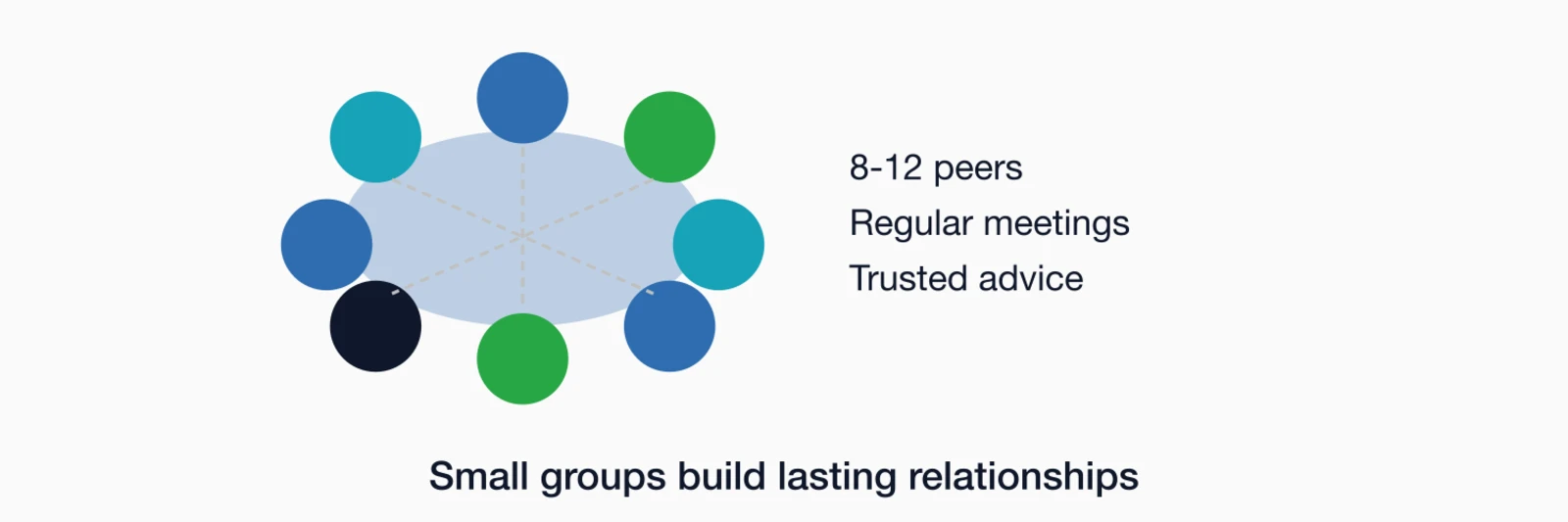
While networking events create initial connections, peer roundtables build the kind of lasting professional relationships that keep members engaged for years. These small groups of peers meet regularly to share challenges, advice, and support—creating a trusted advisory board for each participant.
Roundtable structure
- Group size: 8-12 members with similar roles or challenges
- Frequency: Monthly or quarterly meetings (virtual or in-person)
- Format: Each member shares a challenge; group provides feedback and suggestions
- Facilitation: Trained facilitator keeps discussion on track and ensures equal participation
- Confidentiality: What's discussed in roundtable stays in roundtable
Why roundtables work
Roundtables create the kind of relationships that single networking events can't:
- Regular interaction builds trust over time
- Members become true peers who understand each other's challenges
- The group becomes a trusted advisory board for each member
- Relationships often extend beyond formal roundtable meetings
Starting a roundtable program
- Identify cohorts: Group members by role, organization size, or shared challenge
- Recruit participants: Emphasize the value of peer learning and confidential discussion
- Train facilitators: Good facilitation is essential for roundtable success
- Set expectations: Commitment to attend, confidentiality, active participation
- Provide structure: Discussion formats, time allocation, follow-up accountability
- Measure outcomes: Track satisfaction, retention, and relationship formation
Mentorship matching

Mentorship programs represent one of the most valuable networking structures an association can offer. Unlike casual networking, mentorship creates structured, purposeful relationships between experienced and emerging professionals—connections that often last throughout entire careers and drive deep loyalty to the association that made them possible.
Program types
- Traditional 1:1: Senior mentor paired with junior mentee for extended relationship
- Group mentoring: One mentor meets with several mentees together
- Reverse mentoring: Junior members mentor seniors on technology, trends, perspectives
- Flash mentoring: Single-session advice conversations, no ongoing commitment
- Peer mentoring: Same-level professionals supporting each other
Matching criteria
Successful matches consider:
- Career goals and what the mentee wants to learn
- Mentor expertise and what they can teach
- Industry or specialty alignment
- Geographic proximity (if in-person meetings expected)
- Communication style and personality fit
- Availability and time commitment expectations
Hybrid networking
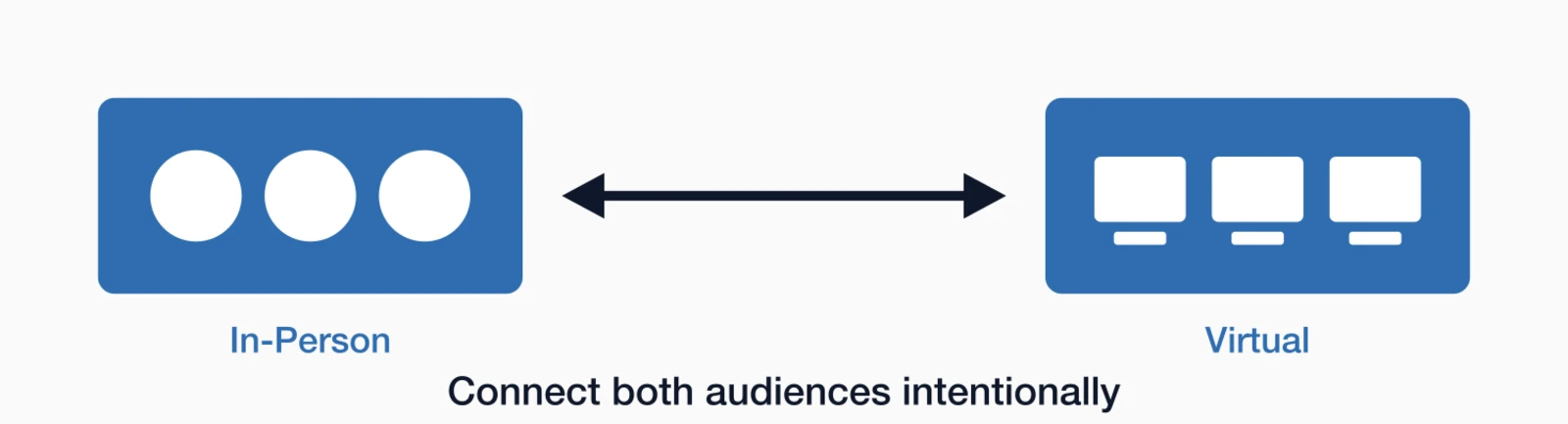
As associations embrace hybrid event models, facilitating networking between in-person and virtual attendees has become one of the greatest challenges. The two groups naturally operate in different modes—but with intentional design, you can create meaningful cross-platform connections that make virtual attendees feel like true participants rather than distant observers.
Hybrid networking strategies
- Separate, then connect: Run dedicated networking for each group, then create specific cross-group connection opportunities
- Virtual buddies: Pair remote attendees with in-person "hosts" who bring them into conversations
- Video networking tables: Physical tables with screens connecting to virtual attendees
- Async introductions: Use discussion boards or community platforms before/after synchronous networking
- Post-event connection: Connect in-person and virtual attendees after the event based on shared interests
What doesn't work
Avoid these common hybrid networking failures:
- Expecting virtual attendees to network with a room via a single camera
- Running identical formats for both audiences
- Forgetting virtual attendees during "networking breaks"
- Relying on chat for virtual attendee participation in primarily in-person events
Virtual networking
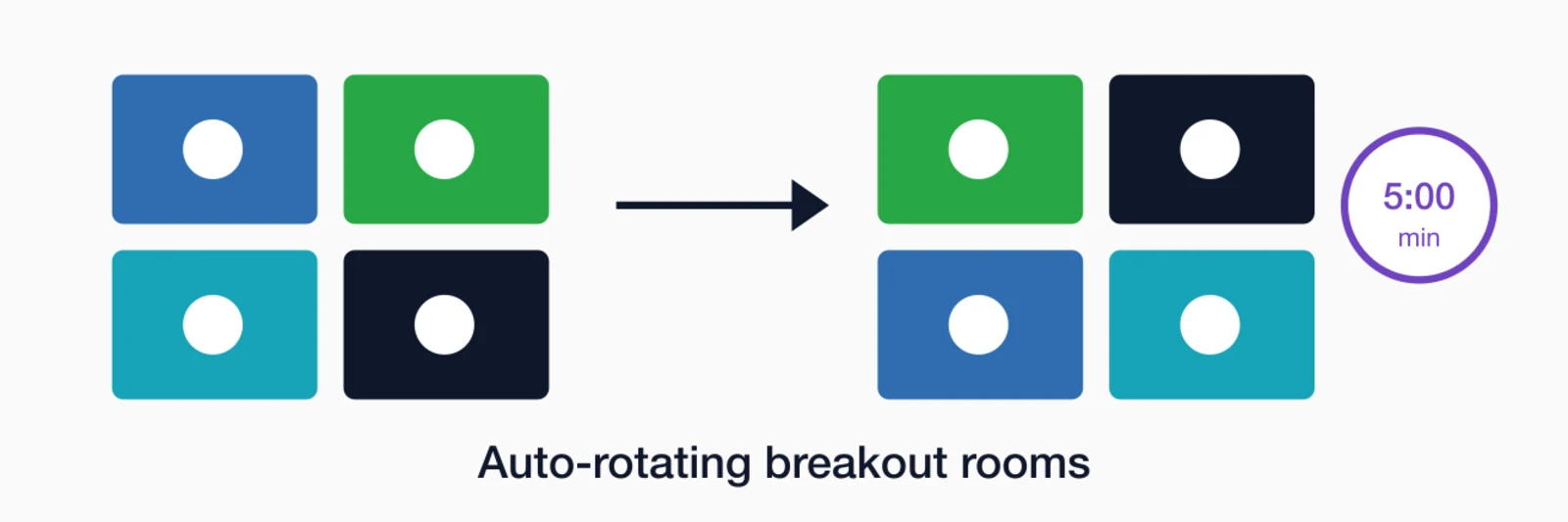
Virtual networking has evolved dramatically since the early days of awkward video calls. The casual hallway conversation doesn't happen naturally online—you have to intentionally design spaces and formats that replicate the serendipity of in-person encounters while taking advantage of the unique capabilities that virtual environments offer.
Effective virtual formats
- Video speed networking: Breakout rooms that automatically rotate participants
- Virtual coffee chats: Scheduled 1:1 video calls between matched members
- Discussion-based networking: Small group video discussions around specific topics
- Social hours with activities: Virtual trivia, games, or shared experiences that create conversation
- Walking meetings: Audio-only calls where both participants take walks
Virtual networking tools
Purpose-built platforms offer features standard video conferencing lacks:
- Spatial audio (move around a virtual room, voice volume changes with proximity)
- Video "tables" that participants can join and leave
- Automated breakout rotation for speed networking
- In-platform profiles showing attendee interests
- AI matching connecting compatible attendees
A deeper look: Making virtual networking feel less awkward
Virtual networking is inherently more awkward than in-person. Acknowledge this and design around it. Provide conversation prompts—people feel silly asking "so what do you do?" over video in a way they don't in person. Structured questions like "What's the best thing that's happened in your work this month?" give people something to say.
Keep video groups small. A 3-4 person video call allows conversation; a 10-person video call becomes presentations. Rotate frequently—virtual attention spans are shorter than in-person.
Give people an out. "You can leave any breakout room at any time and join another" reduces the pressure of being stuck in an uncomfortable conversation. This permission actually makes people more likely to engage—they know they're not trapped.
Help your members find their people
The best networking doesn't feel like networking—it feels like finding people who understand you, who can help you, and who you can help in return. Your job is to create conditions where those connections happen reliably.
Start by improving your existing events. Add structure to your next mixer. Try speed networking at your annual conference. Launch a pilot roundtable program. Measure what works with your specific membership.
The associations that do networking well don't leave it to chance. They invest in formats, facilitation, and technology that ensure members walk away with meaningful new connections every time.
For more on building member connections, explore our online forums guide and the complete Member Engagement Guide
Key takeaways
- Structure beats "mingle freely": Facilitated networking outperforms unstructured mixers every time
- Speed networking works: Timed rotations ensure everyone meets multiple people
- Common interests create connection: Group people by specialty, career stage, or challenge
- Peer roundtables add depth: Small ongoing groups build lasting professional relationships
- Virtual networking needs different design: What works in person fails online; adapt formats
Ready to Transform Your Networking Events?
i4a's event management and community features help you facilitate meaningful member connections at every event.
Explore Event FeaturesRelated resources
Make your directory a powerful networking tool.
Extend networking beyond events into online communities.
Complete guide to building engaged communities.
Event Registration Best Practices
Maximize attendance with better registration workflows.
