Quick Summary: Online Learning Revenue
- High margins after development: Online courses achieve 70–85% profit margins once initial production is complete.
- Multiple models work: Per-course purchase, subscriptions, CE credit sales, and corporate licensing each have strengths.
- CE credits drive demand: Courses with continuing education credits command premium pricing and higher enrollment.
- Start with existing content: Repurpose conference sessions and webinars before investing in new production.
- Subscriptions create stability: Annual all-access models build predictable recurring revenue from your catalog.
Part of our non-dues revenue guide
Online learning revenue offers high profit margins after initial course development—making e-learning one of the most scalable non-dues income streams for associations with educational content to share.
The good news: associations are uniquely positioned to succeed in e-learning. You have subject matter expertise, trusted content, and a captive audience of professionals who need continuing education. The challenge is building a sustainable revenue model around that content.
This guide covers how to create an online learning program that generates meaningful revenue while delivering genuine educational value to your members. Professional associations with CE requirements and medical associations offering CME credits are particularly well-positioned.
Why online learning drives revenue
Education consistently ranks among the most valued member benefits in association surveys—and when delivered online, it becomes one of the most profitable non-dues revenue streams available. Unlike in-person training that requires venue costs, travel coordination, and limited attendance capacity, online learning scales infinitely with minimal marginal costs. For associations already producing educational content, the shift to digital delivery transforms a service obligation into a revenue engine.

The economics of online learning
- High margins: After initial development, online courses can achieve strong profit margins with minimal ongoing costs
- Infinite scalability: No marginal cost for additional learners
- 24/7 availability: Courses generate revenue while you sleep
- Global reach: Serve members regardless of location or time zone
- Repurposable content: Conference sessions, webinars, and publications become courses
Why members pay for online learning
The economics of online learning have shifted from passive consumption to career-critical infrastructure. According to LinkedIn's Workplace Learning Report, career progression remains the primary driver for adult learners—and organizations with robust career development programs see significantly higher engagement and retention. For associations, this means your revenue strategy should focus on career pathways rather than standalone webinars.
- Career advancement: Skills and credentials that lead to promotions and opportunities
- Regulatory compliance: Required CE credits for license maintenance
- Convenience: Learn on their schedule without travel
- Trusted source: Association-provided education carries credibility
- Employer reimbursement: Many employers pay for professional development
E-learning revenue models
Choosing the right revenue model—or combination of models—can mean the difference between a profitable e-learning program and one that barely covers its costs. Associations can monetize online learning through several approaches, and most successful programs actually combine multiple models to maximize both revenue and reach. The right mix depends on your audience, content catalog size, and whether you're prioritizing predictable recurring revenue or maximizing per-transaction value.

Per-course purchase
The traditional per-course model offers the most straightforward path to e-learning revenue. Members pay individually for each course they want to take, creating a clear value exchange that works particularly well for specialized or advanced content where learners have specific needs. This approach requires ongoing marketing effort since each course must be sold separately, but it also allows premium pricing for high-value content.
- Example pricing: $50-$150 for basic courses, $200-$500 for certificate programs
- Member discount: 20-30% off non-member pricing is standard
- Best for: Associations with fewer than 20 courses or highly specialized content
Subscription/all-access model
Subscription models have transformed content businesses across industries, and e-learning is no exception. By offering unlimited access to your entire course catalog for an annual fee, you create predictable recurring revenue while encouraging members to engage more deeply with your educational offerings. This model works best when you have a substantial catalog—generally 20 or more courses—so subscribers feel they're getting real value for their investment.
- Example pricing: $200-$500/year for members, higher for non-members
- Catalog minimum: 20+ courses before subscription feels valuable
- Renewal rates: Well-run programs may see strong annual renewal
Bundled with membership
Rather than treating e-learning as a separate revenue stream, some associations include course access as part of the membership package. This approach strengthens your membership value proposition and can significantly improve retention—members who actively use educational benefits are far less likely to lapse. The trade-off? You won't see direct e-learning revenue, but you may be able to justify higher membership dues.
- Retention impact: Members who use e-learning benefits tend to renew at higher rates
- Dues justification: May support higher annual dues when value is clearly communicated
- Hybrid option: Include basic courses with membership, charge for premium/CE content
CE credit sales
For professions with continuing education requirements, separating content access from CE credit certification creates an interesting monetization opportunity. You can offer course content free or at low cost to maximize reach and engagement, then charge specifically for the assessment and CE credit documentation. This model works particularly well for recorded webinars and conference sessions where content is already available.
- Example pricing: $15-$50 per CE credit hour
- Conversion opportunity: Offer free previews to drive CE credit purchases
- Best for: Professions with mandatory CE requirements (healthcare, finance, legal)
Corporate/group licensing
Corporate licensing represents the highest-value segment of the e-learning market. Employers increasingly invest in workforce development, and associations offer trusted, industry-specific training that generic corporate learning platforms can't match. Selling bulk access to employers and training departments generates large upfront payments and often leads to multi-year contracts, though it typically requires dedicated sales effort and may involve custom content development.
- Example deal size: $5,000-$50,000+ depending on organization size
- Pricing model: Per-seat licensing or unlimited access tiers
- Sales cycle: 3-6 months; often tied to employer training budgets
Hybrid approach works best: Many associations offer a combination—subscription access for members (bundled with or discounted from membership), per-course purchase for non-members, and corporate licensing for employers. This maximizes both revenue and reach.
Content types and formats
Not all learning content is created equal, and understanding the full spectrum of formats available helps you build a catalog that serves diverse member needs. Effective e-learning programs offer variety in content types and delivery methods—from quick micro-learning modules that fit into a coffee break to comprehensive certificate programs that span months. The format you choose should match both the learning objectives and how your members prefer to consume content.
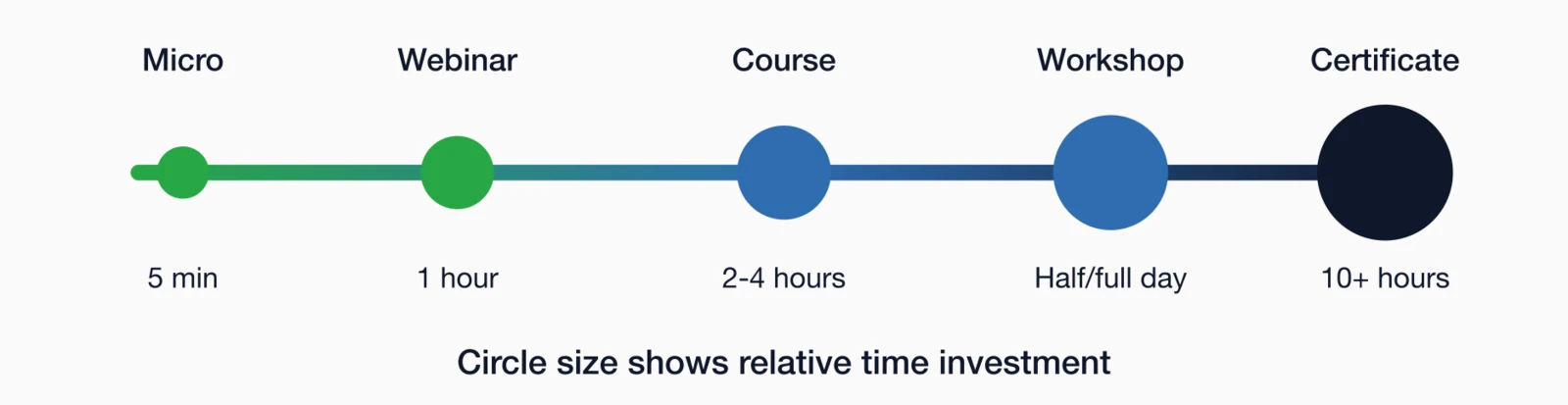
Self-paced courses
Pre-recorded content learners complete on their own schedule:
- Video lessons (10-20 minutes optimal)
- Interactive modules with knowledge checks
- Downloadable resources and worksheets
- Quizzes and assessments for CE credit
- Completion certificates
Live webinars
Real-time sessions with instructor interaction:
- Q&A and discussion opportunities
- Higher perceived value than recordings
- Creates urgency (attend live or miss it)
- Can be recorded and sold afterwards
- Example pricing: $25-$75 per session
Virtual workshops
Extended live sessions with hands-on activities:
- Half-day or full-day programs
- Small group breakouts and exercises
- Higher price points ($150-$500)
- Limited enrollment for quality interaction
Learning paths and programs
Curated course sequences toward specific outcomes:
- Certificate programs (3-10 courses)
- Skill-based learning tracks
- Certification preparation programs
- Bundle pricing increases per-learner revenue
Micro-learning
Bite-sized content for quick skill building. APA research on distributed practice shows that chunking content into smaller sessions leads to higher long-term retention—making micro-learning more effective for busy professionals:
- 5-15 minute modules on specific topics
- Just-in-time learning for immediate application
- Lower individual price, higher volume potential
- Stackable toward larger credentials
Pricing your online courses
Pricing e-learning content is both art and science. Set prices too high, and you limit enrollment and miss revenue potential. Price too low, and you undermine perceived value while leaving money on the table. The best pricing strategies reflect what the learning is actually worth to the learner—considering factors like career impact, CE credit requirements, and competitive alternatives—while ensuring your investment in content development generates appropriate returns.
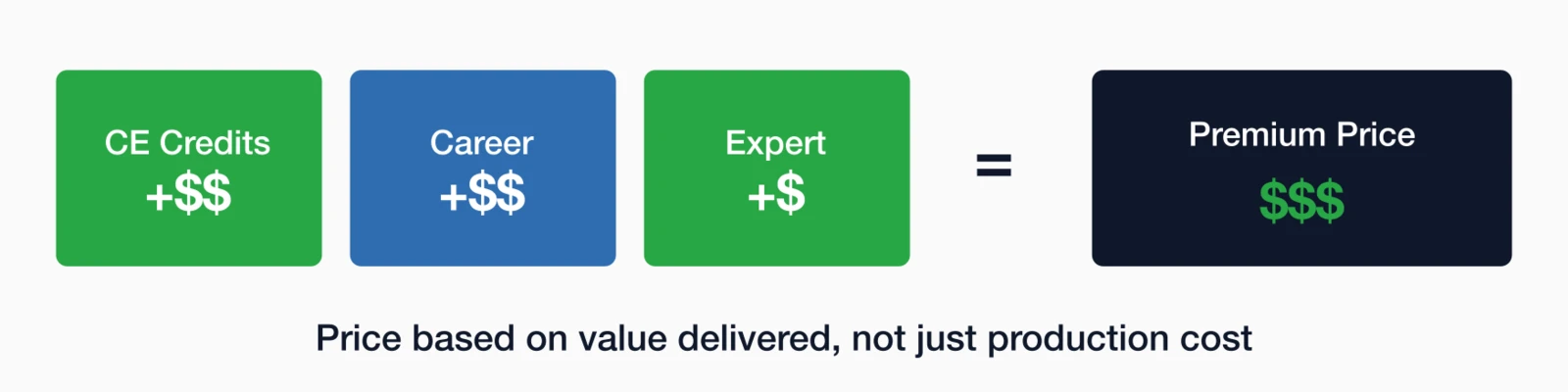
Pricing factors
- CE credit value: Courses with CE credits command premium pricing
- Career impact: Skills that lead to promotions or salary increases justify higher prices
- Content depth: Comprehensive courses warrant higher fees than overviews
- Instructor expertise: Recognized experts add pricing power
- Production quality: Professional video and interactivity support premium pricing
Sample pricing framework
| Content Type | Duration | Member Price | Non-Member |
|---|---|---|---|
| Recorded webinar | 1 hour | $25-$50 | $40-$75 |
| Live webinar | 1 hour | $35-$75 | $50-$100 |
| Self-paced course | 2-4 hours | $75-$150 | $100-$200 |
| Certificate program | 10-20 hours | $300-$600 | $400-$800 |
| Virtual workshop | Half day | $150-$300 | $200-$400 |
| Annual subscription | Unlimited | $200-$400 | $350-$600 |
To command the $300–$800 price points for certificate programs, the credential must be defensible. Aligning your e-learning with ANAB standards for certificate programs ensures that your assessment-based certificates carry the weight of a professional credential—distinguishing your association's high-value content from free, unverified online resources.
Member vs. non-member pricing
Differentiated pricing drives both revenue and membership:
- 20-40% member discount on individual courses
- Members-only access to certain content
- Free or included webinars as member benefit
- Subscription bundled with membership at premium tier
Content development strategies
Building an e-learning catalog from scratch can seem daunting—and expensive. The good news is that most associations are sitting on a goldmine of content that can be repurposed for online delivery. Smart content development strategies minimize upfront investment while maximizing catalog growth, allowing you to generate revenue quickly rather than waiting months for custom course development.

Start with existing content
Repurpose content you already have:
- Conference sessions: Edit recordings into on-demand courses
- Webinar archives: Package past webinars with CE credit
- Publications: Turn white papers and guides into video courses
- Expert presentations: Record presentations from industry experts
SME partnership model
Partner with subject matter experts to create content:
- Revenue share (50/50 or 60/40 to SME)
- Flat fee for content development ($1,000-$5,000)
- In-kind exchange (conference speaking, recognition)
- Member volunteers with industry expertise
Production options
- DIY production: Basic video with slides, $500-$2,000 per course
- Moderate production: Professional editing, graphics, $2,000-$5,000
- High production: Studio video, animations, interactive elements, $5,000-$25,000
Production tip: Start simple. A well-organized screen recording with good audio often outperforms overproduced content. Focus on content quality first—you can upgrade production values as revenue grows.
Technology platform options
The technology you choose to deliver online learning shapes every aspect of your program—from how easy it is for members to access courses to how efficiently you can track CE credits and process payments. Your learning platform decision impacts learner experience, administrative overhead, and how e-learning integrates with your existing membership data and systems. Integrated platforms offer convenience, while standalone LMS solutions may provide specialized features worth the extra integration effort. Many AMS providers also offer integration options with popular LMS platforms, allowing you to maintain single sign-on and member pricing even with a separate learning system.
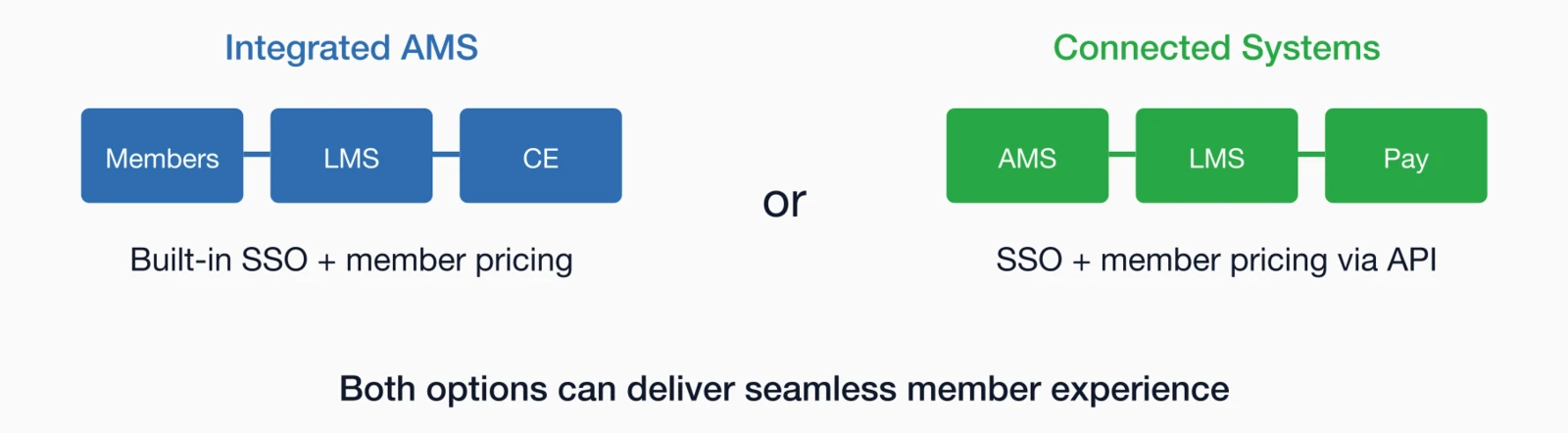
Key platform features
- Course authoring: Easy content upload and organization
- Assessment tools: Quizzes, exams, and completion tracking
- CE credit management: Track and report continuing education
- Payment processing: Handle course purchases and subscriptions
- Mobile access: Learning on phones and tablets
- Reporting: Enrollment, completion, and revenue analytics
Platform options
- Integrated AMS: Learning management within your association management software for unified member experience
- Standalone LMS: Dedicated learning platforms designed for course creators and small organizations
- Enterprise LMS: Full-featured systems for larger programs with advanced reporting and compliance features
- Webinar platforms: Live session tools integrated with recording storage
Integration considerations
Integration with your membership database enables:
- Single sign-on for member access
- Automatic member pricing application
- CE credit tracking in member records
- Unified reporting across membership and learning
Marketing your e-learning
You can build the best online courses in your industry, but without effective marketing, they'll sit unused in your catalog. Many associations make the mistake of promoting courses heavily at launch, then letting marketing fade as attention shifts elsewhere. The most successful e‑learning programs treat marketing as an ongoing discipline—consistently promoting content, highlighting learner success stories, and connecting courses to members' immediate professional needs.
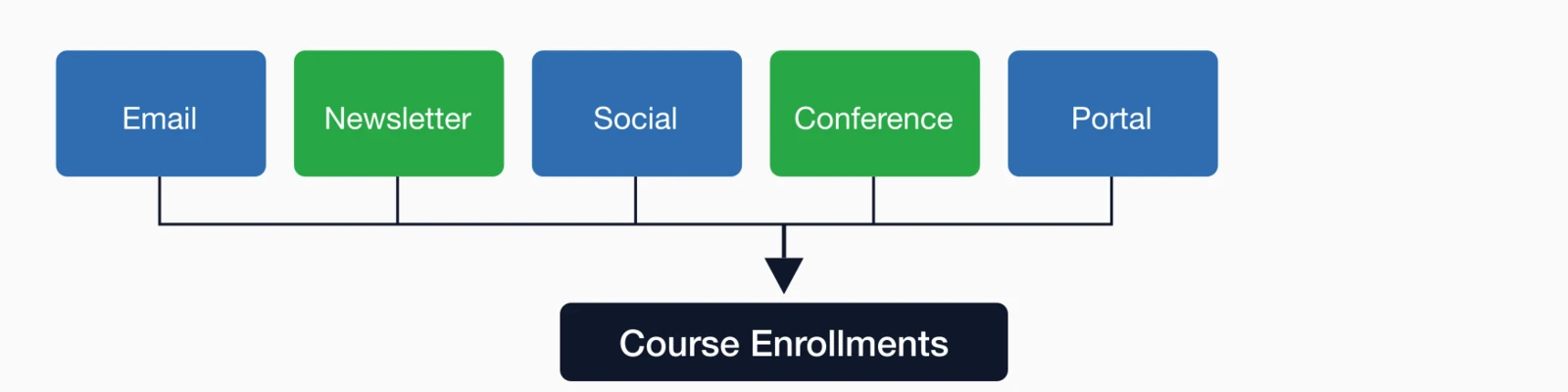
Marketing channels
- Email campaigns: Regular learning updates to member list
- Newsletter features: Highlight new courses and learning opportunities
- Social media: Share course previews and learner testimonials
- Conference promotion: Promote online versions of in-person content
- Member portal: Featured learning on member dashboard
Promotional tactics
- Early bird pricing: Discount for early registration
- Bundle promotions: Discount when purchasing multiple courses
- Free previews: Sample lessons to demonstrate value
- CE deadlines: Reminder campaigns before recertification deadlines
- Group discounts: Encourage team purchases
Content marketing for learning
- Blog posts that lead to related courses
- Free webinars that promote paid programs
- Skill assessment tools that recommend courses
- Career path guides featuring relevant learning
Best practices for success
After working with associations on e-learning programs for years, clear patterns emerge around what separates thriving programs from those that struggle. Successful e-learning initiatives share common characteristics—they start focused rather than trying to do everything at once, they prioritize learner experience over flashy production values, and they continuously measure and improve based on actual data rather than assumptions.

Start small, scale strategically
- Launch with 5-10 courses before building full catalog
- Test demand before investing in production
- Build on what works, retire what doesn't
- Add new content consistently (2-4 courses/quarter)
Prioritize learner experience
- Mobile-friendly design for on-the-go learning
- Clear navigation and progress tracking
- Accessible content for all learners
- Responsive technical support
Measure and improve
- Track completion rates and identify drop-off points
- Gather learner feedback systematically
- Monitor course ratings and reviews
- Analyze revenue per course to guide investment
Connect learning to career outcomes
- Tie courses to certification requirements
- Highlight career impact in marketing
- Include practical applications and job aids
- Feature success stories from learners
Common pitfall: Don't build an extensive course catalog before validating demand. Start with courses addressing known member needs, measure results, and expand based on data rather than assumptions.
Build a sustainable e-learning revenue stream
Online learning is a natural extension of your association's education mission—and a significant revenue opportunity. By starting with existing content, choosing the right revenue model, and continuously improving based on learner feedback, you can build an e-learning program that generates meaningful income while delivering genuine value to members.
Key takeaways:
- Start by repurposing existing content (conference recordings, webinars)
- Offer CE credits to significantly increase demand and pricing power
- Use member/non-member pricing differentials to drive membership value
- Consider subscription models for predictable recurring revenue
- Integrate learning with your AMS for seamless member experience
- Market continuously, not just at launch
For more non-dues revenue strategies, explore our complete Non-Dues Revenue Guide or learn about related opportunities like certification programs and content monetization.
Key takeaways
- High margins after development: Online courses can achieve strong margins once created, with minimal per-learner costs
- Subscription models provide stability: Annual learning subscriptions create predictable revenue
- Start with existing content: Repurpose conference sessions and webinars before creating new courses
- CE credit drives demand: Courses offering continuing education credits sell significantly better
- Member pricing creates value: Discounted access for members drives membership retention
Ready to Launch or Grow Your E-Learning Program?
i4a's association management platform integrates learning management with membership, events, and CE tracking for seamless member education experiences.
Discuss Your E-Learning StrategyRelated resources
10 Non-Dues Revenue Ideas for Associations
Complete guide to diversifying your association's revenue streams.
Certification & Credentialing Revenue
Build profitable professional certification programs.
Sponsorship Packages for Associations
Design tiered sponsorship programs that attract corporate partners.
Publication & Content Monetization
Turn association expertise into revenue.
