Quick Summary: Professional Association Renewals
- Individual members renew differently: Personal budget constraints, employer reimbursement status, and competing memberships all affect renewal decisions—generic campaigns miss these dynamics.
- Start 90 days out with value, not asks: Begin with value reinforcement, then transition to renewal requests at 60 days and urgency at 30 days—starting late means the decision is already made.
- Personalize by actual usage: "You earned 24 CE credits worth $340" outperforms "Your membership is expiring"—your AMS should track and reference specific benefits accessed.
- Auto-renewal lifts retention 15-20%: Make it the default where allowed, notify before charging, and implement failed payment recovery with automated retries and card updater services.
- First-year members need extra attention: They carry the highest churn risk and deserve dedicated renewal campaigns, not the same sequence as 10-year loyal members.
Part of our complete membership retention guide
Professional association renewals require different tactics than organizational memberships—personal budgets, employer reimbursement, and competing memberships all affect decisions. This 90-day renewal sequence drives stronger retention rates.
Here's an opportunity most associations are missing: Sending the same three generic renewal emails to every member, regardless of whether they've attended 10 events or zero. When your renewal rate is stuck at 75%, personalization is often the unlock. You're asking someone to re-commit to a $300-$500 expense — showing them the specific value they received makes that decision much easier.
This guide focuses on strategies specifically tailored for professional associations seeking to maximize individual member renewals.
Understanding professional member dynamics
Professional associations serving individual members operate in a fundamentally different renewal environment than trade associations with organizational members. When the renewal decision is personal—coming out of someone's own budget rather than an employer's—the calculus changes completely. Understanding these dynamics is the first step toward building renewal campaigns that actually work.
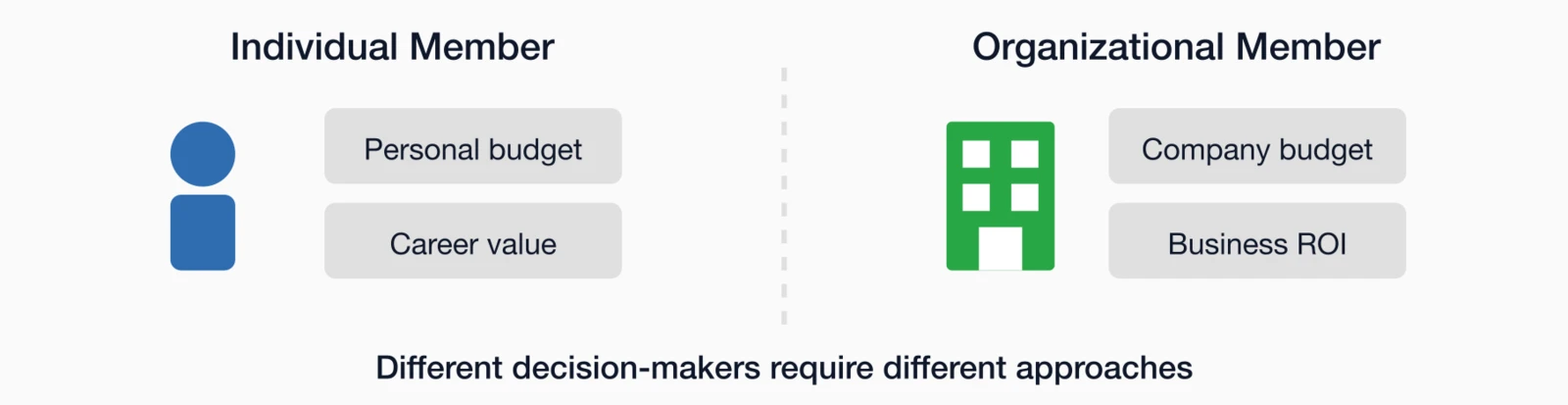
Key individual member considerations
- Personal wallet: Many professionals pay dues themselves, making price sensitivity higher
- Career stage matters: Young professionals have different needs and budgets than senior executives
- Employer involvement: Some employers reimburse; some don't. Track this for messaging
- Competing memberships: Professionals may belong to multiple associations and have to prioritize
- Life changes impact: Job loss, career change, parental leave all affect renewal decisions
Optimal renewal timing
Timing is everything in renewal campaigns, and most professional associations start too late. By the time you send that first email 30 days before expiration, many members have already mentally moved on. The best-performing associations begin their renewal outreach much earlier, building value awareness before the ask for payment ever arrives.
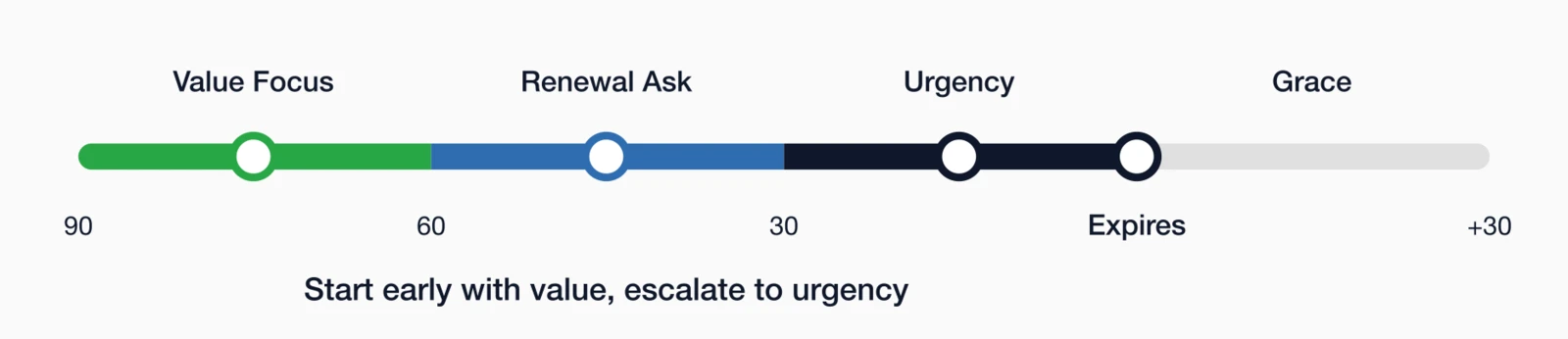
Why 90 days works for professionals
- Gives time for employer reimbursement requests
- Allows budget planning for self-payers
- Enables multiple touchpoints without feeling rushed
- Catches members before vacation/busy seasons
Renewal Rate Revenue Calculator
See the revenue impact of improving your renewal rate:
A 7% renewal improvement on 1,000 members = $24,500 additional revenue — often achievable through better timing and personalization alone.
Real Talk: Your Renewal Emails Are Too Late
Many associations start their renewal outreach 30 days before expiration. By then, half your members have already mentally decided — you're just confirming their choice, not influencing it.
The associations with 85%+ renewal rates start 90 days out with value reinforcement, then layer on urgency as expiration approaches. You can't create urgency if you never built the value foundation first.
Effective renewal messaging
The words you use in renewal communications matter more than most associations realize. Generic "your membership is expiring" notices get lost in crowded inboxes. But personalized messages that remind members of specific value they've received—events attended, credits earned, resources downloaded—create an entirely different response. Crafting effective renewal messaging isn't about pressure; it's about connection.
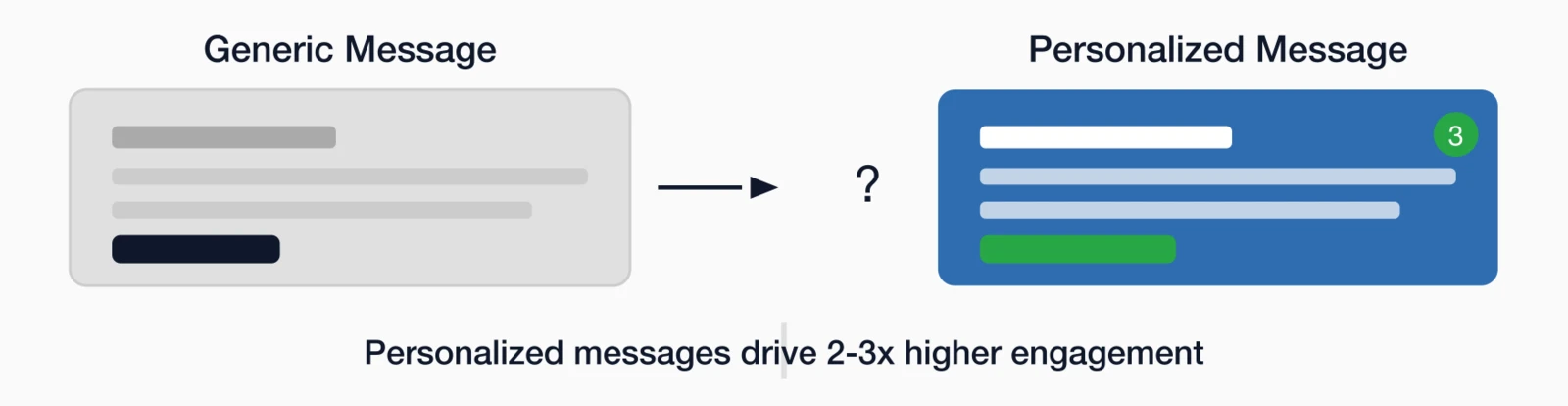
Personalization elements

Your membership platform should track and enable personalization based on:
- Benefits actually used: "This year you accessed 12 CE credits, attended 3 webinars, and downloaded 8 resources"
- Career stage: Different messaging for students, early career, and senior professionals
- Engagement level: High-engagement members get reinforcement; low-engagement get re-engagement messaging
- Member tenure: "Thank you for 7 years of membership" resonates differently than first-year messaging
Value-forward approach
Lead with value received, not renewal action requested:
Instead of: "Your membership expires on March 15. Click here to renew."
Try: "This year your SHRM membership gave you 24 SHRM-CP credits, saved you $340 on the Annual Conference, and provided exclusive access to our salary benchmarking tool. Keep these benefits — renew today."
Professional renewals aren't just a transaction—they're a psychological event. Research published in the ACR Journal
Loss aversion messaging

As expiration approaches, shift to what they'll lose:
- "Your credential will lapse in 14 days"
- "You'll lose access to the member directory and job board"
- "Member pricing for the Annual Conference expires with your membership"
Effective renewal messaging leverages the Endowment Effect
Multi-channel renewal approach
Email is the backbone of most renewal campaigns, but relying on email alone leaves significant renewals on the table. Professional members have overflowing inboxes, and even well-crafted renewal messages can get lost. The associations with the highest renewal rates use multiple channels strategically—email, direct mail, personal calls, and text messages—each playing a specific role in the renewal journey.
Relying on a single communication channel is a high-risk strategy for individual renewals. MGI's 2025 Membership Marketing Benchmarking Report
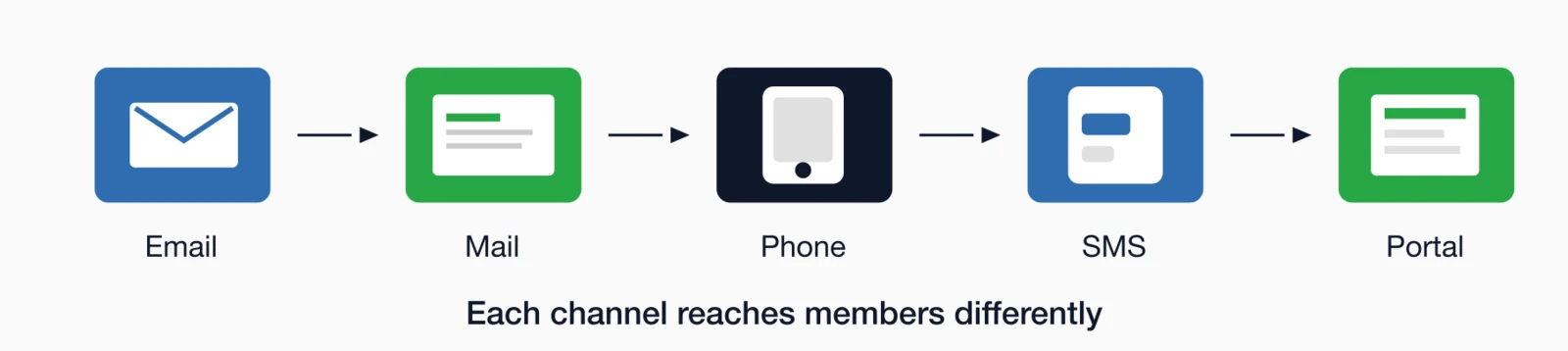
| Channel | When to Use | Best Practices |
|---|---|---|
| Primary channel throughout | 4-6 emails across the renewal period; vary subject lines | |
| Direct Mail | 30 days out + for non-responders | Physical invoice or renewal card; stands out from digital |
| Phone/Personal | High-value or at-risk members | Volunteer leader calls can be highly effective |
| SMS/Text | Final reminder (with consent) | Short, urgent, link to mobile-optimized renewal |
| In-App/Portal | When they log in | Banner or modal prompting renewal action |
Auto-renewal best practices
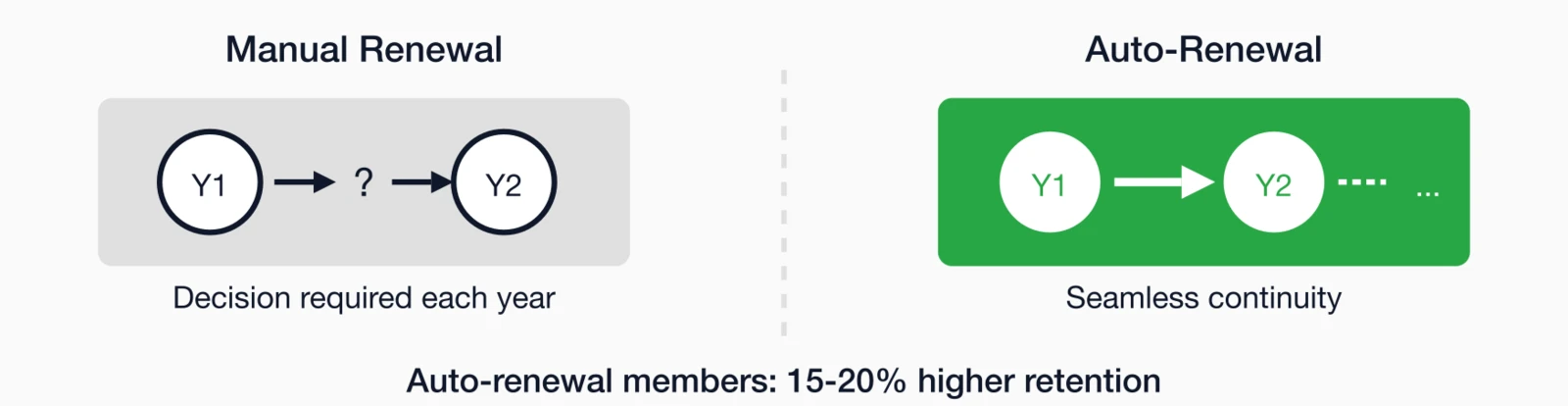
If there's one tactical change that consistently moves the needle on retention, it's auto-renewal. When members opt into automatic renewal, they're making a decision once rather than every year—and that removes the friction that causes many lapsed memberships. Members on auto-renewal typically show 15-20% higher retention rates than those who manually renew. The key is implementing it thoughtfully, with transparency and easy cancellation options.
Implementing auto-renewal
- Make it the default: Opt-out auto-renewal (where allowed) performs better than opt-in
- Clear communication: Transparency about what they're signing up for builds trust
- Pre-renewal notification: Always notify before charging; give easy cancellation option
- Payment method updates: Proactively request updated cards before expiration
Handling failed payments

Credit card failures are a leading cause of unintentional churn. Your system should:
- Retry the charge automatically (within card network rules)
- Notify the member immediately of failure
- Provide easy payment update link
- Use account updater services to get new card numbers automatically
For more on handling payment failures, see our guide on reducing membership churn
Segmenting your renewal campaigns
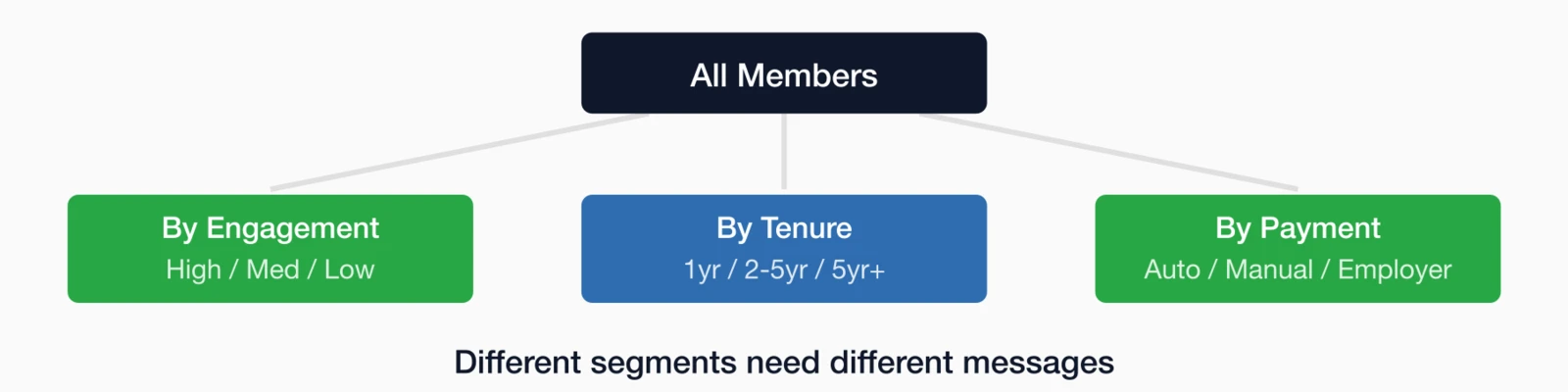
Sending the same renewal email to every member is one of the most common mistakes in membership retention. A first-year member who hasn't engaged needs a completely different message than a 10-year member who attends every event. Segmentation—dividing your renewal outreach based on member characteristics and behavior—allows you to speak to each member's actual situation rather than treating everyone the same.
By engagement level
- High engagement: Thank them, reinforce value, make renewal easy
- Moderate engagement: Highlight what they may have missed
- Low engagement: Re-education on benefits; consider personal outreach
By member tenure
- First-year members: Critical cohort with highest churn risk; extra attention needed
- 2-5 year members: Established value; reinforce and appreciate
- Long-tenured (5+ years): Celebrate loyalty; legacy messaging
By payment method
- Auto-renewal: Light-touch notification; ensure card is current
- Self-pay: Full renewal campaign sequence
- Employer-paid: May need employer-focused messaging and longer lead time
Pro Tip: First-year members deserve their own dedicated renewal campaign with enhanced onboarding check-ins throughout the year. See our new member onboarding guide
Payment options that boost renewals
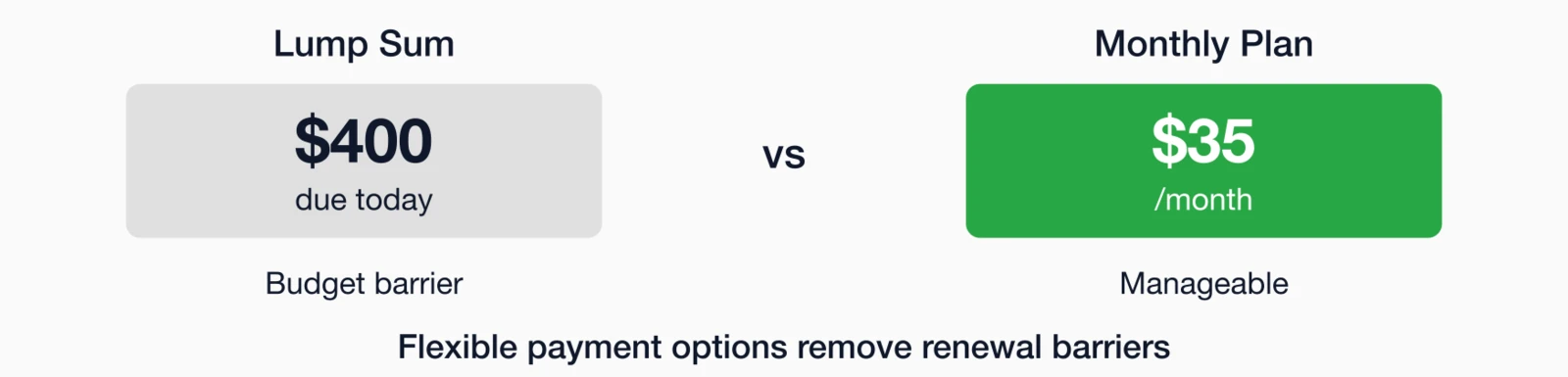
Sometimes the barrier to renewal isn't lack of perceived value—it's payment friction. A member who wants to renew but encounters a clunky checkout process, limited payment options, or an unaffordable lump-sum bill may simply give up. Removing these barriers is often the fastest way to capture renewals you're currently losing.
Payment plan options
Monthly or quarterly payment plans significantly boost renewal rates for budget-conscious professionals. Members who might balk at $400 annual dues may happily pay $35/month.
Multiple payment methods
- Credit/debit cards
- ACH/bank transfer
- Digital wallets
- Mobile payment options
- Invoice for employer reimbursement
Early renewal incentives
- Small discount for renewing 60+ days early
- Entry into prize drawing for early renewers
- Exclusive early-bird content or event access
The Payment Plan Dilemma
Payment plans are proven to boost renewals — but if your AMS charges per-member, offering monthly payment plans can actually hurt your margins. Here's the math: A $300 annual dues member paying monthly might cost you $36-60/year in per-contact fees. That's 12-20% of their dues going to your AMS instead of your programs.
Some associations avoid payment plans entirely because the economics don't work with per-contact AMS pricing. That's letting your technology constrain your retention strategy.
i4a uses flat-rate pricing with unlimited members. Offer monthly plans. Keep members on grace period without worrying about extra fees. Your retention strategy should never be limited by your software pricing model.
Putting it together
To optimize your professional association's renewal process:
- Start early: Begin at 90 days with value-focused messaging
- Personalize: Use member engagement data to customize messaging
- Go multi-channel: Email + direct mail + personal touches
- Push auto-renewal: Make it easy and the default when possible
- Segment strategically: Different campaigns for different member types
- Remove payment friction: Multiple methods, payment plans, mobile-optimized
For automation strategies that make this scalable, see our guide on automating membership renewals, and for comprehensive retention strategy, see our Membership Retention Guide
Want to streamline your renewal process? Talk to us
Key takeaways
- Start early: Begin renewal outreach 90 days before expiration for best results
- Personalize by value used: Reference specific benefits each member actually accessed
- Offer auto-renewal: Members on auto-renewal have 15-20% higher retention
- Multi-channel approach: Email + direct mail + personal outreach for high-value members
- Automate the sequence through your membership platform for consistency
Automate Your Renewal Process
i4a's professional association software automates renewal reminders, payment processing, and member communications—helping you boost retention with less manual work.
Learn MoreRelated resources
Complete 2026 strategy guide.
Complete automation guide.
90-day onboarding framework.
Duration and access policies.
