Quick Summary: Member Community Building
- Connected members renew more: Members with strong peer connections renew at dramatically higher rates than isolated ones.
- Shift to community mindset: Value member-to-member relationships over organization-to-member transactions.
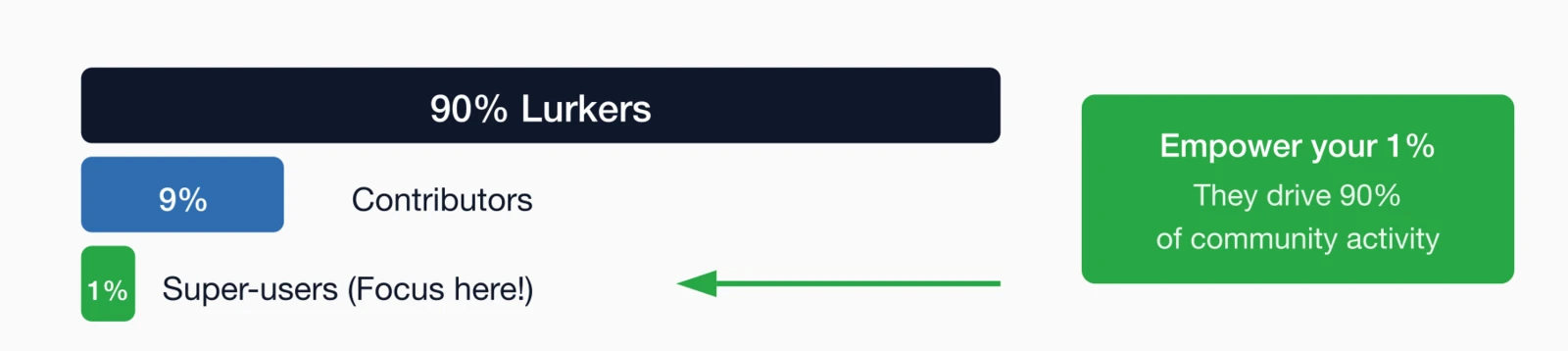
- Empower your superusers: The 1% of active contributors drive 90% of community activity—support and celebrate them.
- Offer diverse engagement formats: Large events, small groups, online forums, and one-on-one connections serve different preferences.
Part of our complete member engagement guide
Member community strategies transform passive members into engaged advocates—connected members renew at dramatically higher rates than isolated ones. Here's how to build belonging, not just membership.
Yet too many associations treat membership as a transaction: pay your dues, get your benefits, renew next year. This transactional mindset misses the fundamental truth about what makes associations successful.
You are not a membership list. You are a community.
The difference matters more than you think. Communities foster belonging, create peer-to-peer connections, and generate value that extends far beyond any single benefit or service. When you embrace your role as a community builder rather than just a membership manager, everything changes—from retention rates to member satisfaction to organizational growth.
This guide explores proven strategies for building a vibrant member community—whether you're running a professional association, trade organization, nonprofit, or membership-based business.
Why community matters more than ever
In an increasingly digital and fragmented world, the human need for belonging and connection hasn't diminished—it's intensified. Members have countless options for professional development, industry news, and networking. What keeps them loyal isn't just your content or events—it's the relationships they build with peers who understand their challenges.
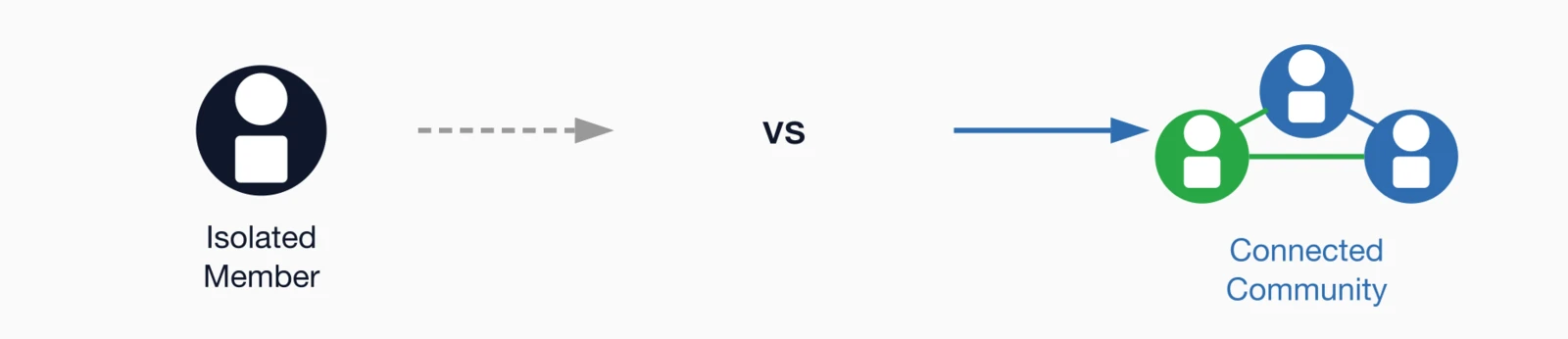
The business case for community is compelling: According to the MGI 2025 Association Outlook Report
- Higher retention rates: Members with strong community connections tend to renew at far higher rates than those who feel disconnected
- Increased engagement: Community members attend more events, consume more content, and participate more actively
- Member advocacy: Engaged community members become your best recruiters, referring new members organically
- Valuable feedback: Active communities provide insights that help you improve your offerings
- Non-dues revenue: Engaged members spend more on events, certifications, and additional services
- Organizational resilience: Strong communities weather challenges better and adapt faster
Key Insight: One thing I tell association leaders all the time: your organization doesn't create community—you facilitate the conditions for community to emerge. Your role is to remove barriers, create opportunities, and empower members to connect with each other.
The community mindset shift
The first step toward building a thriving community is changing how you think about your members and your role. This isn't just semantics—how you frame the relationship shapes every decision you make, from communications to event design to the metrics you track.
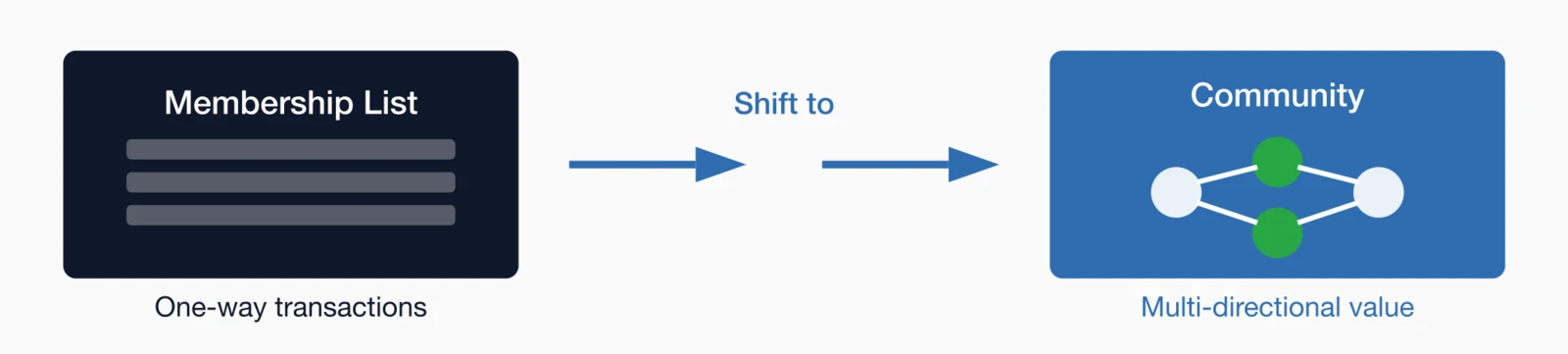
Membership List Thinking:
- Members are customers who pay for services
- Success is measured in renewal rates and transaction volume
- Communications are one-way broadcasts
- Value comes from what the association provides
- Relationships are vertical (member to association)
Community Thinking:
- Members are participants who contribute to collective success
- Success is measured in engagement, connections, and shared value
- Communications are multi-directional conversations
- Value comes from member-to-member connections and shared experiences
- Relationships are horizontal (member to member) and facilitated by the association
Pro Tip: Review your communications from the past month. Count how many were broadcasts versus conversations, how many featured member stories versus association news. This ratio reveals whether you're operating as a membership list or a community.
Define your community purpose and identity
In my experience, the strongest communities start with clarity on what brings people together. Communities coalesce around shared identity, shared challenges, or shared aspirations—and understanding which one applies to your members shapes everything else.
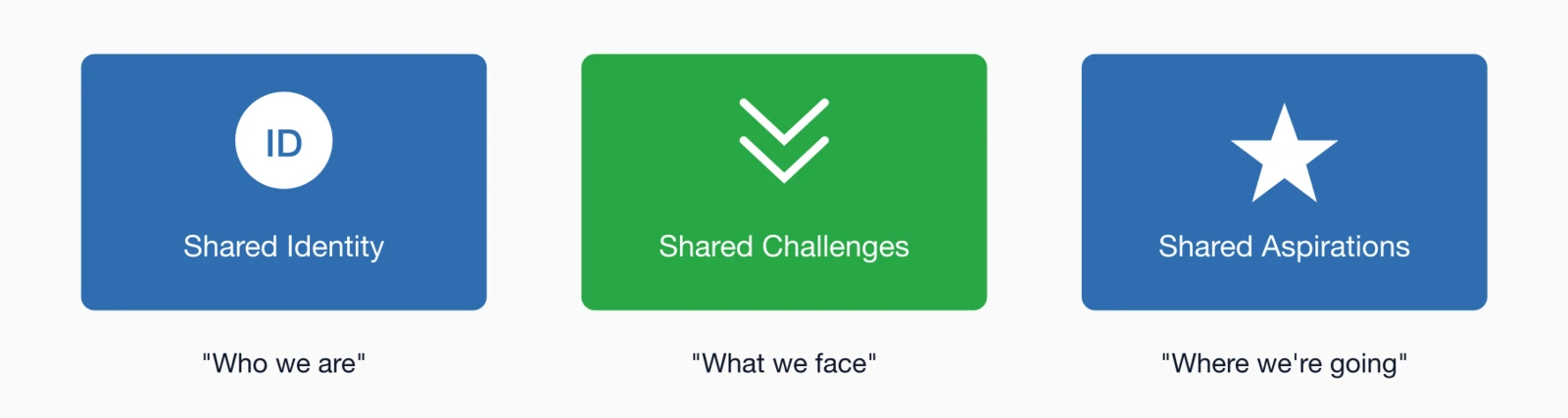
Questions to answer:
- What do our members have in common beyond their membership?
- What challenges do they face that we can help them solve together?
- What aspirations or goals unite them?
- What values does our community stand for?
- How do we want members to feel when they're part of our community?
Create a community value proposition:
Articulate why someone should engage with your community, not just your organization. For example:
- "Connect with 5,000+ healthcare administrators facing the same challenges you are"
- "Learn from peers who've successfully navigated the issues you're dealing with today"
- "Build relationships that advance your career and expand your professional network"
Pro Tip: Survey your most engaged members to understand what they value most about your community. Their insights will help you articulate and amplify what's already working.
Create diverse engagement opportunities
Not all members engage the same way. Some thrive in large networking events, others prefer intimate roundtables. Some are active online, others only engage in person. A one-size-fits-all approach will engage some members well and miss others entirely.

Offer a mix of engagement formats:
- Large-scale events: Annual conferences, regional summits, webinars (low barrier, broad appeal)
- Small group discussions: Roundtables, mastermind groups, peer circles (high value, deeper connections)
- One-on-one connections: Mentorship programs, coffee chats, peer matching (personalized, relationship-focused)
- Online forums: Discussion boards, real-time chat channels, social media groups (asynchronous, convenient)
- Special interest groups: Committees, task forces, affinity groups (common interests or demographics)
- Social gatherings: Happy hours, dinners, recreational activities (relationship-building, informal)
Consider different engagement depths:
- Passive consumption: Reading newsletters, watching recorded webinars (easy entry point)
- Active participation: Attending live events, joining discussions (moderate commitment)
- Contribution: Answering questions, sharing resources, mentoring (higher investment)
- Leadership: Leading groups, organizing events, serving on boards (deepest engagement)
Create clear pathways for members to progress from passive to active to leadership roles.
Facilitate peer-to-peer connections
The strongest communities are built on member-to-member relationships, not just member-to-organization relationships. Your job is to make it easy for members to find and connect with each other—then get out of the way.
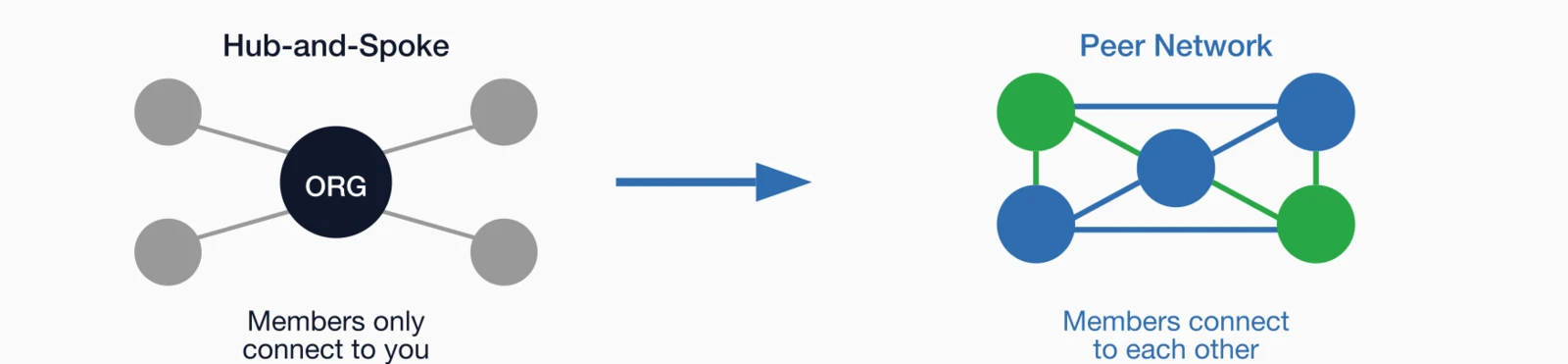
Connection-building tactics:
- Member directories: Searchable databases with profiles, expertise, and interests
- Smart matching: Algorithm or manual matching based on goals, challenges, or interests
- Facilitated introductions: "You should meet" emails connecting relevant members
- Icebreaker activities: Structured networking at events (speed networking, discussion prompts)
- Buddy programs: Pair new members with established ones for onboarding
- Regional chapters: Enable local connections for in-person relationship building
- Project collaboration: Opportunities to work together on initiatives or research
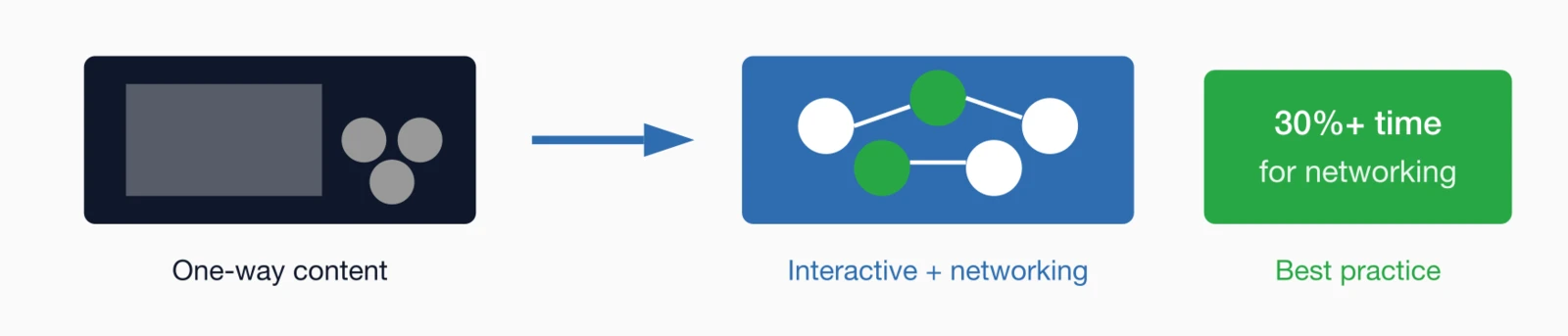
What tends to work: At every event, dedicate at least 30% of the time to unstructured networking. Relationships form in the margins, not just during formal programming.
Empower member leaders and champions
Thriving communities are member-led, not staff-led. Your most engaged members want to contribute and lead—they just need the platform, tools, and authority to do so. Empowering them multiplies your impact far beyond what staff alone could achieve.
Ways to empower member leaders:
- Special interest group leaders: Members lead topic-specific groups or committees
- Ambassador programs: Champions who welcome new members and promote engagement
- Discussion moderators: Members who facilitate online forums or social media discussions
- Event hosts: Members who organize local meetups or virtual coffee chats
- Content contributors: Members who write blog posts, lead webinars, or share expertise
- Mentors: Experienced members who guide newer or less experienced peers
Supporting your community leaders:
- Provide clear roles, expectations, and guidelines
- Offer training and resources to help them succeed
- Give them recognition and visibility
- Create spaces for leaders to connect with each other
- Celebrate their contributions publicly
- Don't micromanage—trust them to lead
Worth knowing: The 90-9-1 rule applies to communities: 90% lurk, 9% contribute occasionally, and 1% create most content. Focus your energy on supporting the 1% of superusers who drive community activity.
Build effective online community spaces
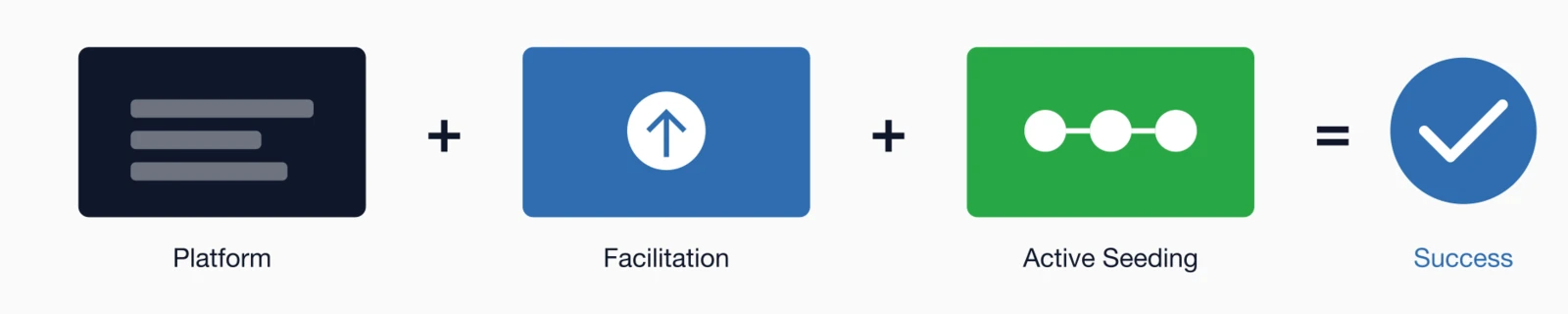
Online communities enable connection between events and across geography, giving members a way to stay engaged year-round. But here's something I remind boards constantly: your platform is not your community. Technology alone doesn't create community—thoughtful design and active facilitation do.
Platform options:
- Discussion forums: Built into your membership platform (centralized, controlled)
- Chat platforms: Real-time chat channels (dynamic, informal)
- Social media groups: Leverage existing networks (easy adoption, limited control)
- Private social networks: Dedicated community platforms (full-featured, branded)
- Member portals: Integrated into your website (seamless experience)
An integrated member community platform
Making online communities work:
- Start conversations: Staff or member leaders post discussion prompts regularly
- Celebrate contributions: Highlight valuable posts, thank contributors
- Create structure: Organized channels/topics make it easy to find relevant discussions
- Set norms: Clear community guidelines encourage respectful, valuable interactions
- Model engagement: Staff participation signals that the space is active and monitored
- Cross-promote: Reference online discussions in emails, events, and content
- Make it mobile-friendly: Most members will engage from their phones
Critical Success Factor: I've lost count of how many boards I've sat with who assumed "if we build the community space, they'll come." They won't—unless you activate it. The first 90 days are crucial. Actively seed discussions, invite participation, and create early wins to build momentum. A ghost-town community is hard to revive.
Host meaningful events that foster connection
Events are community accelerators—they deepen relationships faster than almost any other tactic. A single well-designed conference can create connections that last for years. But not all events build community equally, and the difference is in the design.
Event design principles for community building:
- Prioritize interaction: Small group discussions over one-way presentations
- Create common experiences: Shared challenges or activities that bond people
- Facilitate introductions: Structured networking, not awkward mingling
- Leave space for serendipity: Breaks, meals, and informal time for organic conversations
- Vary formats: Mix large sessions, small groups, and one-on-one time
- Continue conversations: Create post-event spaces to maintain connections
Event types that build community:
- Annual conferences: Flagship events that bring the whole community together
- Regional meetups: Smaller, local gatherings for more intimate connections
- Virtual roundtables: Topic-specific discussions with peer learning
- Peer learning circles: Recurring small groups focused on mutual support
- Social events: Dinners, happy hours, recreational activities (no agenda, just connection)
- Member-led sessions: Unconferences, lightning talks, open space technology
Post-event community cultivation:
- Create social media groups or chat channels for attendees to stay connected
- Share attendee contact information (with permission) for follow-up
- Send "you should meet" emails connecting people with common interests
- Publish event photos and highlights to celebrate the experience
Comprehensive event management tools
Recognize and celebrate community contributors
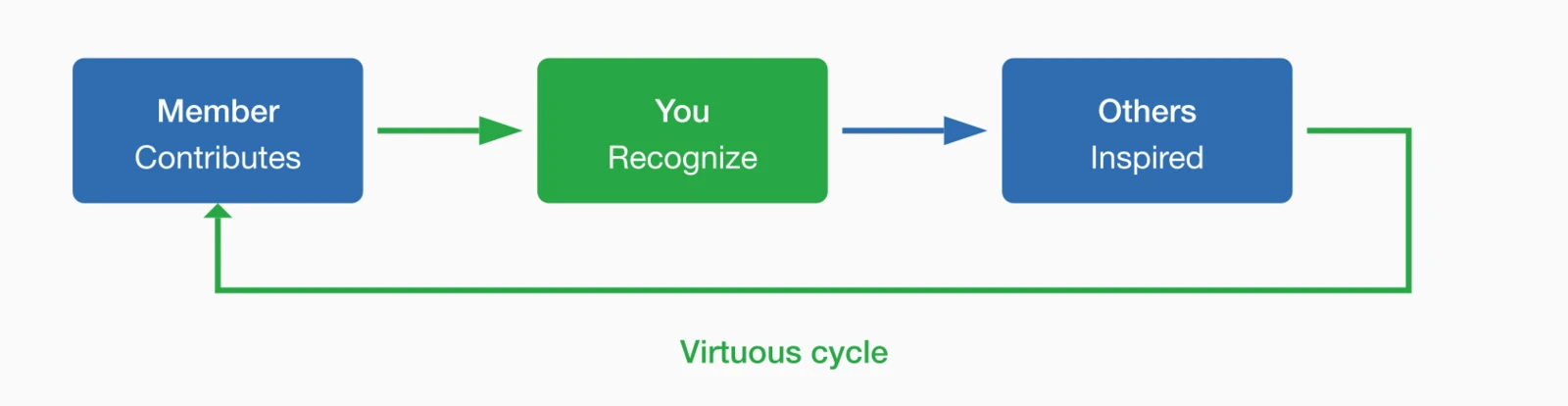
Recognition reinforces the behaviors you want to see. When you celebrate members who contribute, mentor, and lead, you signal that community participation is valued—and you inspire others to step up.
Recognition tactics:
- Member spotlights: Feature active members in newsletters, blog posts, or social media
- Awards and honors: Formal recognition for outstanding contributions
- Thank-you notes: Personal messages from staff or board members
- Exclusive opportunities: Early access, VIP experiences, or special invitations
- Leadership positions: Invitations to committees, boards, or advisory roles
- Public appreciation: Shout-outs in meetings, events, or online forums
- Swag and perks: Special badges, gifts, or member tiers for active contributors
Why this matters: Public recognition not only rewards the contributor but also inspires others to get involved. Make it visible, specific, and genuine.
Foster inclusive belonging for all members
True community means everyone feels welcome, valued, and safe to participate. Exclusion—whether intentional or unintentional—kills community. And in diverse professions, inclusion requires deliberate effort, not just good intentions.
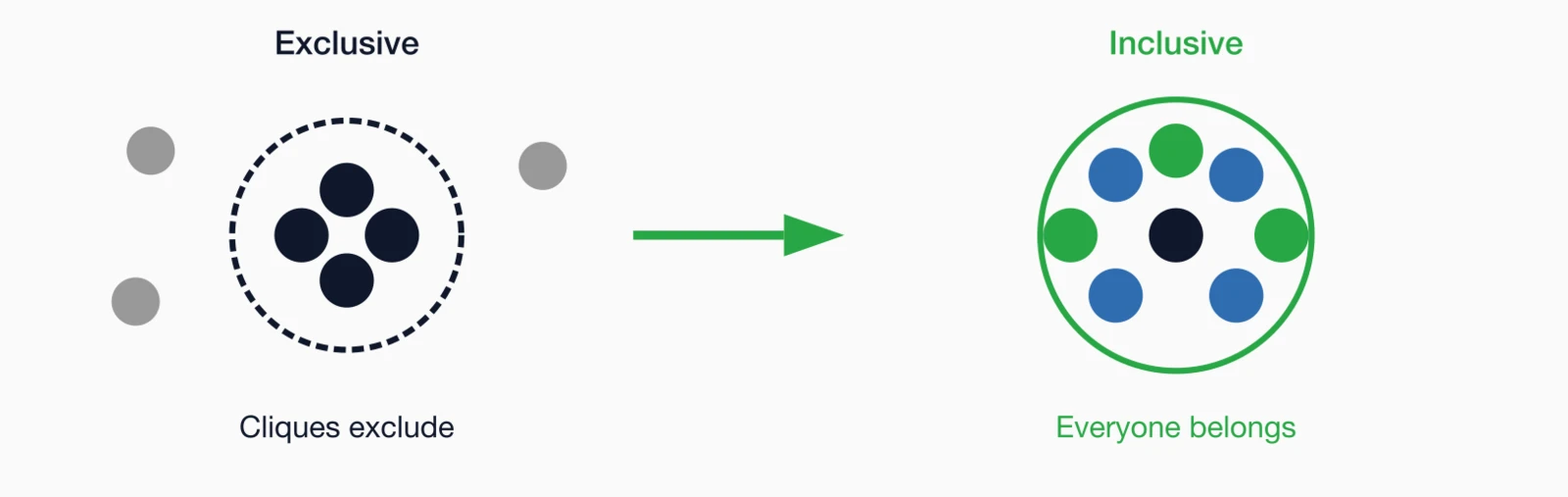
Creating inclusive communities:
- Diverse representation: Leadership, speakers, and content reflect your full membership
- Accessibility: Events and platforms accommodate different abilities and needs
- Affinity spaces: Groups for underrepresented demographics to connect safely
- Anti-harassment policies: Clear standards and enforcement for respectful behavior
- Onboarding for newcomers: Help new members navigate the community and feel welcomed
- Multiple languages: Translation or multilingual options where relevant
- Economic accessibility: Scholarships, sliding scales, or free options for participation
Warning signs of exclusion:
- Cliques or "inner circles" that dominate conversations
- Inside jokes or jargon that confuse newcomers
- Homogeneous leadership or speaker lineups
- Members reporting feeling ignored, dismissed, or unwelcome
- Low participation from certain demographics
The bigger point: Inclusion isn't just about avoiding harm—it's about actively creating conditions where diverse voices are heard, valued, and elevated.
Measure community health and engagement
You can't improve what you don't measure. Tracking community health helps you identify what's working, what's not, and where to invest your energy. The right metrics show you whether your community is actually thriving or just appearing to.
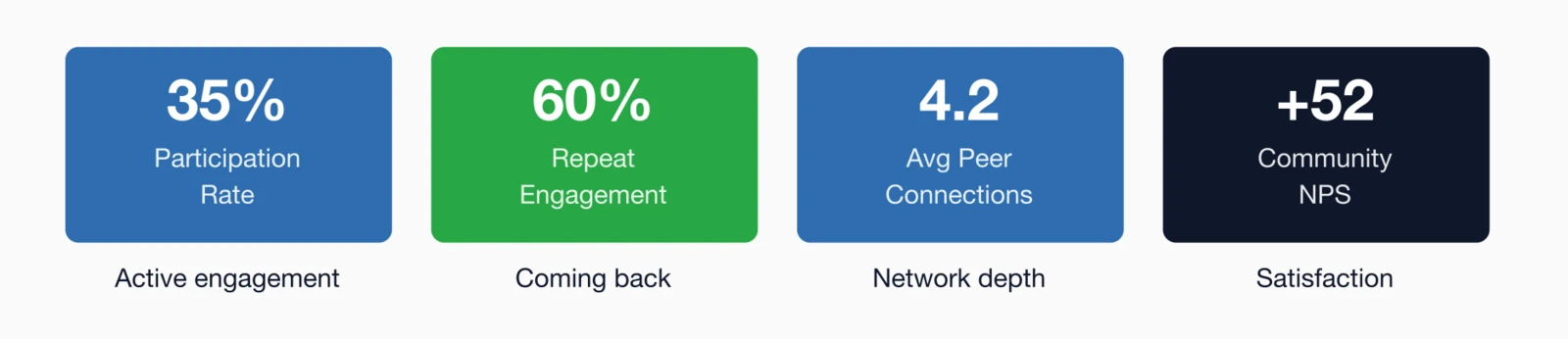
Key community metrics:
- Participation rates: % of members actively engaging in events, forums, or groups
- Repeat engagement: How many members participate multiple times (not just once)
- Peer-to-peer interactions: Members connecting with each other, not just staff
- Content contribution: Members posting, answering questions, or sharing resources
- Network density: How interconnected members are (do people know each other?)
- Net Promoter Score (NPS): How likely members are to recommend your community
- Retention correlation: Do engaged community members renew at higher rates?
Qualitative measures:
- Member testimonials about community value
- Stories of connections that led to collaborations or opportunities
- Feedback from surveys and focus groups
- Unsolicited expressions of gratitude or belonging
What I've seen: In healthy communities, a meaningful portion of members are actively engaged in any given quarter, and a smaller subset contribute content or lead activities. The exact numbers vary widely by organization size and type.
Sustain community momentum over time
Community building isn't a one-time project—it's an ongoing commitment that requires sustained attention. Momentum can stall if you don't continuously nurture and evolve your community, and reviving a dormant community is much harder than maintaining an active one.
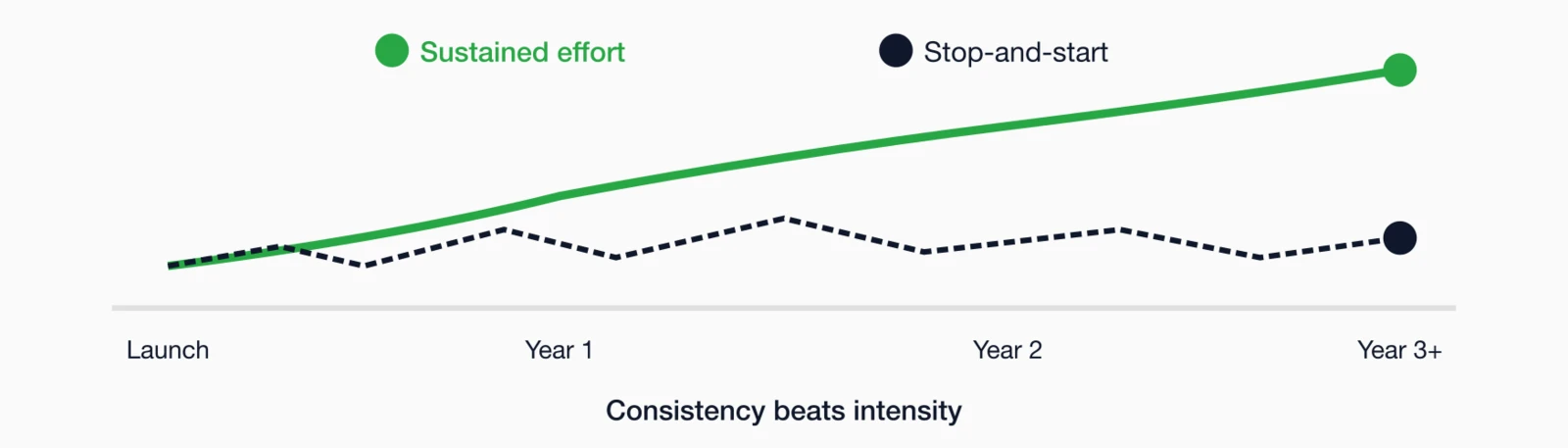
Sustaining community energy:
- Consistent cadence: Regular events, communications, and activities create rhythm
- Fresh content: New discussions, topics, and opportunities keep things interesting
- Member-generated ideas: Let members shape programming and direction
- Celebrate milestones: Anniversary events, member achievements, community wins
- Re-engagement campaigns: Reach out to inactive members with targeted invitations
- Evolve with needs: As members and industries change, adapt your community approach
- Refresh leadership: Rotate leaders to bring new energy and prevent burnout
Avoiding community burnout:
- Don't over-program—quality over quantity
- Support your volunteer leaders with resources and breaks
- Distribute leadership so it's not dependent on a few people
- Listen to feedback and make adjustments
- Accept that not every initiative will succeed—experiment and learn
Staff as community facilitators
When you shift from membership list to community mindset, your staff's role changes too. You move from service providers to community facilitators—a fundamentally different way of working that requires new skills and approaches.
I can't count how many associations I've seen try to bolt together four or five tools—forums here, directories there, event networking somewhere else—and then wonder why members stay scattered. When your technology is fragmented, your community will be too.
The Facilitator's Role
Start Conversations
Post questions, share interesting content, and invite member input to spark discussions.
Make Connections
Introduce members who should know each other, tag relevant experts, facilitate collaborations.
Amplify Member Voices
Share member content, spotlight member expertise, and celebrate member achievements.
Model Good Behavior
Demonstrate the kind of respectful, helpful, engaged community participation you want to see.
Step Back
As member-to-member activity grows, facilitate less and focus on creating new opportunities for connection.
The goal is not to be the center of all community activity, but to create conditions where members naturally connect and engage with each other.
Common community-building pitfalls to avoid
Building for staff convenience
Don't create forums or groups just because it's easier for you to manage. Ask what members actually want and need.
Launching without activation plans
Technology doesn't create community. You need active seeding, promotion, and facilitation from day one.
Expecting it to build itself
Community requires intentional cultivation, especially in early stages. Assign staff or volunteer resources to nurture it.
Over- or under-moderating
Too much control stifles organic interaction. Too little allows toxicity. Find the balance that maintains healthy culture.
Ignoring negative dynamics
Address conflict, cliques, or problematic behavior early. Small issues become big problems if left unaddressed.
Treating it as a marketing channel
If every interaction feels like a sales pitch, members will disengage. Lead with value, not promotion.
Neglecting newcomers
Long-time members dominate conversations while new members feel lost. Intentionally welcome and integrate new people.
Measuring vanity metrics
Total members or page views don't matter if no one is actually connecting. Focus on engagement depth, not just breadth.
Building community is a long-term investment
Creating a thriving member community doesn't happen overnight. It requires patience, persistence, and genuine commitment to serving your members' needs for connection and belonging. But the organizations that get it right build something that competitors can't easily replicate.
The organizations that succeed at community building share these traits:
- They view community as core to their mission, not a nice-to-have add-on
- They invest staff time and resources in community cultivation
- They empower members to lead and contribute
- They continuously listen and adapt to member needs
- They celebrate small wins while building toward long-term vision
When you get community right, the benefits compound over time. Members become more engaged, retention improves, advocacy increases, and your organization becomes resilient and sustainable.
Start small: You don't need to implement all 10 strategies at once. Pick one or two that resonate most with your organization's goals and member needs. Test, learn, and build from there.
Remember: Your members are already seeking community and connection. Your job is simply to make it easier for them to find it with you.
Key takeaways
- Connected members renew at significantly higher rates: Members who feel strong peer connections are several times more likely to renew, attend events, and recommend membership—making community building the highest-ROI retention strategy
- Define your community's unique purpose: Successful communities go beyond "networking"—clarify specific member needs (career advancement, knowledge exchange, advocacy, peer support) and build programs aligned to those goals
- Peer-to-peer beats organization-to-member: Facilitate member-led discussions, mentorship programs, special interest groups, and local chapters—members want to connect with each other, not just consume content from you
- Measure community health with engagement metrics: Track active participation rates, repeat participation patterns, and member-to-member connections—not just event attendance or email opens that measure passive consumption
Build Stronger Member Communities with i4a
i4a's AMS platform includes discussion forums, member directories, event management, and communication tools to help you create vibrant member communities that drive engagement and retention.
Ask About Community FeaturesRelated resources
How to Reduce Membership Churn
Reduce churn and keep members engaged for the long term.
Strategies to boost member participation and involvement.
Keep members informed and engaged with effective communication.
Complete guide to building engaged communities.
