Quick Summary: Trade Association Retention
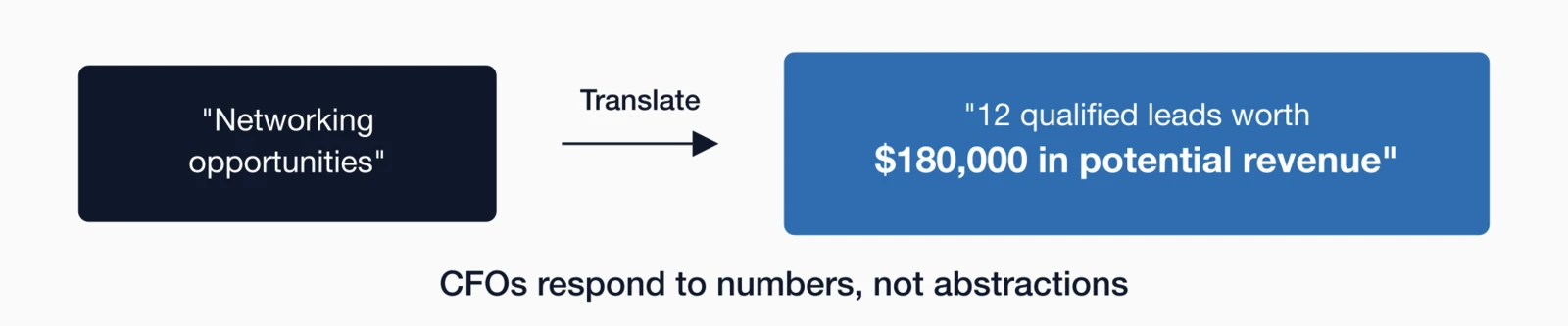
- Corporate members think like CFOs: "Networking opportunities" means nothing in budget meetings—translate benefits to dollars: "12 leads worth $180K in potential revenue."
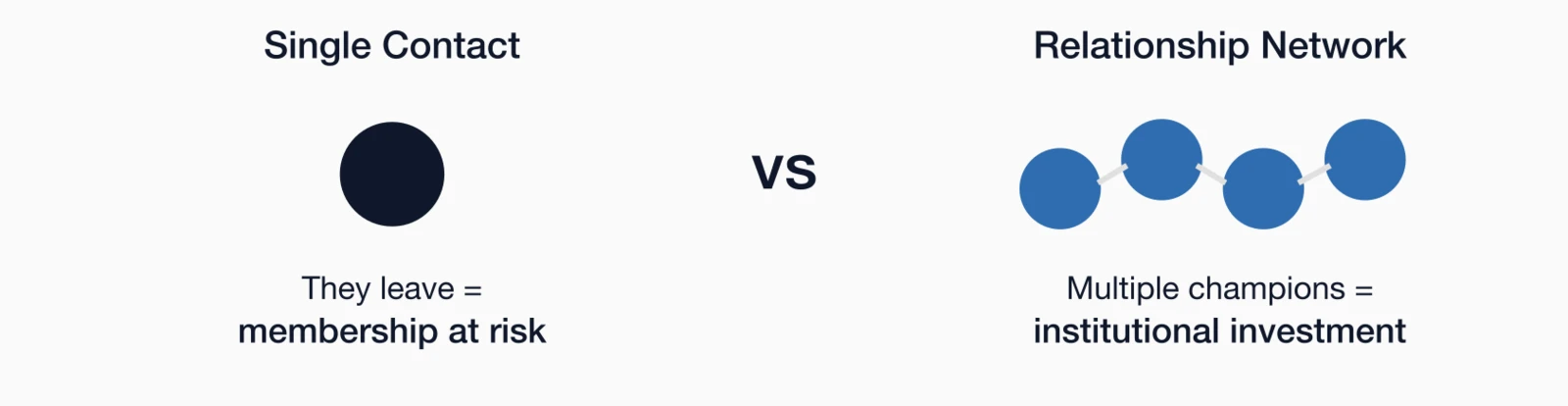
- Single contacts are single points of failure: When your champion leaves, membership often follows. Build relationships with 3-5 people at each member company to create institutional stickiness.
- Advocacy is likely your 10x ROI: If you defeated a 2% industry tax and a member does $10M in revenue, you saved them $200K—but only if you tell them explicitly at renewal time.
- Start renewals 120 days out: Corporate budget cycles, purchase orders, and multi-stakeholder approvals need more runway than the 30-day window that works for individuals.
- Monitor trigger events proactively: Mergers, leadership changes, and cost-cutting announcements signal risk—reach out before the non-renewal decision is already made.
Part of our retention improvement guide
Trade association retention requires different strategies than individual memberships—corporate members evaluate membership as a business expense with expected ROI, involve multiple stakeholders, and need quantified value that CFOs understand.
Here's the opportunity many trade associations miss: They treat corporate renewals like individual renewals — send a few emails to the "primary contact," hope they renew, then get a one-line reply: "We're not renewing this year." When you're asking a company to spend $5,000-$50,000, a few emails to one contact isn't enough. You need to engage decision-makers and demonstrate concrete ROI throughout the year. That's the difference between renewal and retention.
This guide focuses on retention strategies specifically designed for trade associations and industry groups with corporate or organizational membership models.
Understanding organizational member dynamics
Corporate membership decisions differ from individual decisions in critical ways that require fundamentally different retention strategies. When a company evaluates membership, multiple people are involved—finance scrutinizes the line item, executives question the strategic value, and day-to-day contacts judge the practical benefits. Understanding these dynamics is the foundation for building retention programs that actually work for organizational members. Without this knowledge, your renewal efforts will miss the mark no matter how well-intentioned they are.
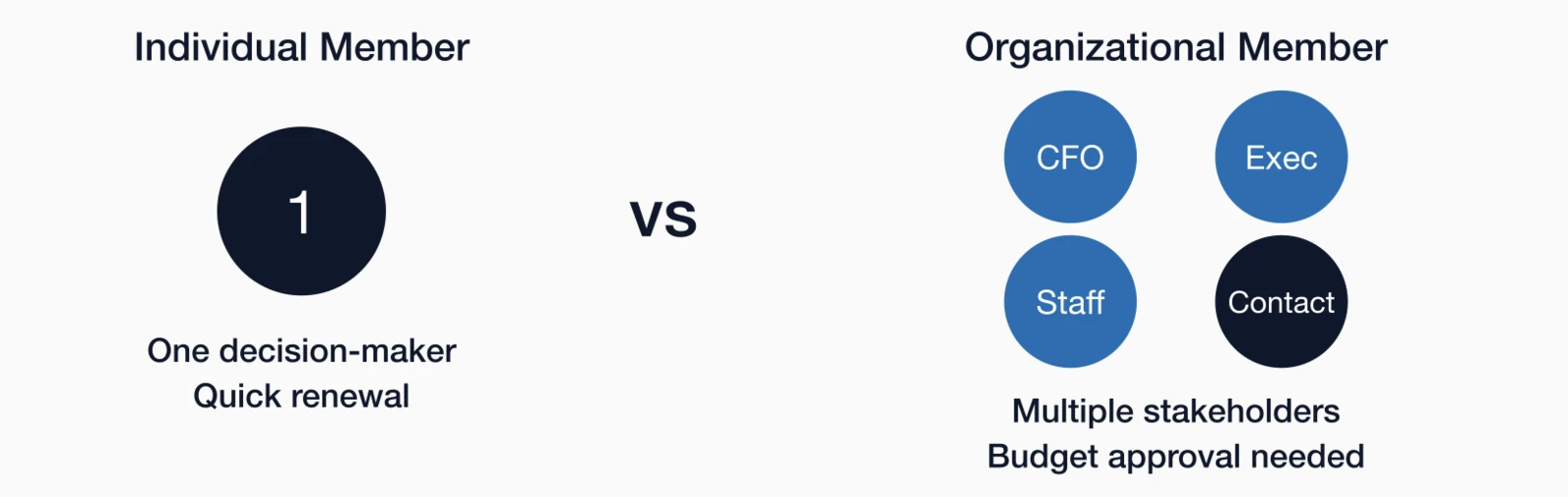
Key differences from individual memberships
- Budget accountability: Membership is a line item that must be justified annually
- Multiple stakeholders: Several people influence and benefit from membership
- Longer decision cycles: Renewal may require finance approval, not just a credit card
- Impersonal decisions: Personnel changes can suddenly put membership at risk
- Higher stakes: Larger dues mean larger expectations for return
Demonstrating ROI to corporate members
Corporate members think in business terms. Abstract benefits don't justify budget allocations—tangible returns do. When a CFO sees "networking opportunities" on a membership benefits list, they see fluff. When they see "generated 12 qualified leads worth an estimated $180,000 in potential revenue," they see a business case. Your challenge is translating every benefit into language that resonates in budget meetings and ROI discussions. The associations that master this translation retain their corporate members at dramatically higher rates.
Corporate members evaluate membership through a specific lens of business utility. As Harvard Business Review details in their "B2B Elements of Value" framework
Quantifying value delivered
Track and report specific value metrics:
| Benefit Category | How to Quantify | Example |
|---|---|---|
| Event Savings | Member vs. non-member pricing | "$3,200 saved on conference registrations" |
| Advocacy Impact | Value of prevented costs or protected revenue | "Defeated 5% tax that would have cost you $X" |
| Market Intelligence | Commercial value of research reports | "$15,000 in industry reports accessed" |
| Networking Value | Leads or partnerships generated | "Connected with 12 potential partners" |
| Standards/Compliance | Cost avoidance through guidance | "Early compliance saved estimated $X" |
The annual value report
Create personalized annual reports for organizational members showing:
- Total dues paid
- Quantified benefits received
- Staff engagement metrics
- Advocacy wins relevant to their business
- Committee and leadership participation
Send these 60-90 days before renewal to frame the renewal conversation around demonstrated value.
Organizational Member ROI Calculator
Build a value statement for corporate members:
Use this framing in renewal conversations: "Your $8,500 investment delivered $40,200 in value — a 4.7x return."
Real Talk: Your Advocacy Value Is Probably Your Best Retention Tool
Trade associations often undersell their advocacy work. You spent $500,000 fighting a regulation that would have cost the industry $50 million, but you buried it in a newsletter nobody read.
Calculate the per-company impact. If you defeated a 2% industry tax and your member does $10 million in revenue, you saved them $200,000. Tell them that — explicitly, in the renewal conversation. Advocacy ROI is often 10x or more, but only if members know about it.
Multi-level relationship management
Single-point-of-contact relationships are fragile. When that person leaves, membership often follows—sometimes before anyone at your association even realizes there's been a change. Building relationships with multiple people at each member organization creates redundancy that protects against turnover, increases overall engagement, and makes the organization institutionally invested rather than individually connected. The deeper your relationship network extends into a member company, the harder it becomes for them to walk away.
Single-point-of-contact relationships are a major churn risk. Gartner research reveals that the typical B2B buying group now involves 6 to 10 stakeholders
Building relationship depth
- Map the organization: Know who the decision-maker, day-to-day contact, and engaged staff are
- Engage multiple people: Invite different staff to events, committees, and programs
- Create internal champions: Help engaged staff see career benefits from association involvement
- Executive relationships: Ensure your leadership connects with their leadership periodically
Contact transition management
When key contacts leave member organizations:
- Immediately reach out to understand the transition
- Identify and welcome the replacement contact
- Provide orientation on membership and benefits
- Maintain relationship with departing contact (they may join a new member company)
Watching for trigger events
Certain organizational events signal heightened churn risk—and by the time you hear about them through normal channels, it may already be too late. Companies going through mergers, leadership transitions, or cost-cutting often make swift decisions about discretionary expenses, and association dues are an easy target. Proactive monitoring of these trigger events gives you the window you need to intervene, demonstrate value, and protect the relationship before a non-renewal decision is finalized.

High-risk triggers
- Mergers and acquisitions: Combined entities may consolidate memberships or re-evaluate
- Leadership changes: New executives often review all discretionary spending
- Financial stress: Layoffs, cost-cutting announcements signal budget pressure
- Strategic pivots: If a company shifts industries, association relevance may change
- Key contact departure: Your champion leaving is an immediate risk
Monitoring and response
Your association platform should help you:
- Track company news and industry developments
- Flag contact role changes
- Monitor engagement decline patterns
- Trigger proactive outreach when risk signals appear
For more on identifying at-risk members, see our guide on at-risk member identification
Advocacy as a retention driver
For trade associations, government affairs and advocacy often rank as the top membership value driver. But many members don't understand the advocacy work being done on their behalf—they just see dues going out and vague mentions of "legislative priorities" in newsletters they skim. The disconnect between advocacy investment and member awareness represents both a retention risk and a massive opportunity. When you translate advocacy victories into tangible business impact that members can point to in budget discussions, you transform an invisible benefit into your strongest retention argument.
Advocacy is often the top value driver for corporate members. Research from ASAE and Oxford Economics proves the scale of this impact, showing that associations support 1.1 million jobs and generate over $71 billion in wages annually. When you quantify how your specific advocacy efforts protect these industry-wide interests, you move the renewal conversation from a "discretionary fee" to a "strategic investment."

Making advocacy visible
- Regular advocacy updates: Monthly or quarterly reports on legislative/regulatory activity
- Quantify wins: "Our advocacy prevented a regulation that would have cost the industry $X billion"
- Company-specific impact: Help members understand how advocacy affects their specific business
- Engagement opportunities: Give members ways to participate in advocacy efforts
Pro Tip: Create an "Advocacy Impact Statement" for each member at renewal time, showing specific regulatory or legislative issues that affected their business and what the association did about them.
Building engagement depth
Organizations that engage deeply with your association are far more likely to renew. Engagement creates switching costs and builds internal advocates who will fight for the membership when budget time comes. A company with five employees actively involved—attending events, serving on committees, accessing research—has a fundamentally different relationship with your association than one with a single passive contact. Deep engagement also compounds: each additional touchpoint creates more value, more relationships, and more institutional knowledge that becomes harder to replace.
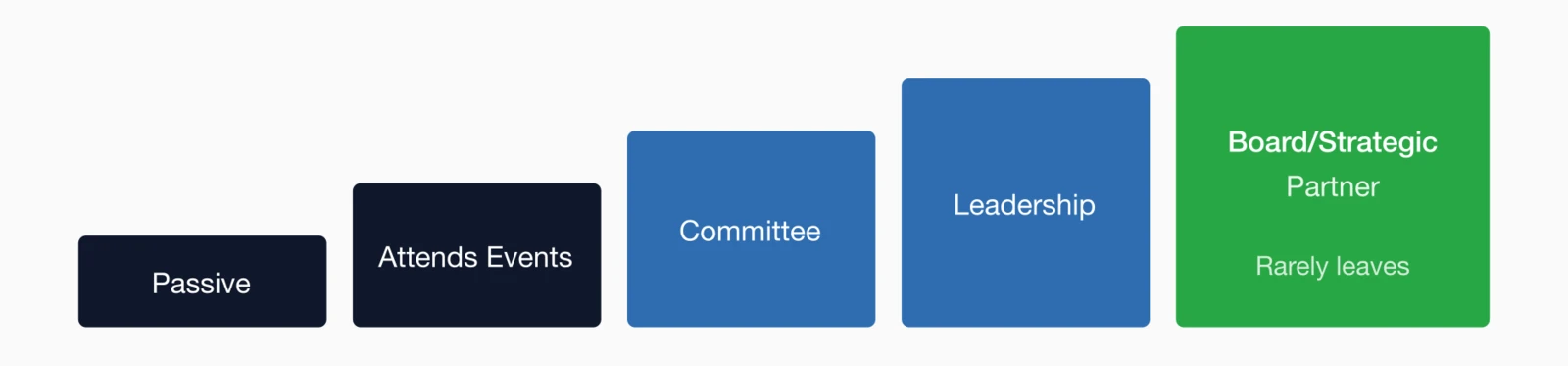
Engagement ladders for corporate members
- Level 1: Receive communications, access online resources
- Level 2: Attend events, participate in webinars
- Level 3: Serve on committees, contribute to publications
- Level 4: Hold leadership positions, sponsor events
- Level 5: Board service, strategic partnerships
Your goal is to move organizations up this ladder over time. Level 4-5 members rarely leave.
Tracking organizational engagement
Don't just track the primary contact's engagement. Aggregate engagement across all individuals at each member organization to get a true picture of relationship depth.
The corporate renewal process
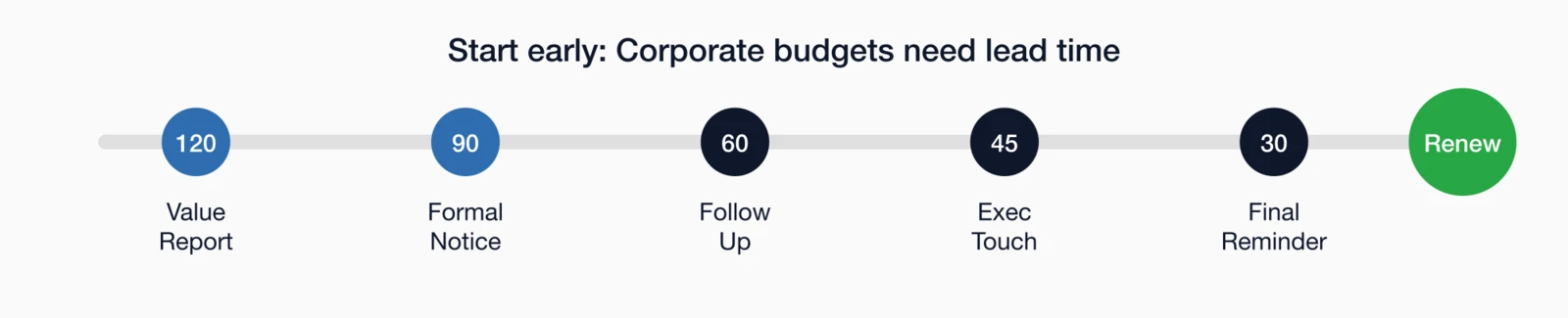
Organizational renewals require a longer runway and different approach than individual renewals. Corporate procurement cycles, budget approvals, and multi-stakeholder decisions mean a 30-day renewal window that works for individuals is woefully inadequate for companies. You're not just asking someone to click a payment button—you're asking them to get approval, process a purchase order, and defend the expense to colleagues who may not understand the value. Building a renewal process that accounts for these corporate realities dramatically improves your success rate.
Timeline
- 120 days out: Value report delivery; informal check-in with key contact
- 90 days out: Formal renewal notice with invoice
- 60 days out: Follow-up; address any concerns or questions
- 45 days out: Executive-to-executive touch for large or at-risk members
- 30 days out: Final reminder; expedited processing options
Navigating corporate processes
- Understand each member's fiscal year and budget cycle
- Provide PO and invoicing options, not just credit cards
- Offer multi-year commitments with pricing incentives
- Provide materials that help your contact justify renewal internally
The Contact Tracking Problem
Trade associations need to track multiple contacts per member organization — the CEO who makes decisions, the marketing VP who attends events, the government affairs director who engages on advocacy. But if your AMS charges per-contact, tracking all these relationships gets expensive fast.
We've seen trade associations deliberately under-track contacts to save money, then be surprised when the one contact they tracked leaves and nobody at the company knows they're members. Your AMS pricing shouldn't discourage proper relationship tracking.
i4a uses flat-rate pricing with unlimited contacts. Track every contact at every member company. Build the relationship depth that drives retention. Your software shouldn't penalize you for good member management practices.
Getting started
Improving trade association retention requires a systematic approach that addresses the unique dynamics of organizational membership. Rather than trying to overhaul everything at once, focus on the highest-impact changes first—typically relationship depth and value documentation. These foundational improvements will create the data and relationships you need to implement more sophisticated strategies over time. Here's a practical starting point for strengthening your corporate retention program.

- Audit relationship depth: How many contacts do you have at each member company? How engaged are they?
- Build value reports: Create personalized ROI documentation for each member
- Monitor trigger events: Set up alerts for M&A, leadership changes, and key contact departures
- Quantify advocacy: Translate your advocacy work into business impact members can understand
- Extend engagement: Actively work to engage more people at each member organization
For more retention strategies applicable across association types, see our comprehensive Membership Retention Strategy Guide
Looking to improve organizational member retention? Start a conversation
Key takeaways
- Organizational members require ROI demonstration — quantify value in business terms
- Manage multiple relationships: Decision-maker, day-to-day contact, and engaged staff
- Watch for trigger events: Mergers, leadership changes, and budget cuts signal risk
- Advocacy and market intelligence are often the top value drivers for corporate members
- Track engagement across the organization in your AMS, not just the primary contact
Strengthen Your Trade Association's Member Retention
i4a provides the tools trade associations need to manage organizational members effectively: unlimited contacts per company, automated renewal workflows, member communities, and custom reporting—all in one integrated system.
See How i4a Supports Trade AssociationsRelated resources
Complete 2026 strategy guide.
10 proven strategies.
Early warning signs of churn.
Calculate and track member LTV.
