Quick Summary: Member Recognition Programs
- Valued members renew: Recognition directly impacts retention—members who feel appreciated are dramatically more likely to stay engaged and renew.
- You're probably under-recognizing: Most associations give too little recognition, not too much; if you're worried about overdoing it, you're likely not doing enough.
- Specificity beats praise: "Great job" feels hollow; "Your forum answer helped 47 members this month" creates lasting impact.
- Everyday recognition compounds: Small, timely acknowledgments throughout the year matter more than a single annual award.
- Peer recognition scales infinitely: Staff can recognize dozens of members; enabling members to recognize each other creates thousands of appreciation moments.
Part of our engagement best practices guide
Member recognition programs directly impact retention—members who feel valued renew at significantly higher rates. This guide covers awards, milestones, volunteer appreciation, and peer recognition strategies that build lasting loyalty.
Many associations treat recognition as an afterthought—an annual awards dinner and maybe a mention in the newsletter. That's not enough. Effective recognition is systematic, specific, and woven into the fabric of how the association operates. Online community platforms
This guide covers how to build recognition programs that genuinely honor member contributions while building the loyalty that drives long-term engagement. Professional associations with individual achievement recognition and trade associations
Why recognition matters
Recognition isn't just nice—it's strategic. The psychology behind effective recognition is well-documented, with research
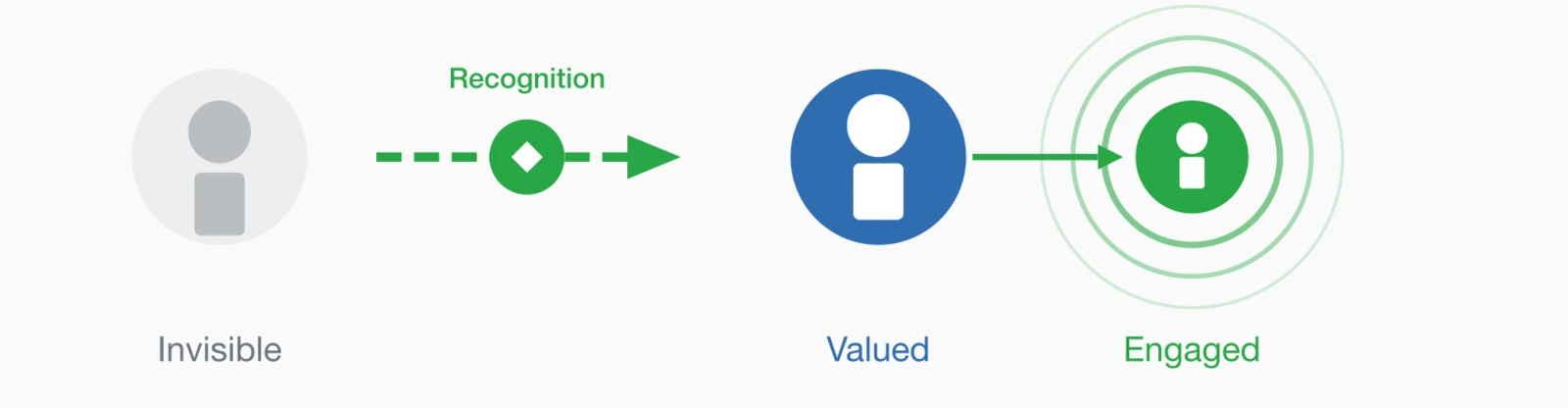
- Validation of time investment: Members give time to associations; recognition confirms that time was worthwhile
- Social proof of value: Public recognition shows other members that contribution is noticed
- Identity reinforcement: Awards and recognition confirm someone's identity as an expert or leader
- Career benefit: Professional recognition has tangible value for members' careers
- Reciprocity trigger: Recognition creates a sense of mutual obligation that drives continued engagement
Recognition and retention
The connection between recognition and retention is direct. Members who receive recognition—whether awards, public appreciation, or personal thanks—renew at higher rates and give more time to the association.
The opposite is also true. Members who contribute without acknowledgment feel taken for granted. Even dedicated volunteers will eventually burn out if their efforts go unnoticed.
The recognition gap: Most associations under-recognize. You're probably not recognizing too much—you're almost certainly not recognizing enough.
Awards programs
Formal awards are the most visible form of recognition—annual honors that celebrate exceptional achievement or contribution. When designed well, they create aspirational goals that motivate members throughout the year.
Types of association awards
Honoring a career of contribution to the profession
Recognizing outstanding work in the field
Celebrating volunteer contribution to the association
Highlighting new approaches or breakthrough work
Recognizing early-career members with exceptional promise
Honoring those who develop others
Awards program best practices
- Clear criteria: Define what makes someone eligible and how winners are selected
- Transparent process: Nomination and selection processes should be visible and fair
- Meaningful presentation: Awards ceremonies should honor the achievement appropriately
- Lasting recognition: Physical awards, permanent listings, and ongoing acknowledgment
- Promotion value: Help winners leverage the recognition (press releases, badges, announcements)
A deeper look: Designing awards that matter
An award's value comes from its prestige—and prestige comes from selectivity and meaning. Awards that everyone receives mean nothing. Awards that recognize genuine excellence become career-defining honors.
Consider who has won in the past. If your award winner list reads like a "who's who" of industry leaders, the award carries weight. If past winners are randomly selected or winners by default, the award lacks credibility.
The nomination process matters too. Member-nominated awards feel more meaningful than staff-selected ones. They represent peer recognition, which carries social weight that top-down awards can't match.
Finally, think about after the ceremony. How do winners benefit long-term? Can they use a logo or credential? Are they featured in publications? Do they speak at future events? The ongoing value of an award extends its recognition far beyond the moment of receiving it.
Milestone recognition
Milestone recognition celebrates tenure and achievement benchmarks—automatic recognition triggered by specific accomplishments. Unlike awards that require nomination and selection, milestones are earned through consistent engagement over time.
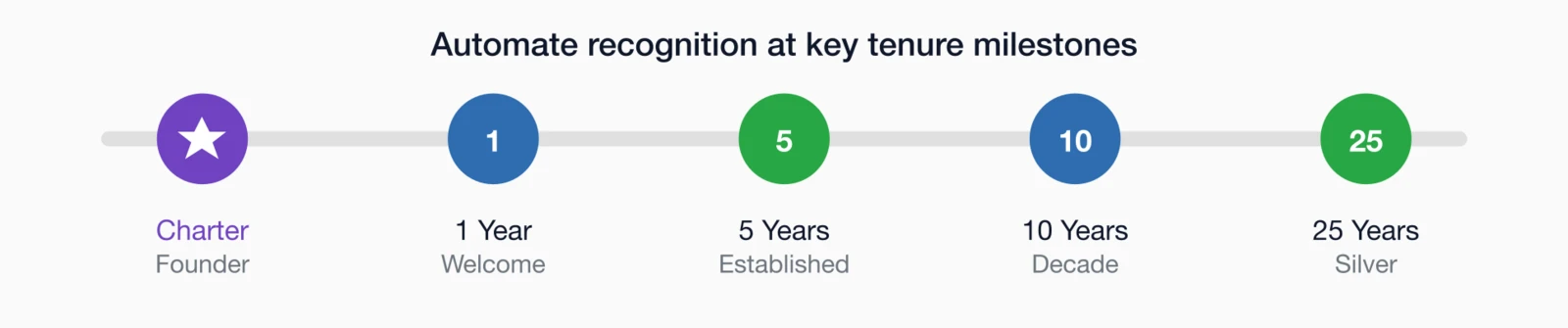
Membership tenure milestones
- 1 year: Welcome to the community (personal note)
- 5 years: Established member recognition
- 10 years: Decade of dedication honor
- 25 years: Silver anniversary celebration
- Charter member: Special recognition for founding members
Achievement milestones
- Certification completion
- CE credit thresholds (100 hours, 500 hours)
- Event attendance milestones
- Forum contribution levels
- Committee service years
Automating milestone recognition
Milestone recognition should be automated—no member should pass a milestone without acknowledgment. Modern membership management systems can:
- Track tenure and automatically trigger recognition at milestones
- Monitor CE credits and certification progress
- Generate personalized recognition communications
- Create certificates and badges automatically
- Alert staff to high-value recognition opportunities
Volunteer appreciation
Volunteers are the backbone of most associations—and they're often under-recognized for their contributions. These members give their time freely, and that investment deserves meaningful acknowledgment.
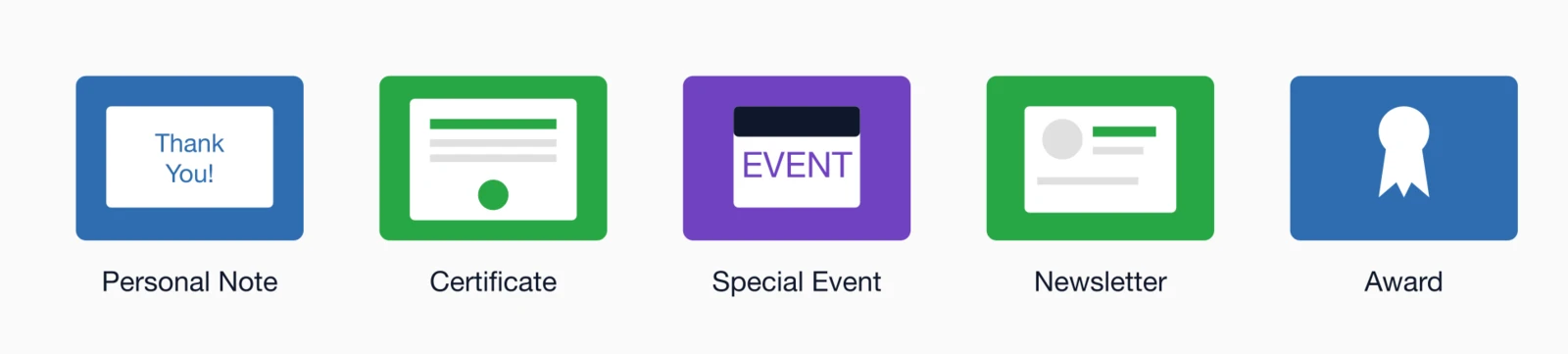
Recognizing volunteer contributions
- Public acknowledgment: Name volunteers in publications, at events, on the website
- Personal thanks: Direct communication from staff leadership or the executive director
- Service certificates: Formal documentation of volunteer service
- Volunteer appreciation events: Dedicated gatherings to honor volunteer contributions
- Volunteer of the year award: Annual recognition for exceptional volunteer service
Volunteer recognition by role
| Role | Recognition Approaches |
|---|---|
| Committee members | Year-end thank you, listing in annual report, service certificate |
| Committee chairs | Board acknowledgment, speaking opportunities, leadership badge |
| Event volunteers | On-site recognition, thank you gifts, volunteer appreciation event |
| Mentors | Mentor recognition program, mentee testimonials, mentor badge |
| Board members | Public biography, governance recognition, legacy acknowledgment |
For more on volunteer management and recognition, see our volunteer management guide
Peer recognition
Staff can't recognize everyone—but members recognizing each other creates unlimited recognition capacity. Peer recognition also carries unique weight because it comes from people doing the same work.
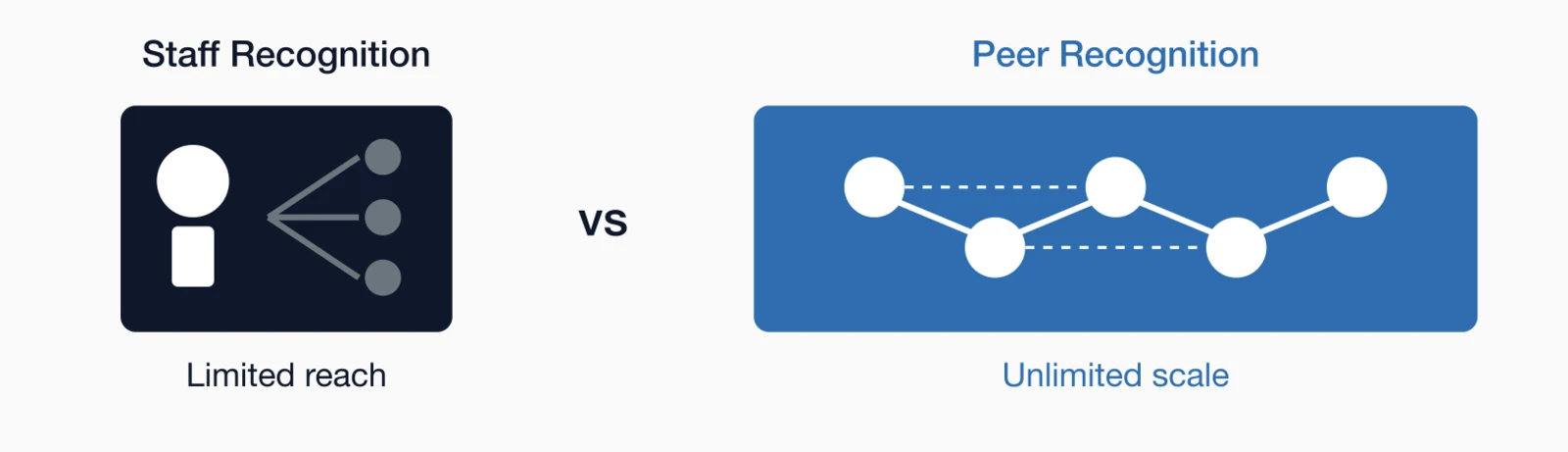
Enabling peer recognition
- Nomination systems: Let members nominate each other for awards and recognition
- Kudos features: Simple "thank you" or "this helped" buttons on forum posts and content
- Shoutout channels: Dedicated space for members to recognize each other
- Testimonials: Members sharing how another member helped them
- Recommendation features: Members endorsing each other's expertise
Making peer recognition visible
Peer recognition has more impact when it's visible:
- Feature peer recognition in newsletters ("Members recognizing members")
- Display recognition badges on member profiles
- Aggregate peer recognition into "most helpful" rankings
- Share peer testimonials publicly (with permission)
Peer recognition multiplies: One staff member might recognize 50 members in a year. 500 members recognizing each other creates thousands of recognition moments.
Everyday recognition
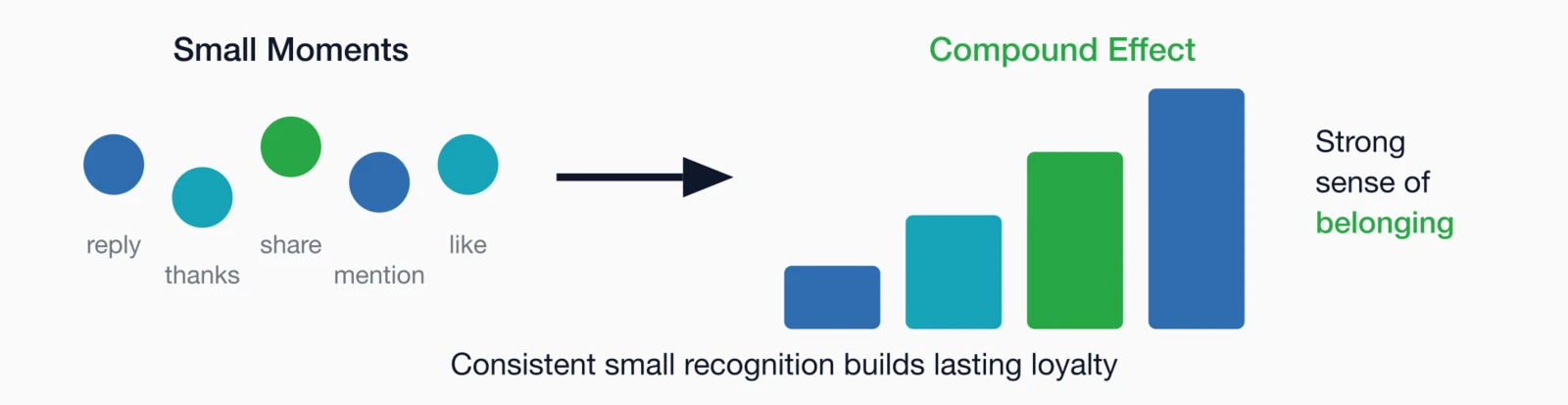
The most impactful recognition often isn't awards or milestones—it's the everyday acknowledgment that members are seen and valued. These small moments compound over time into a powerful sense of belonging.
Everyday recognition opportunities
- Responding to forum posts: "Great answer—this helped me too"
- Acknowledging event participation: "Thanks for joining us yesterday"
- Following up on contributions: "Your suggestion led to this change"
- Personal check-ins: "We noticed you haven't logged in—everything okay?"
- Sharing member content: Amplifying member articles, posts, or achievements
Building recognition into operations
Make recognition systematic, not sporadic:
- Weekly staff recognition targets: "Each team member recognizes 5 members this week"
- Recognition prompts in member management system: "This member contributed X—recognize them?"
- Meeting rituals: "Who should we recognize this month?"
- Automated appreciation: Thank-you messages for specific actions (posting, attending, renewing)
A deeper look: The compound effect of small recognition
A single "thank you" feels small. But recognition compounds over time. A member who receives occasional appreciation—a response to their forum post, a note after volunteering, acknowledgment at renewal—builds a cumulative sense of being valued.
This is why everyday recognition often matters more than annual awards. The award winner gets recognized once; the member who receives steady small acknowledgments feels valued continuously.
Think about your own experience. The compliments you remember often aren't the formal ones—they're the unexpected ones, the specific ones, the timely ones. That's the power of everyday recognition.
Recognition communication
How you communicate recognition affects its impact just as much as the recognition itself. The right approach amplifies appreciation; the wrong approach can feel hollow or even insulting.
Recognition communication principles
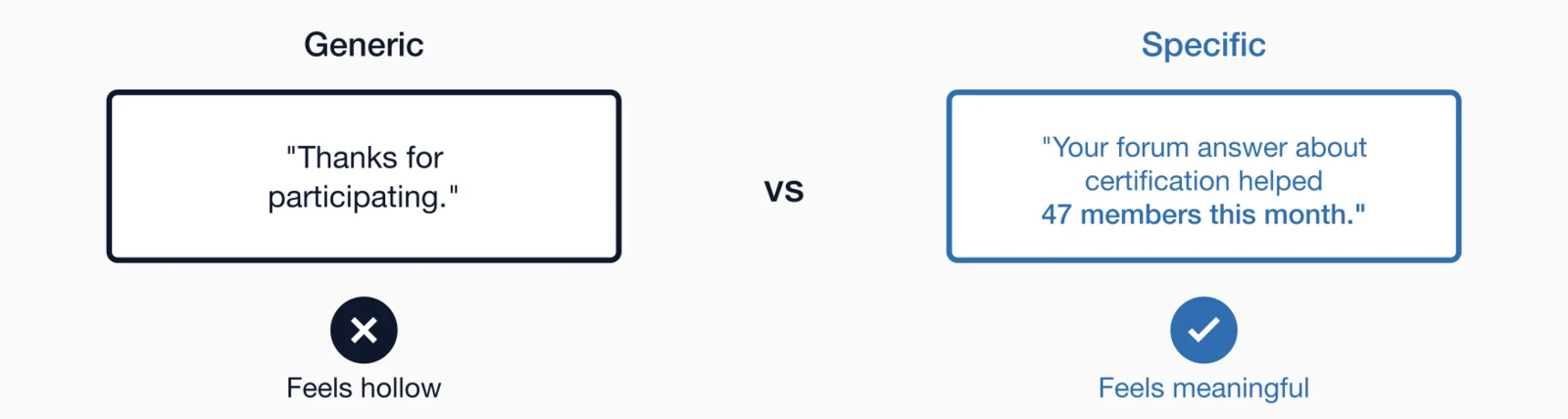
- Be specific: "Your forum answer about certification requirements helped 47 members this month" beats "Thanks for participating"
- Be timely: Recognition loses impact with delay; acknowledge contributions promptly
- Be personal: Use names, reference specific actions, make it clear you know who they are
- Be public when appropriate: Public recognition inspires others and amplifies the honor
- Be sincere: Generic form letters feel like spam; authentic appreciation resonates because it acknowledges the person's value on a human level
Recognition channels
| Channel | Best For |
|---|---|
| Personal email | Direct, private appreciation from staff or leadership |
| Newsletter | Public recognition reaching the full membership |
| Social media | Public recognition that extends beyond membership |
| Member portal | Badges, achievements, and visible recognition |
| Events | In-person acknowledgment and awards presentation |
| Phone call | High-touch recognition for significant contributions |
Common pitfalls to avoid
Recognition programs can backfire if poorly designed. Even well-intentioned efforts can create frustration or resentment if they miss the mark.
Creates perception of insider favoritism
Feels insincere and automated
"Thanks for six months ago" lacks impact
Ignores rank-and-file contributions
"Great job" tells members nothing
Easy-to-earn awards carry no prestige
Signs your recognition program needs work
- Members don't mention recognition when asked about membership value
- Award nominations are sparse or come from the same few nominators
- Volunteers complain about feeling unappreciated
- The same members win awards repeatedly
- Recognition communications have low open rates
Build a culture of appreciation
The best recognition programs don't feel like programs—they feel like culture. Recognition becomes woven into how the association operates, how staff interact with members, and how members interact with each other.
Start by auditing your current recognition. Who gets recognized? How often? Through what channels? Then identify the gaps—the contributions going unnoticed, the members feeling invisible, the milestones passing without acknowledgment.
Build recognition into your systems and processes. Automate what can be automated. Train staff on recognition as a core competency. Enable peer recognition at scale. Make appreciation visible and specific and sincere.
Members who feel valued stay. Members who feel invisible leave. Recognition is one of the most powerful tools you have for building the kind of loyal, engaged community every association aspires to create.
For more on member appreciation, see our volunteer management guide or explore the complete Member Engagement Guide
Key takeaways
- Recognition drives retention: Members who feel appreciated are dramatically more likely to renew and stay engaged
- Specificity matters: "Great job" means nothing; "Your forum answer helped 47 members" means everything
- Mix formal and informal: Annual awards are great, but everyday recognition has more cumulative impact
- Peer recognition scales: Staff can't recognize everyone, but members recognizing each other multiplies impact
- Public recognition amplifies: Recognition shared publicly benefits the recipient and inspires others
Ready to Build Stronger Member Relationships?
i4a's association management platform helps you communicate with members, celebrate milestones, and build the connections that drive retention.
See How i4a Can HelpRelated resources
Use points and badges to drive engagement.
Build and retain your volunteer workforce.
Complete guide to building engaged communities.
Create connections that drive long-term engagement.
